About Oophaga sylvatica (Funkhouser, 1956)
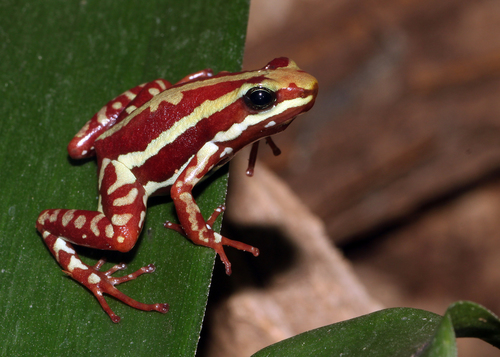
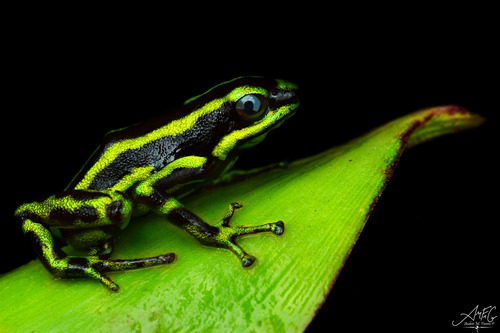
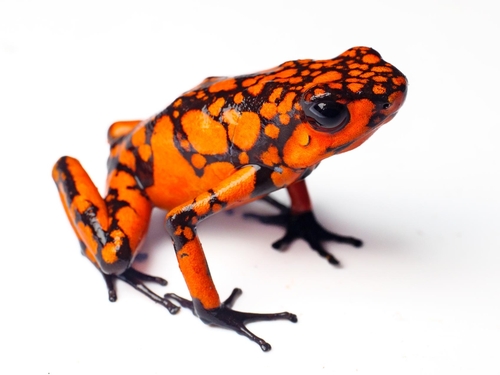
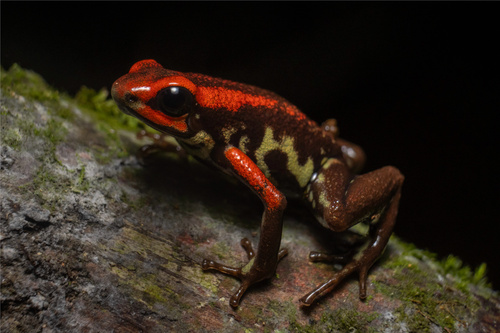
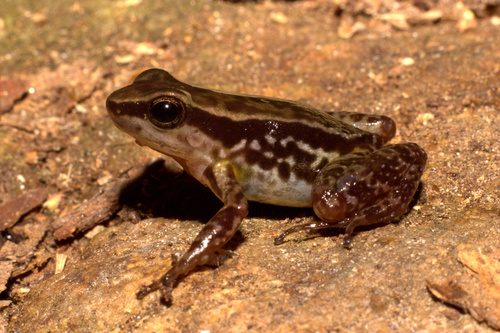
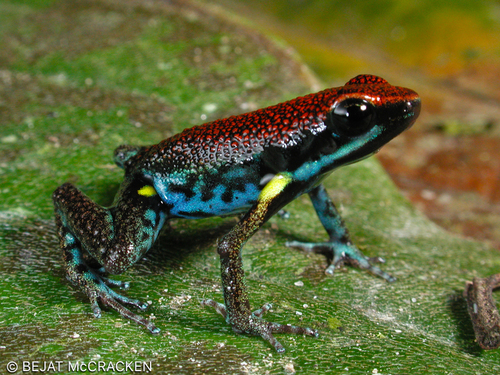
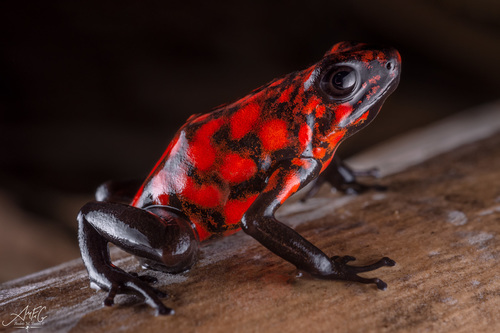
Oophaga sylvatica shows sexual dimorphism only in body size. Both males and females generally have a snout-vent length between 26 and 38 mm, with males only slightly larger than females on average. It is the largest species among its close relatives. This species has aposematic coloration, with both polytypic and polymorphic variation. Aposematic coloration acts as a visual warning to potential predators that the species is unpalatable, a fact predators discover after attacking an Oophaga sylvatica. While color patterning varies widely, the colors consistently show both chromatic and achromatic contrast. The colors are typically bright, a trait commonly associated with toxic and poisonous species. This broad pattern variation suggests that all these variants have roughly equal fitness. The color range of O. sylvatica is limited to varying shades of orange, black, and similar colors. This coloration lets the species blend into the mottled forest floor, its typical habitat. Its skin is smooth, and there is no webbing between any of its toes. Oophaga sylvatica is native to southwestern Colombia and northwestern Ecuador, and has been recorded in the provinces of Esmeraldas, Pichincha, Imbabura, Cotopaxi, Manabi, Santo Domingo de los Tsachilas, and Los Rios. It lives in humid tropical forests, mostly lowland and submontane rainforest, and can be found across a range of elevations up to 1000 meters above sea level. Within the Chocó rainforest of Ecuador, neotropical poison frogs including O. sylvatica occupy multiple habitat types: rivers, riparian zones, and interior forest. Rivers generally host the highest frog species diversity; riparian zones have unique species communities that include rare and endangered species; interior forest is more vulnerable to logging and other anthropogenic changes. Oophaga sylvatica has external fertilization of eggs. Since this species lays its eggs in or near shallow pools on land, it produces fewer and larger eggs than related species that lay eggs in water. Laying fewer eggs is thought to give each egg more resources to mature, increasing each tadpole's chance of survival after hatching, as tadpoles require water to survive. Clutch sizes usually range from 4 to 20 eggs.