About Oophaga pumilio (Schmidt, 1857)
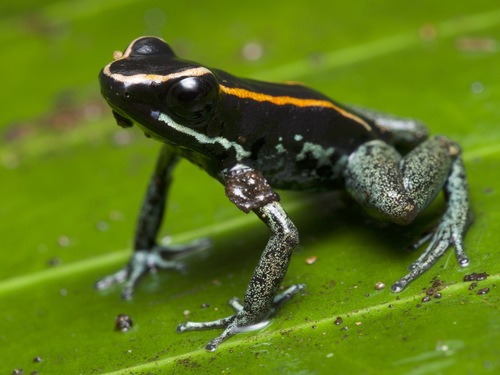
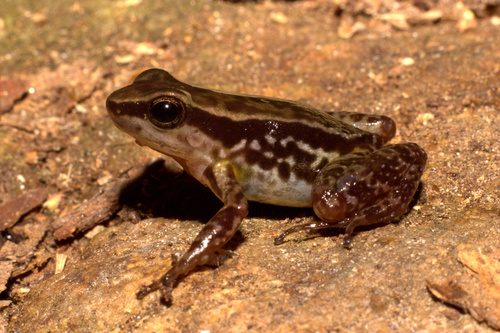
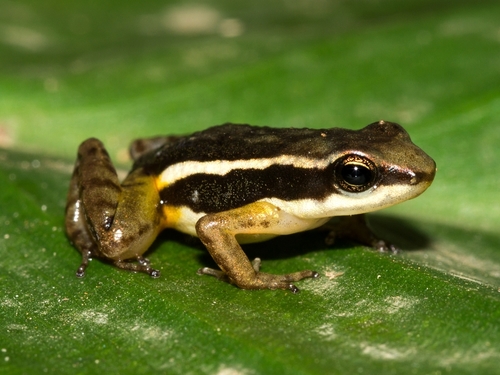
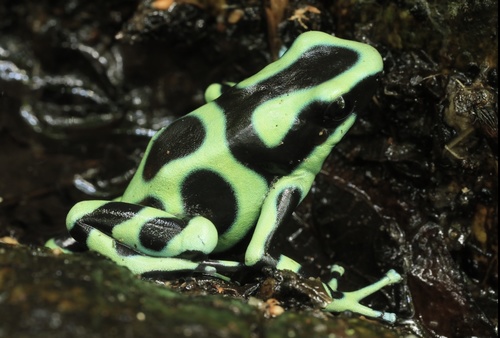
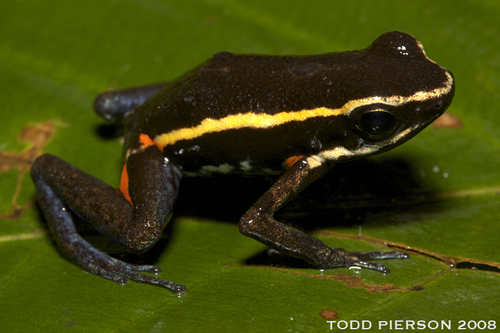
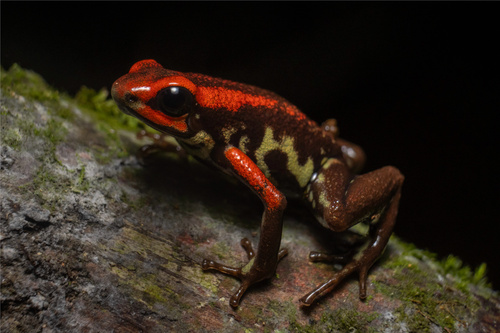
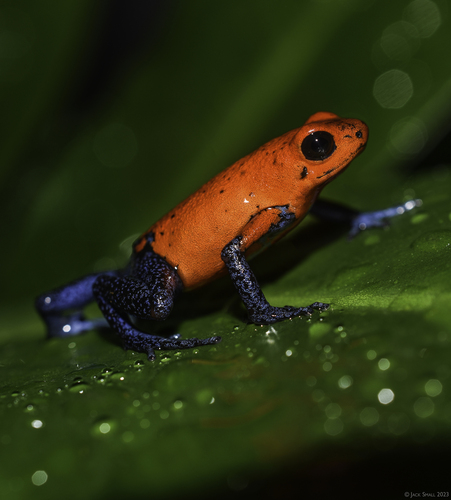
Oophaga pumilio, commonly called the strawberry poison frog, strawberry poison dart frog, or blue jeans poison frog, is a species of small poison dart frog that occurs in Central America. It is common across its range, which extends from east-central Nicaragua through Costa Rica to northwestern Panama. This species is most often found in humid lowlands and premontane forest, but large populations also live in disturbed areas such as plantations. The strawberry poison frog is best known for its wide variation in coloration, with around 15 to 30 distinct color morphs, most of which are thought to be true-breeding. While O. pumilio is not the most poisonous species among dendrobatids, it is the most toxic member of its genus Oophaga. This frog species uses scattered structures across disturbed lands to reduce thermal stress. Even so, O. pumilio individuals still have higher body temperatures than frog species found in forested areas, and can be exposed to temperatures up to 27 degrees Celsius. These observations indicate that this dart frog species acts as an ecological buffer and will survive better than other species as land use changes and temperatures rise. Oophaga pumilio is an external breeder, and other species in the genus Oophaga are known among amphibians for displaying a high degree of parental care. The strawberry poison frog has dual parental care: males defend and keep nests hydrated, while females feed the oophagous tadpoles with their unfertilized eggs. Although both parents contribute to parental care, females make heavier investments in terms of energy use, time spent, and lost potential reproduction. When selecting a mating partner, females choose the closest calling male rather than the highest quality male. Females provide energetically costly eggs to tadpoles for 6 to 8 weeks, until metamorphosis, stay sexually inactive while rearing tadpoles, and only care for one clutch of four to six tadpoles at a time. Males contribute through the relatively energy-cheap work of watering and protecting eggs over a shorter period of 10 to 12 days, and can care for multiple nests at once. This extreme maternal investment in offspring is thought to have evolved due to high egg mortality. Only 5 to 12% of a clutch develops into tadpoles, so a female's fitness is best increased by ensuring that the few eggs that become tadpoles survive. After mating, the female lays three to five eggs on a leaf or in a bromeliad axil. The male keeps the eggs hydrated by carrying water in his cloaca. After approximately 10 days, the eggs hatch, and the female transports the tadpoles on her back to a water-filled location. In captivity, males have rarely been observed transporting tadpoles, though it is unclear whether this is intentional or if tadpoles are just hitching a ride. Bromeliad axils are common tadpole deposition sites, but any suitable location can be used, such as tree knots, small puddles, or human trash like aluminum cans. Tadpoles are deposited one at each location. After deposition, the female visits each tadpole every few days and lays several unfertilized eggs for the tadpole to eat. In captivity, tadpoles have been raised on a range of diets, from algae to eggs of other dart frogs, but this has had very little success. O. pumilio tadpoles are classified as obligate egg feeders, as they cannot use any other source of nutrition. After about one month, the tadpole metamorphoses into a small froglet. The froglet generally stays near its water source for a few days for protection while it absorbs the rest of its tail.