About Onychogomphus forcipatus (Linnaeus, 1758)
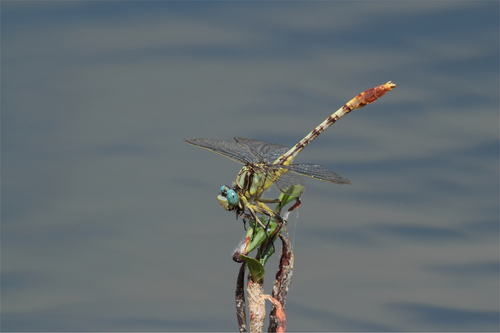
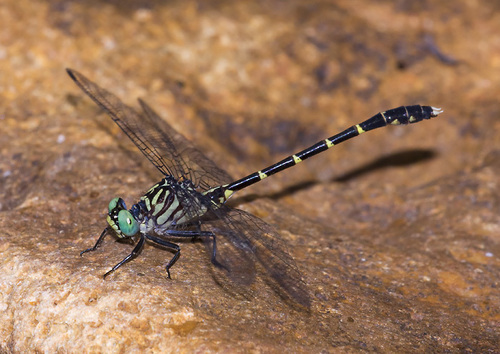
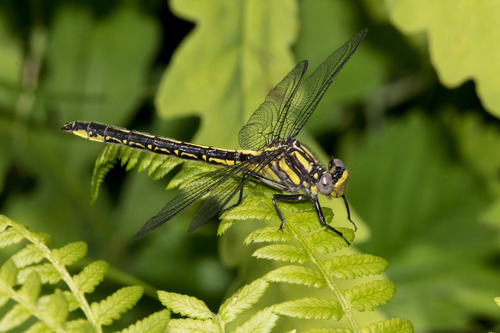
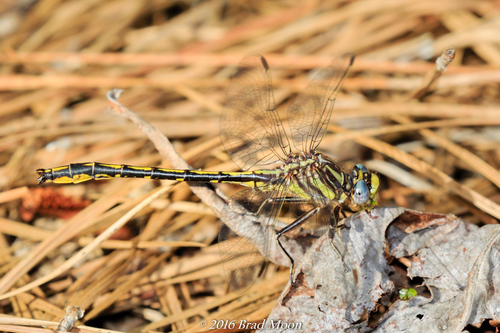
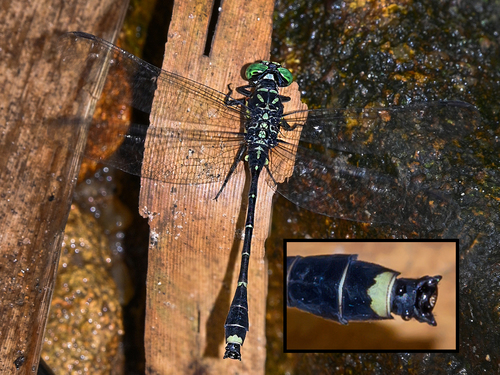
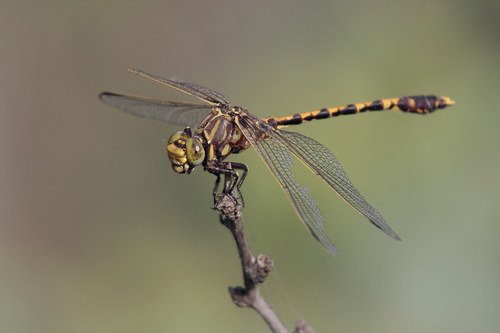
Onychogomphus forcipatus (Linnaeus, 1758) is a medium-sized dragonfly. Adult individuals of this species reach up to 6 centimetres (2.4 inches) in length, with a wingspan between 5.5 and 7.5 centimetres (2.2 to 3.0 inches). The widely separated eyes of these dragonflies range in color from grey to green. Two relatively narrow black lines run along the side of the thorax, and these lines touch the midline. There is a yellow marking on the vertex, and two cells located above the anal triangle. Males have large three-hooked anal appendages on their abdomen; cercoids may be dark, and bear a subterminal tooth. The base of the hindwing is angled in males and rounded in females. This species is very similar to Onychogomphus uncatus. The two species can be told apart by the shape and extent of their black markings, particularly those on the thorax and the last segments of the abdomen. This dragonfly is quite common and widespread; it can be found in most of Europe, North Africa (specifically Algeria, Morocco, and Tunisia), and West and Central Asia (including Armenia, Azerbaijan, Iran, Kazakhstan, and Turkmenistan). Onychogomphus forcipatus most often lives in clean, moderately fast-flowing rivers with gravel or sandy banks. Occasionally, the species is also found at large lakes.