About Onychognathus morio (Linnaeus, 1766)
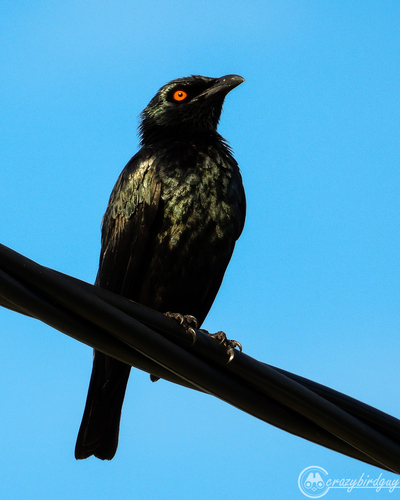
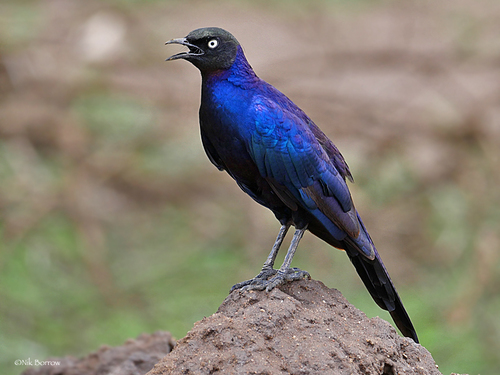
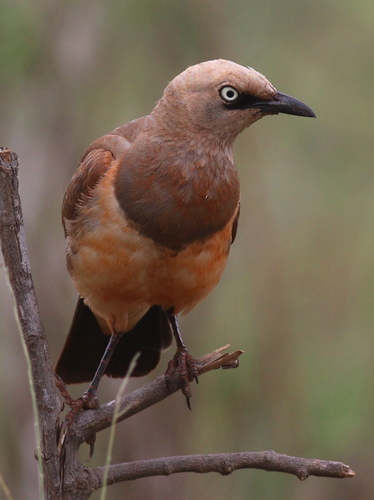
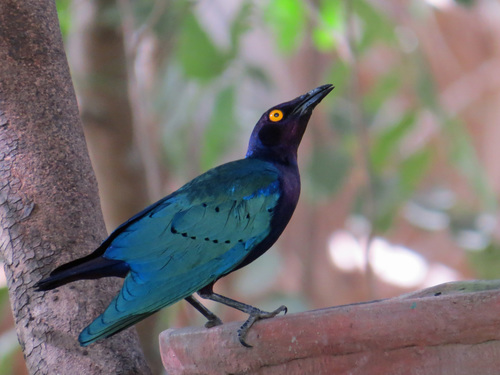
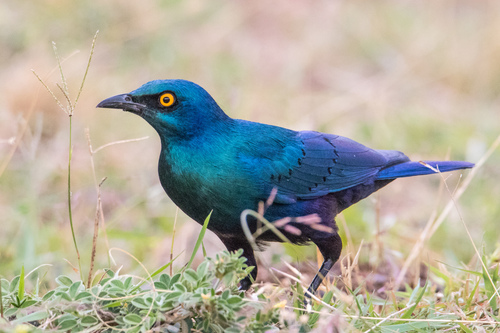
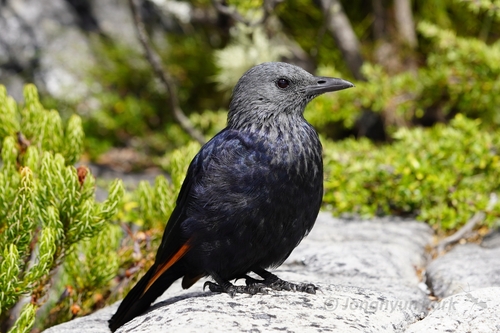
This species, Onychognathus morio, is a starling that measures 27 to 30 centimetres (11 to 12 inches) in length. Adult males have mostly iridescent black plumage, with chestnut flight feathers that are especially visible when the bird is in flight. Adult females have an ash-grey head and upper breast. Juveniles resemble males but are less glossy than adults, and have brown eyes instead of dark red eyes. The Ethiopian subspecies O. m. rupellii has a longer tail than the nominate form, and intergrades with the nominate. This starling produces a variety of whistled calls, and its most common contact call is cher-leeeoo. This species may be mistaken for other similar starlings, including its sister species the pale-winged starling. The two can be distinguished by several traits: the red-winged starling has rufous primaries, while the pale-winged starling has whitish primaries with orange edges. The pale-winged starling has a bright red or orange eye, while the red-winged starling’s eye is dark, almost black. Only female red-winged starlings have a grey head. The species’ range extends down eastern Africa, from Ethiopia to the Cape, KwaZulu-Natal, and Gauteng in South Africa. It tolerates a very wide variety of habitats, and can be found in forest, savannah, grassland, wetlands, fynbos, farmlands, commercial plantations, and urban centres. It is now common in many urban areas because tall buildings and houses provide nesting sites that structurally resemble the cliffs of its original native habitat. It may also nest in residential areas, breeding in roof openings, gaps, and house eaves. Like other starlings, the red-winged starling is omnivorous, and eats a broad range of foods: seeds, berries, nectar from plants including aloes and Schotia brachypetala, and invertebrates such as the beetle Pachnoda sinuata. It will prey on the nestlings and adult individuals of some bird species, for example the African palm swift. It also scavenges carrion and discarded human food. When feeding on nectar, the red-winged starling will only perch on plant structures strong enough to support its weight. Because of this, it chooses plant species that have strong, robust racemes with easily accessible flowers, such as Aloe ferox and Aloe marlothii, and avoids Aloe arborescens. It also feeds from large flowers that can support its weight, such as those of Strelitzia nicolai and certain Protea species. Fruit species eaten by the red-winged starling include figs (such as the sycamore fig), marulas, date palm fruit, berries from wild olive (Olea europaea subsp. cuspidata) and Euphorbia, and commercial fruits including apples, grapes, and citruses, among others. In rural areas, red-winged starlings are often seen perching on livestock and game animals, such as cattle, klipspringers, and giraffes — a trait they share with the pale-winged starling. While perched, they may eat insects and ectoparasites such as ticks, acting in much the same way as oxpeckers.