About Onnia tomentosa (Fr.) P.Karst.
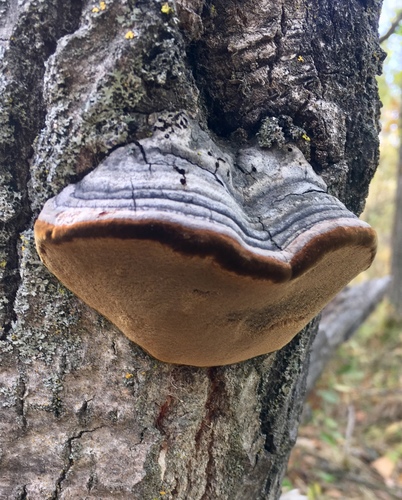
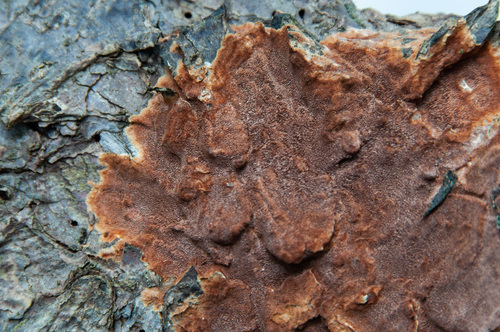
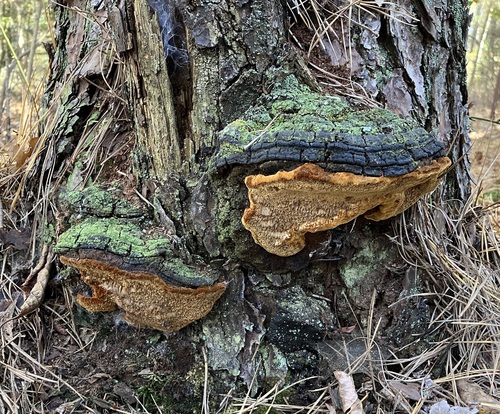
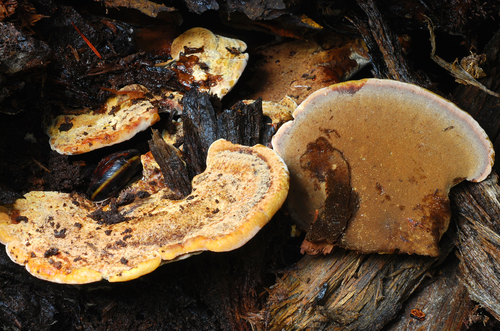
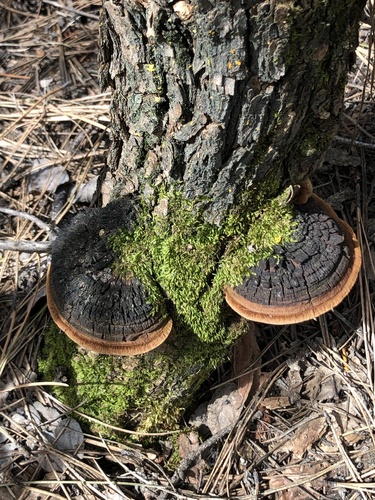
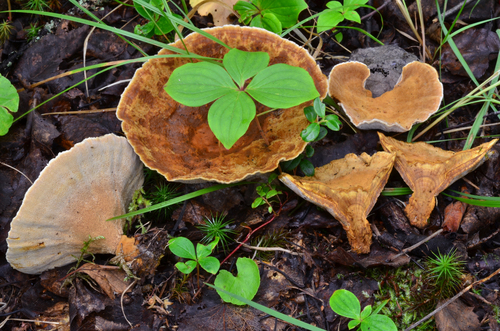
When young, the cap of Onnia tomentosa is flat with a blunt, rounded, yellowish-white margin. As it ages, the cap develops a slightly depressed center and becomes wavy contoured toward the rim, which develops a rather sharp edge when mature. The cap surface is covered in a felt-like texture that is grey when young and turns rusty brown with age, and the cap can reach up to 10 cm (3+7⁄8 inches) in diameter. If a stem is present, it is short and thick, and colored dark brown to near-black; caps may also grow directly on the base of a tree. Under the cap surface, the flesh is ochre brown; it is softer in the upper portion and hard and fibrous below. Onnia tomentosa is classified as inedible. This fungus is frequently found in coniferous forests at higher altitudes, and often grows in large groups; it is rather rare at lower altitudes. It is a plant pathogen that causes tomentosus root rot, primarily in spruce. Most commercially important conifers in Canada, including white spruce, are attacked by this fungus, which is also known as Inonotus tomentosus (Fr.) Teng. The fungus produces a white pocket rot called Tomentosus root rot that affects both the roots and butts of naturally seeded and planted conifers. In an inoculation test conducted in Saskatchewan, white spruce and black spruce were found to be the two most susceptible species. High losses to root rot, largely caused by this fungus, affected white spruce plantations at Grand-Mère, Quebec. In white spruce plantations, mortality typically occurs in groups of two or three trees when the plantation reaches 30 to 35 years of age, but younger trees can also be killed; occasional trees as young as 10 years old can become infected. Over a 6-year study period, 17 white spruce plantations aged 43 to 58 years old in Ontario recorded an average annual mortality rate of 0.7%. In that same study, the average accumulated mortality of dominant and codominant trees was 10.3% across all plantations. After clearcutting in a plantation at Searchmont, Ontario, Tomentosus root rot was found in more than half of the stumps, but decay and stain had not yet reached stump height.