About Oncorhynchus masou (Brevoort, 1856)
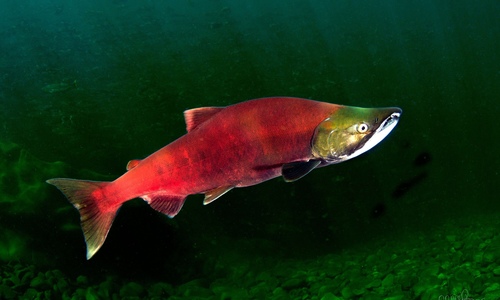
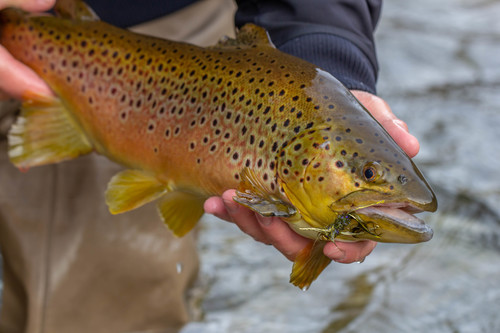
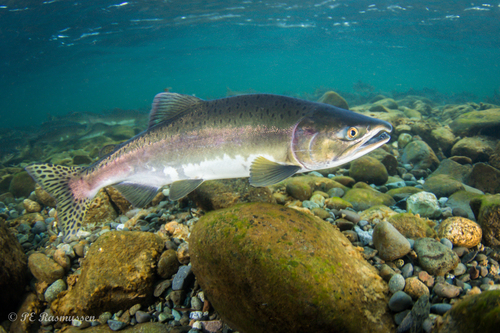
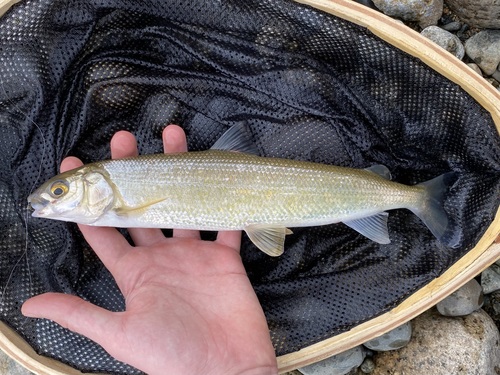
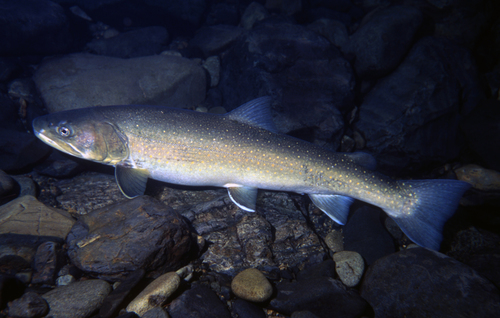
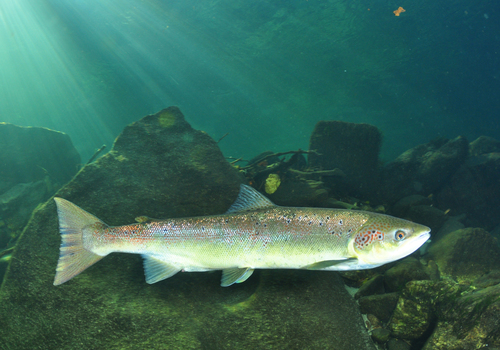
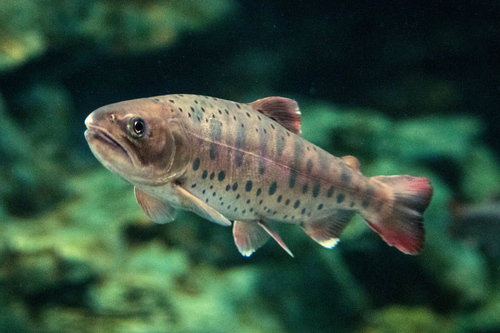
The masu salmon, scientifically named Oncorhynchus masou (Brevoort, 1856), is also called masu (from Japanese マス, meaning 'salmon trout') or cherry trout (sakura masu, from Japanese 桜鱒 サクラマス) in Japan. It is a salmonid species in the genus Oncorhynchus, native to the North Pacific along Northeast and East Asian coasts. Its range extends from the Russian Far East, including Primorsky, the Kamchatka Peninsula, Sakhalin, and the Kuril Islands, southward through Korea, Japan, and Taiwan. While Western sources generally classify it as a salmon, it is considered a trout in Japan, its most well-known native range, because it is the most frequently encountered freshwater salmonid in the Japanese archipelago.
Several subspecies of Oncorhynchus masou are recognized: the widespread nominate subspecies yamame (O. m. masou), the critically endangered Formosan salmon (O. m. formosanus) found only in landlocked waters of Taiwan, the Biwa trout (O. m. rhodurus) endemic to Lake Biwa, and the anadromous amago (O. m. macrostomus) limited to western Japan.
In terms of ecology, masu salmon typically favor temperate climates around latitudes 58°N to 65°N, and in marine environments they occupy depths of 0 to 200 m (0 to 660 ft).
Like other Pacific salmon, the masu salmon's life cycle is split between freshwater and marine stages. Young masu salmon live in rivers for 1 to 3 years, and some non-anadromous, freshwater-resident forms can exist. The marine stage lasts for 2.0 to 3.5 years, depending on the age of the fish when it first enters the ocean. In the sea, masu salmon feed heavily on crustaceans, and less frequently on young fish. Once the fish reach sexual maturity between 3 and 7 years of age, they enter rivers to spawn. Their spawning migration begins earlier than that of other salmon species. After spawning, most adult masu salmon die, but surviving individuals, particularly dwarf males, can return to spawn again the following year. When young masu salmon hatch from their eggs, they do not immediately move to the sea; instead, they stay in spawning areas, upper river reaches, and shallow areas with slow currents. The juveniles move to pools and riffles in the main river channel to feed on chironomid larvae, stonefly larvae, mayfly larvae, and airborne insects. Young masu salmon migrate to the ocean in their second year of life, and occasionally in their third year.