About Oncacontias vittatus (Fabricius, 1781)
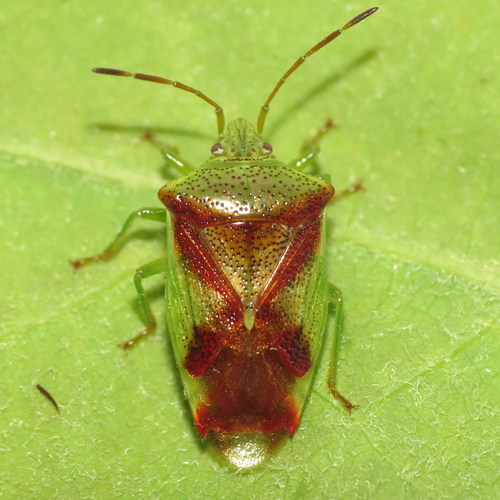
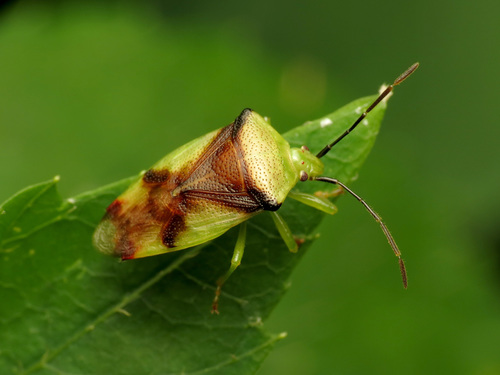
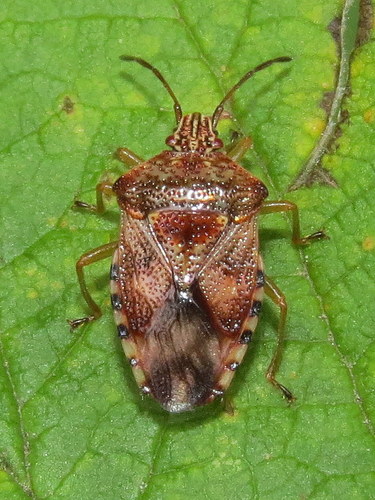
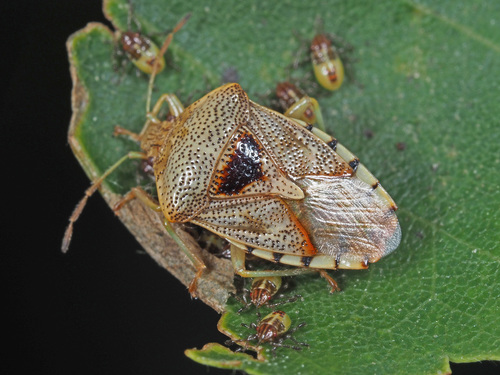
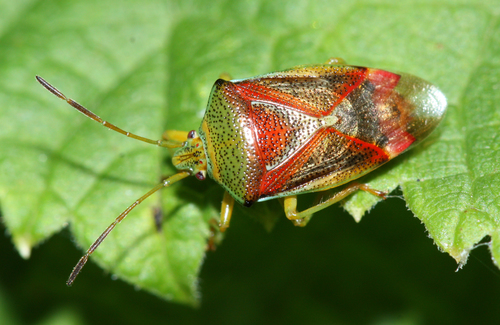
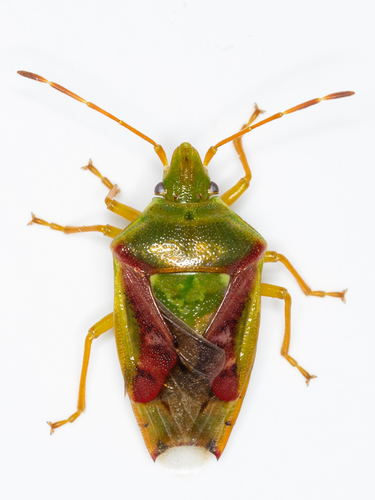
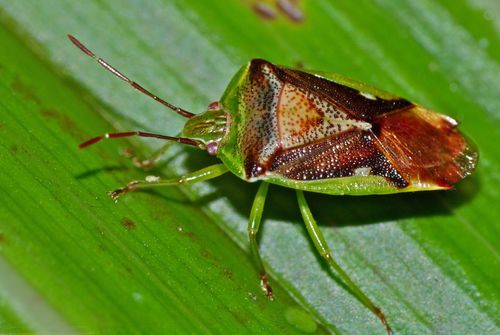
Adult Oncacontias vittatus males measure 8.70–10.44 mm in length, while adult females measure 10.33–11.74 mm. The base body colour of this species ranges from yellowish to greenish. Their antennae are uniformly brown along their entire length. The pronotum, the first section of the thorax, has a creamy to yellowish colour along its margins. The scutellum, a large triangular plate that follows the pronotum, is brownish and transitions to creamy toward its rear end. The legs are smooth and greenish. The hardened forewing that covers the abdomen, called the elytra, is brownish with creamy markings on the margins and has a translucent membrane at its tip. Adult O. vittatus are fully winged and capable of flight when required. Oncacontias vittatus is found exclusively in New Zealand, where it is widespread across the North Island, South Island, and Stewart Island. It occurs at altitudes ranging from lowland to alpine. While it is usually considered a native forest species, it can also live in a variety of other habitat types, including exotic forest, tussock, swamps, subalpine scrub, and riverbanks. It is commonly found on plant species including tree ferns, tree tutu (Coriaria arborea), and southern beech (Nothofagus), but has also been recorded on many other plant species. It has been collected in leaf litter, moss, under logs, and at the base of plants. It is often encountered basking in the sun on walls and fences in human-modified habitats.