About Omphalotus illudens (Schwein.) Bresinsky & Besl
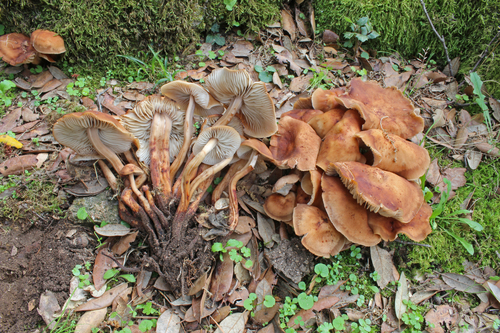
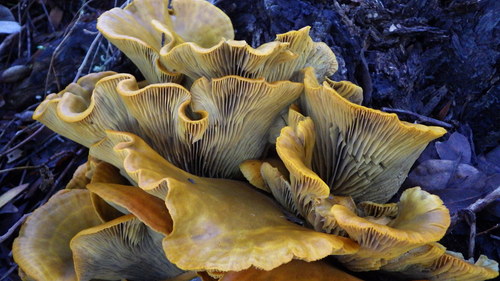
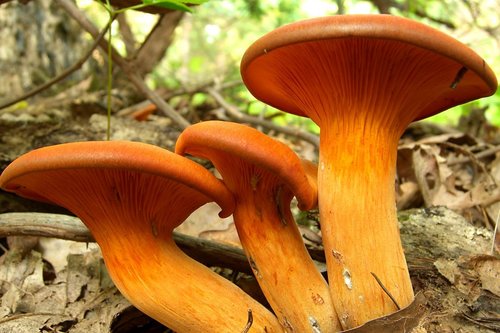
Omphalotus illudens produces large, orange mushrooms. The caps can grow up to 15 centimetres (6 inches) wide, while the stems can reach 15 cm in length. This species has decurrent gills, orange flesh, and a spore print that ranges from white to cream. When fresh, the gills often display weak green bioluminescence. Multiple journal articles have documented this glow, noting it can persist for 40 to 50 hours after the mushroom is picked. Researchers hypothesize the bioluminescence attracts nocturnal insects to the gills, which then spread the mushroom's spores over a wider area. Omphalotus illudens typically grows in clumps on decaying stumps, buried roots, or at the base of hardwood trees. It is found in eastern North America, where it appears between June and November. Two toxic chemical compounds, illudin S and illudin M, have been isolated from Omphalotus illudens. These compounds have both antibacterial and antifungal effects, and they are responsible for human toxicity when the mushroom is eaten, whether raw or cooked. Consumption causes symptoms including vomiting, cramps, and diarrhea. Muscarine has also been indirectly linked to this toxicity, but modern studies confirming its presence in O. illudens are still needed. The cytotoxic effect of illudin has drawn interest for use in treating certain cancers, though illudin itself is too poisonous to use directly and requires chemical modification first. Inside human cells, illudin S reacts with DNA to create a type of DNA damage that blocks transcription. This block can only be repaired through a process called nucleotide excision repair, while damage in non-transcribed regions of DNA remains unrepaired by the cell. MGI Pharma used this property to develop an illudin derivative called Irofulven, intended for cancer treatment. Development of this treatment is still in the experimental phase.