About Ommatotriton vittatus (Gray, 1835)
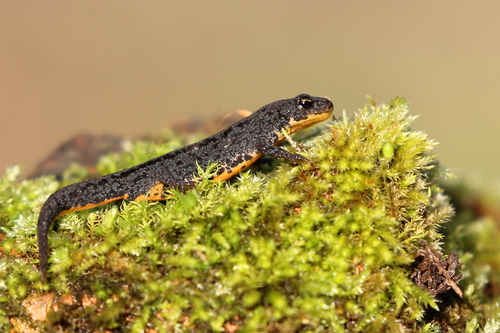
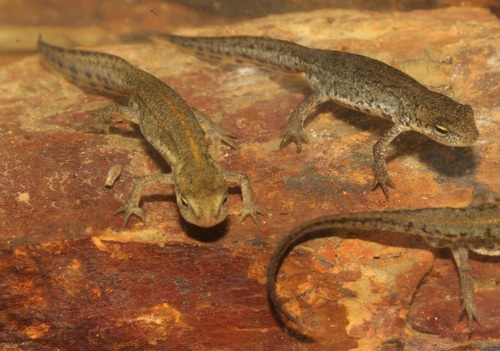
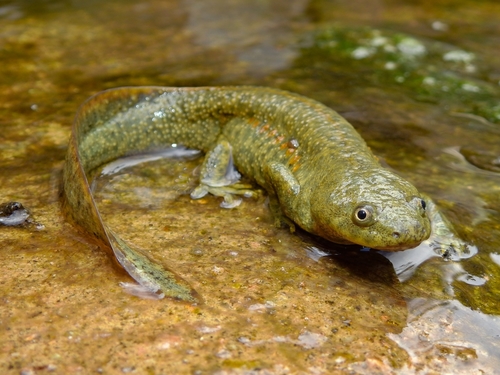
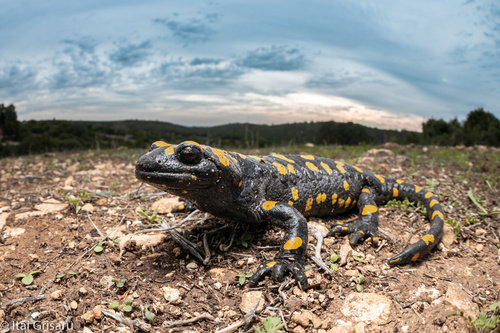
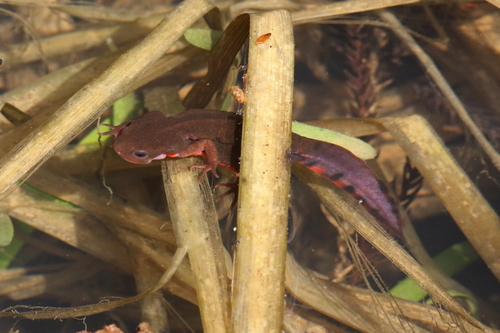
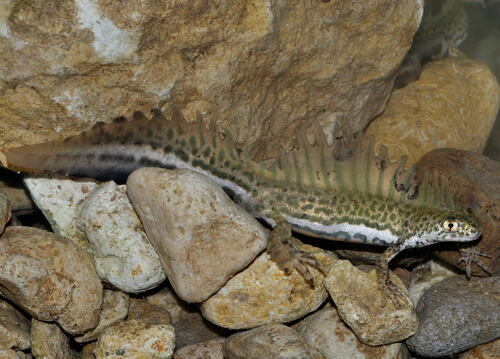
The southern banded newt, scientifically named Ommatotriton vittatus (Gray, 1835), is a species of salamander belonging to the family Salamandridae. It is found in Lori Province (northern Armenia), Iraq, Israel, Jordan, Lebanon, Syria, and Turkey. This species has two recognized subspecies: O. v. vittatus, which occurs in Turkey, Syria, and Israel, and O. v. ciliensis, which is found only in Turkey. It is a medium-sized newt, with a total body length of 90–110 mm. Females are often slightly smaller than males and weigh approximately half as much as males, but both sexes have a similar mean body condition index. The natural habitat of the southern banded newt includes various types of water bodies in temperate forests and grasslands, such as rivers, ponds, and canals. Its range also extends to water in caves, arable land, and rural gardens. It has been recorded in water with temperatures ranging from 8.7 to 14.6 °C (average 11.4 °C), pH between 7.5 and 8, general hardness (GH) between 3 and 18 (average 11.4), and carbonate hardness (KH) between 3 and 18 (average 10.4). Generally, the species prefers higher altitudes above 1500 m, which have lower temperatures. When temperatures drop below 3.9 °C, southern banded newts enter hibernation, and they aestivate during dry, hot weather. The breeding season of this species runs from early spring to early summer, which is February to June in its native range. During the breeding season, individuals live in shallow, slow-flowing water with vegetation; outside of breeding season, they occupy wooded areas or areas with loose stones located close to water. During breeding season, male O. vittatus develop large crests on their backs and more vivid coloration to attract females, and they also perform visual displays and movements with their tails and crests. Males are aggressive and territorial; they defend their territories by biting and chasing other males away, and maintain an open space of a few tens of centimeters to 0.8 m between territories. Fertilization is internal but non-copulatory, and females often accept multiple spermatophores from different males.