About Oligotoma nigra Hagen, 1885
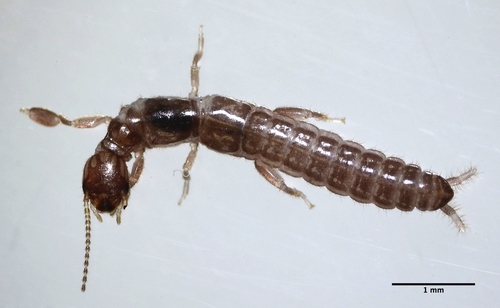
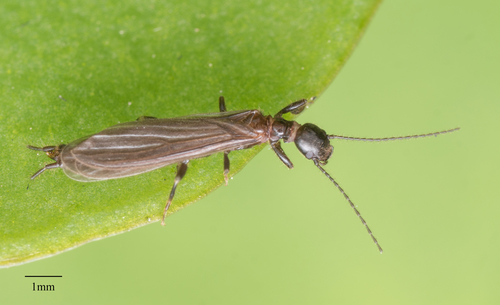
Oligotoma nigra Hagen, 1885, also known as the black webspinner. Adult individuals of this species are usually entirely dark brown or black, and reach approximately 9 millimeters in total length. Females typically have a redder body color than males. Only adult males have wings and are able to fly, and unlike adult females, adult males are attracted to light. Nymphs are much paler in color than adults, and darken as they mature. This species is originally native to India, but is now found in other regions across the world. In North America, it occurs across much of the southwestern United States, ranging from Texas to California and extending north to Utah. It was most likely introduced to North America in the late 1800s during the shipping of date palm cuttings from the Persian Gulf Region. During the day, black webspinners spend most of their time in silk tunnels located under rocks or other structures near their food source. In gardens, their food source is often grass or a type of ornamental plant. They are frequently found near the base of palm trees, and emerge from their silk tunnels to feed on debris, dead plant material, mosses, and lichens. The full life cycle of the black webspinner is typically completed within one year. This is a hemimetabolous insect species, meaning it undergoes incomplete metamorphosis. During their developmental stages, nymphs produce silk from silk glands located on the basal segment of the foretarsus. They use this silk to create protective tunnels that shield them from predators and store food. Eggs are laid inside these silk tunnels. When nymphs hatch, they expand the existing tunnel network, which continues to grow as the insects mature. The vast majority of this species' life is spent inside its silk tunnel network.