About Oligosoma otagense (Mccann, 1955)
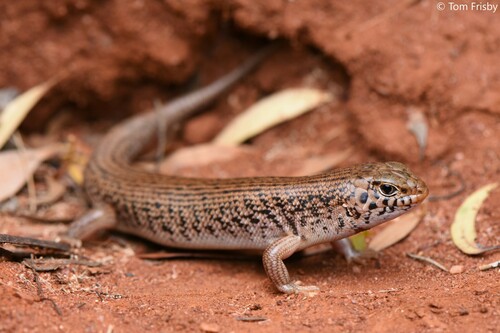
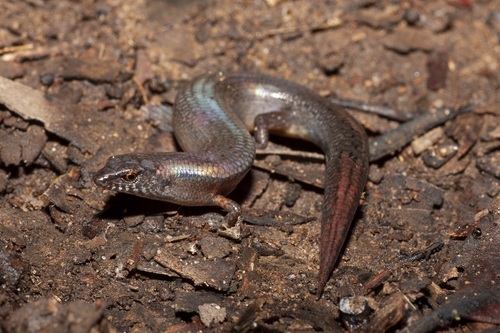
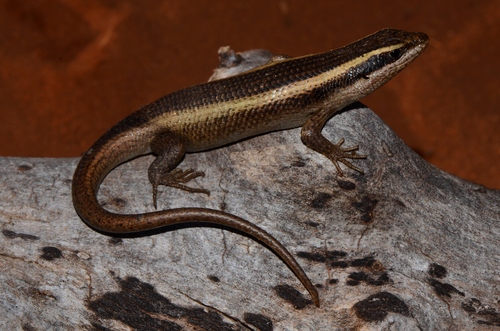
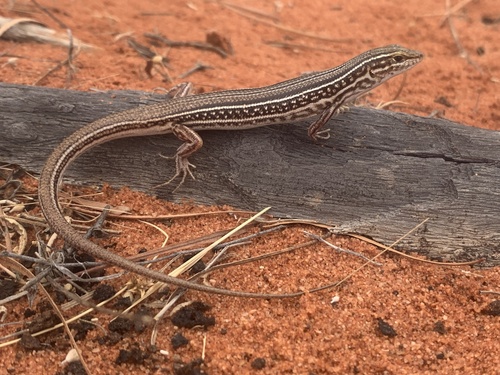
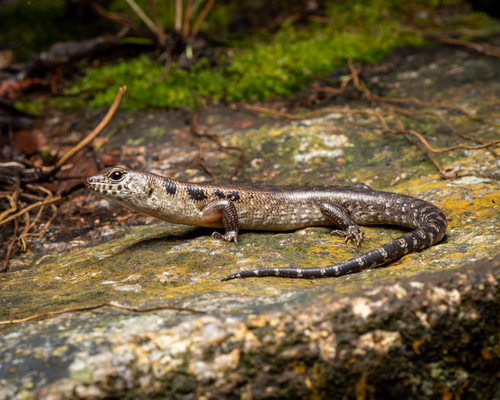
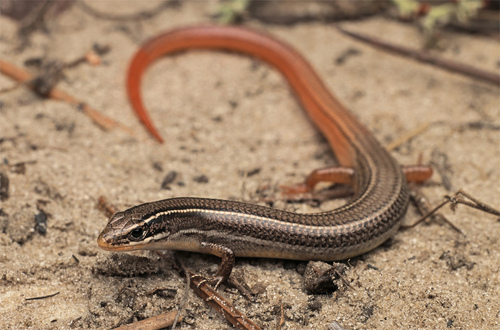
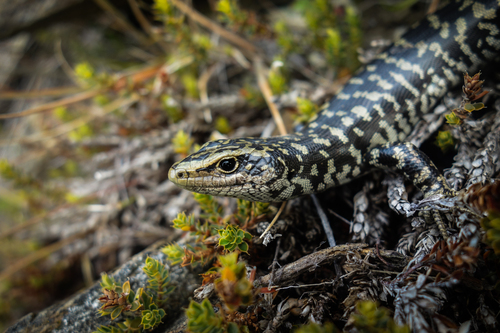
Otago skinks, scientifically named Oligosoma otagense (Mccann, 1955), are large relative to other New Zealand skinks, and can grow up to 12 inches (30 cm). Their bodies are marked with distinctive black, yellow, and green spots, which work as excellent camouflage in their rocky habitat of lichen-covered rocks and schist outcrops. Juveniles of this species have a more yellow base color with dark blotches, and shorter limbs. Like most skinks, Otago skinks are omnivores. They feed on a wide variety of insects, fleshy fruits, flower petals, and even other small reptiles. This species is long-lived: individuals reach around 16 years of age in the wild, and up to 40 years in captivity. They are slow to mature, reaching sexual maturity at 3–4 years old. Unlike many reptiles, Otago skinks are viviparous: embryos develop inside the mother’s body, and the mother gives birth to live young. Between one and three young are born between January and March each year. Otago skinks are only found in very specific locations in Otago, New Zealand. Most of the population lives in eastern Otago, between Macreas Flat and Sutton, usually at elevations up to 1,000 meters. There is also a smaller separate population in western Otago between Lake Hāwea and Lindis Pass. The combined total range of both populations is nearly 860 mi². While the two populations are morphologically similar, researchers have speculated whether they have undergone genetic divergence. A phylogeographic analysis found separation between their lineages, but that gene flow was still occurring in neighboring areas. This analysis suggested that the two regional populations should be assessed and treated separately for conservation. Although individual Otago skinks are occasionally found in surrounding tussock areas, the species is typically restricted to the large schist rock outcroppings of the region. They can often be seen sunning on these rocks to regulate their body temperature, and seek refuge in deep rock crevices when alarmed, at night, and on cold days. A 2001 estimate found that the Otago skink’s total range had decreased by roughly 90% over the previous 100 years. This decline is presumably driven by land use changes, particularly the intensification of farming, and the introduction of mammalian predators.