About Oligosoma moco (Duméril & Bibron, 1839)
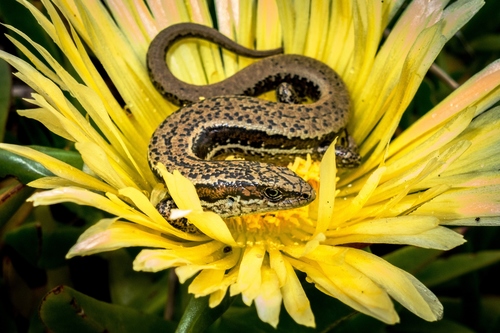
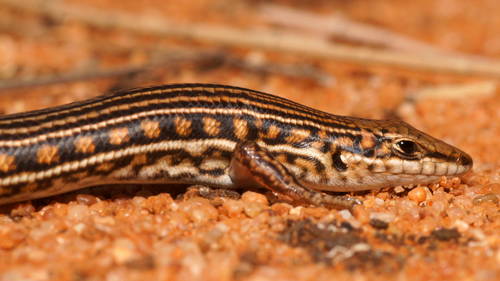
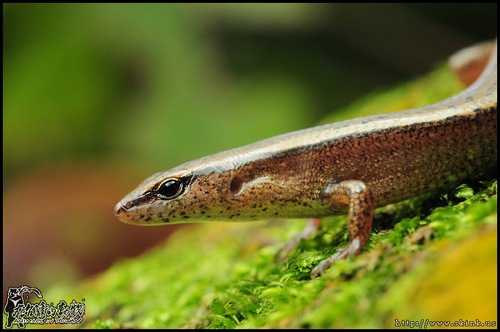
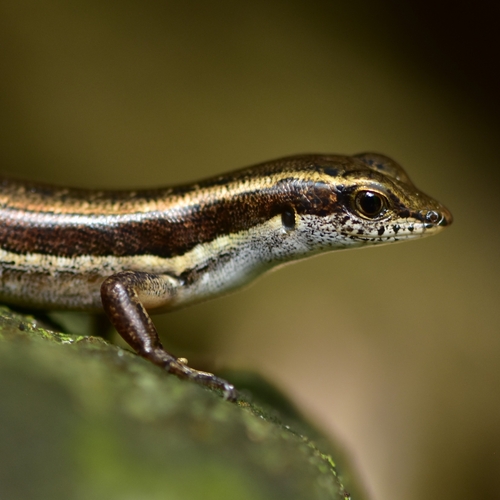
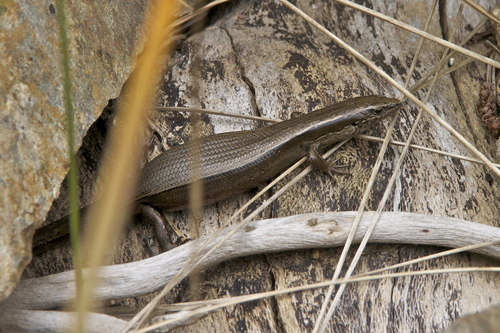
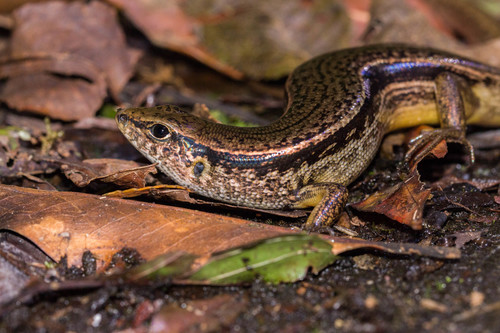
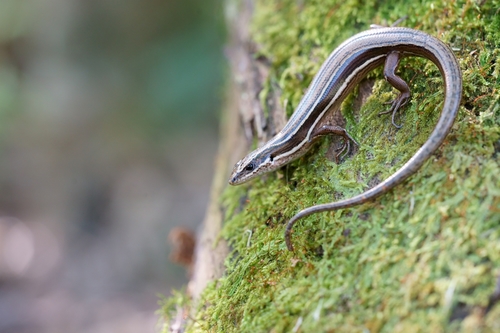
Oligosoma moco (Duméril & Bibron, 1839), commonly called the moko skink, has variable coloration and patterning. Its overall base color is coppery or olive brown, and it usually has an even-edged dark brown stripe running along its side, which is bordered by cream or white along both the top and bottom edges. Some individual skinks of this species are very dark. It has distinctive long toes and a long tail, reaching a maximum snout–vent length of 81 mm (3.2 in). The very long tail accounts for over half of the skink’s total body length. This species can be told apart from the undescribed Whirinaki skink, another member of the Oligosoma genus, because Whirinaki skinks have a distinct teardrop-shaped marking below their eyes. This species is endemic to New Zealand. It occurs across the northeastern region of the North Island, ranging between North Cape and the Bay of Plenty, and is most commonly found on numerous islands off the North Island’s east coast. To support conservation of the species, skinks were released into the Rotoroa Island sanctuary in 2015. Moko skinks typically inhabit coastal environments. They are primarily active during the day, and are often observed basking on warm rocks. They may also be found under logs and stones, and on clay banks. They feed on small insects, spiders, and other similar invertebrates, and frequently emerge from the edges of vegetation to hunt on beaches and open rocky areas. Like most native New Zealand skinks, the moko skink gives birth to live young instead of laying eggs. Litters of between two and six young are born between February and March each year.