About Oligocottus snyderi Greeley, 1898
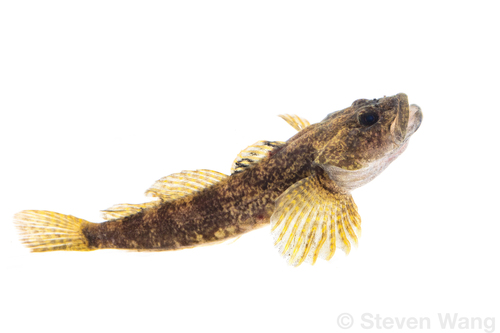
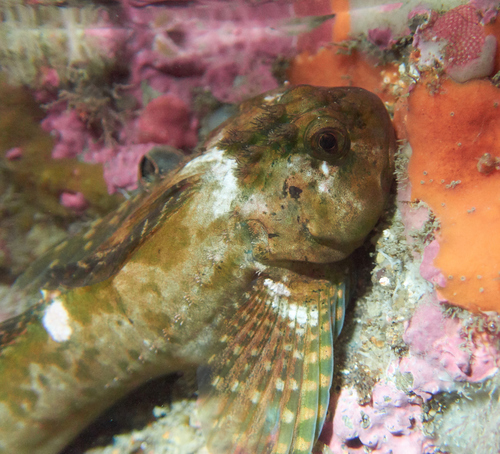
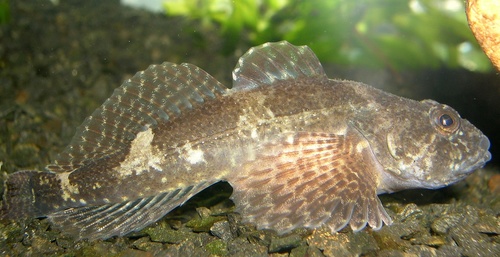
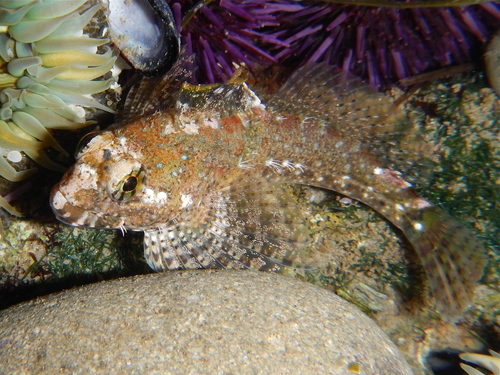
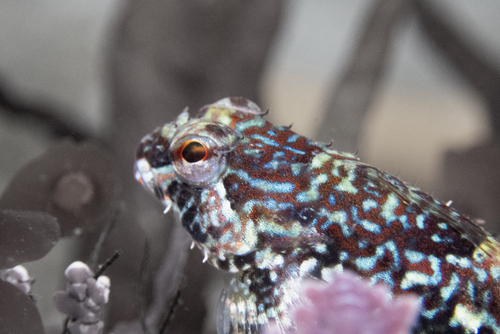
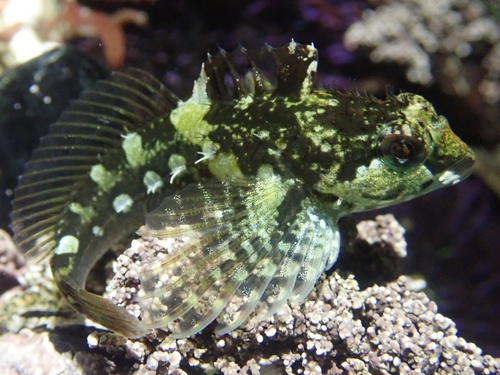
Oligocottus snyderi Greeley, 1898, commonly known as the fluffy sculpin, reaches a maximum length of approximately 9 centimeters (3.5 inches). Its dorsal fin contains 7 to 9 spines and 17 to 20 soft rays, while its anal fin has 12 to 15 soft rays and no spines. In males of this species, the first anal ray is enlarged, and the first three anal rays are separated from the rest of the anal fin rays. The body of the fluffy sculpin is smooth and does not have scales. It has a short spine on its snout with a cirrus next to this spine; it also has tufts of cirri on the top of its head, along its lateral line, and at the base of its dorsal fin. The body color of this fish is variable, and can range from green to pink or reddish-brown. The fluffy sculpin is native to the western coast of North America, and its native range stretches from Kodiak, Alaska to Baja California. It lives on rocky coasts, and occurs from the mid littoral zone down to the shallow subtidal zone. When the tide goes out, the species lives in rock pools on the lower shore. When the tide comes back in, it forages across a wider area. The fluffy sculpin shares most of its geographic range with the closely related tidepool sculpin (Oligocottus maculosus). The two species do not appear to compete directly for resources, because the fluffy sculpin prefers rock pools further down the beach, where the water stays cooler. Both species are able to return to their original home pool if they are displaced to a nearby location outside their immediate home range. The fluffy sculpin is a predator, and its diet is made up mostly of amphipods and polychaete worms. Larger fluffy sculpins also eat small shrimps and crabs. This species spawns in winter and spring. The male's first anal ray is prehensile, and is used as a clasper to hold onto the female during mating. Fertilization is internal; clusters of eggs are laid on rocks, and are guarded by the male. The larvae are planktonic and live in the open sea; metamorphosis into juvenile fish likely takes place during periods when nutrient-rich water upwells along the North American western coast. If conditions in the fluffy sculpin's tide pool become unfavorable at low tide, the fish can leave the water and breathe air. It is less tolerant of poor habitat conditions than the tidepool sculpin.