About Oestrus ovis Linnaeus, 1758
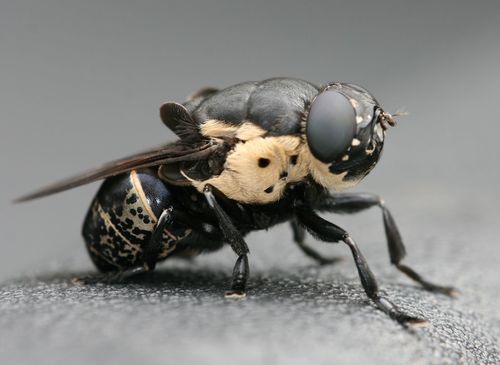
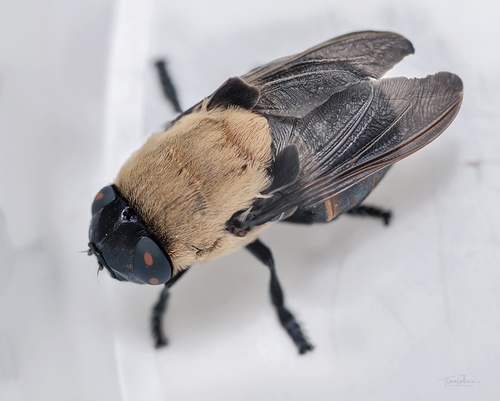
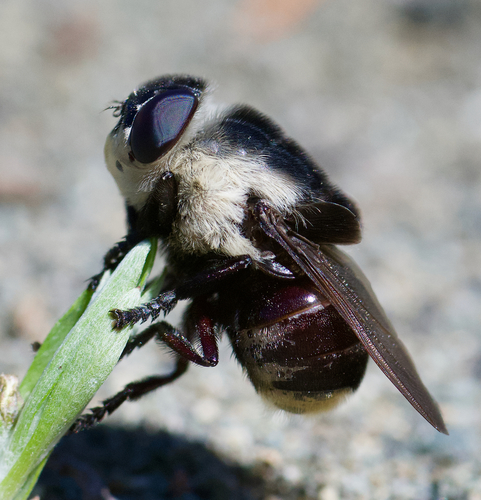
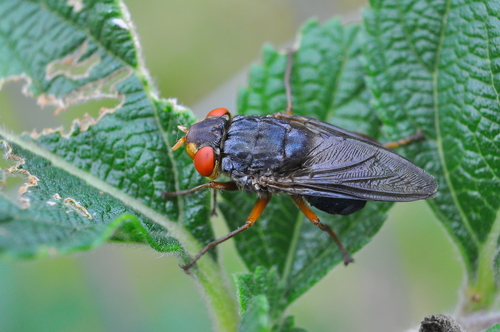
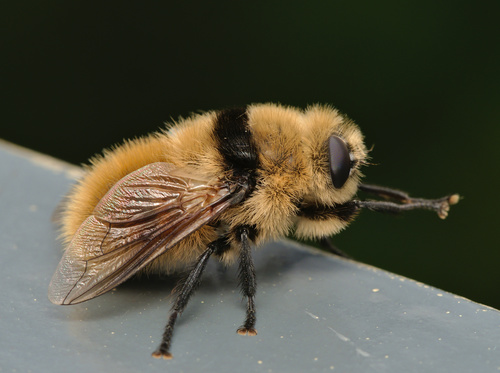
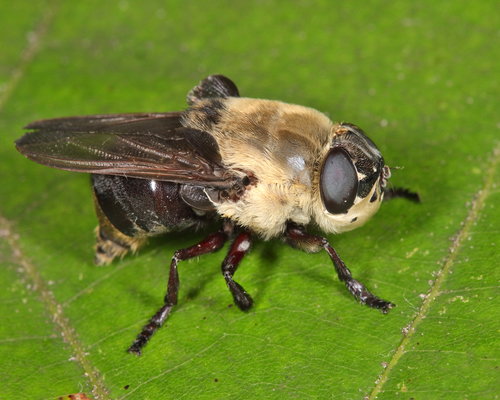
The adult Oestrus ovis is a bee-sized insect, measuring about 10 to 12 millimetres (3/8–½ inches) long. It is slightly hairy, with a banded dark grey body and dull yellow head and legs. This species is widely distributed across the world wherever sheep, deer, and goats live. Known regions where it occurs include North America, Central America, the area surrounding the Mediterranean Sea, the Middle East, Australia, Brazil, and South Africa. The incidence of Oestrus ovis in northern Europe has decreased in recent years. Sheep bot flies begin their life as eggs inside the female, which are fertilized and hatch into 1 mm larvae while still inside the female’s body. While in flight, the female then deposits a small number of larvae in a tiny mucous drop, directly into the nostril of a host animal. The larvae travel up the nasal passage along the mucosa and enter a nasal sinus. During this stage, they develop, grow, and moult into their second larval instar. They continue to develop until they reach up to 20mm (approximately 4/5 inch) in length, with a dark stripe across each body segment. When fully developed, the larva moves back down the nasal passage and drops to the ground, where it buries itself and pupates. The time it takes the larva to mature depends on the ambient temperature. It may take 25–35 days in warm weather, but can take up to 10 months in colder climates. The pupal stage lasts from 3–9 weeks to mature, again depending on climatic conditions. After pupal maturation, the adult fly burrows up to the surface, takes flight, and begins mating. Adults do not feed during their 2–4 week adult lifespan, though they may consume water.