About Oenothera macrocarpa Nutt.
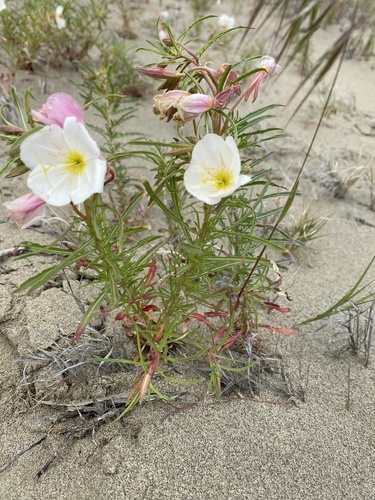
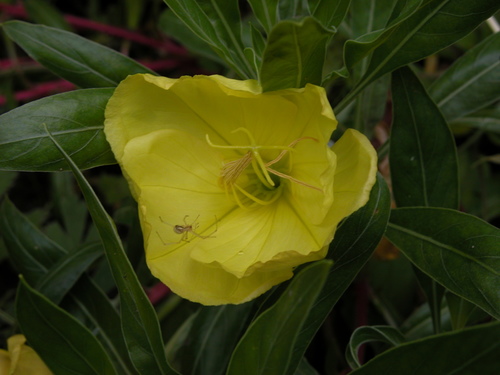
Oenothera macrocarpa Nutt. is a herbaceous perennial plant. It grows a red stem that can reach up to 46 cm (18 inches) in height, and the plant can sprawl along the ground to a length of up to 0.6 m (2 feet). Its long, narrow leaves measure around 15 cm (6 inches) long by 3 cm (1 inch) across, and are densely packed in an alternate arrangement along the stem. Leaves are hairy, and have either smooth margins or broadly spaced teeth. The plant produces large, canary yellow, cup-shaped flowers up to 13 cm (5 inches) across, which have four petals and a mild fragrance. Flowers bloom in great numbers from early to mid summer; each flower lasts only one day, opening in the evening and closing the following morning. Every flower has a very long floral tube, 10–11 cm (3.9–4.3 inches) in length. The seed pods of Oenothera macrocarpa are 4-winged and 52–75 mm (2–3 inches) long. This species is native to Arkansas, Illinois, Kansas, Missouri, Nebraska, Oklahoma, Tennessee, Texas, and northeast Mexico. Its natural habitats include limestone outcrops, glades, bluffs, rocky prairies, quarries, and roadsides. The flowers of Oenothera macrocarpa are pollinated by night-flying moths, including sphinx moths of the family Sphingidae. The seed pods of this plant are often used in cut flower arrangements. It is also cultivated in gardens for its flowers, and is suitable for use as a groundcover in full sun, growing in poor, stony soil that does not become waterlogged in winter. This plant has received the Royal Horticultural Society's Award of Garden Merit.