About Oenothera biennis L.
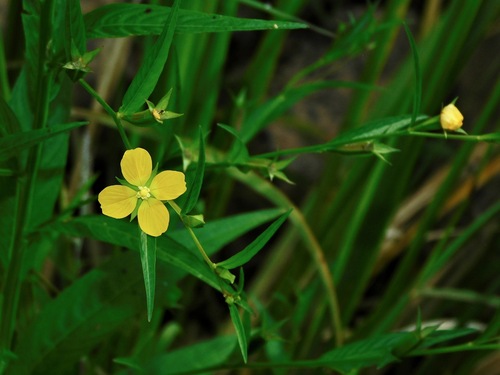
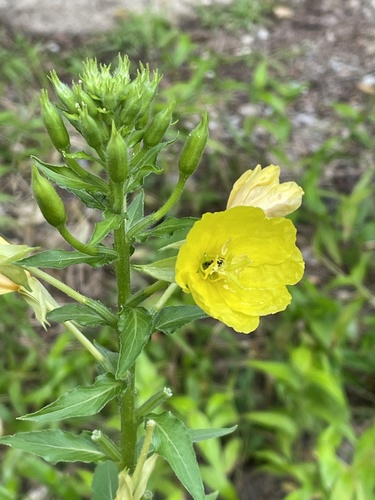
Oenothera biennis L. is most commonly a biennial species, reaching 1.6 m (5 ft 3 in) tall in its seeding year. Its lanceolate leaves measure 8–18 cm (3–7 in) long and 2–6 cm (3⁄4–2+1⁄4 in) wide: they form a tight rosette in the plant’s first year, then grow spirally along the stem in the second year. Documented annual life cycle variants of this species also exist, and these variants have been selectively bred under experimental conditions in low-competition environments. Oenothera biennis is a weedy species that prefers disturbed habitats. It has been introduced and naturalized on every continent except Antarctica. The plant’s seeds are an important food source for birds, including the American goldfinch, Northern bobwhite, and mourning dove. It acts as a larval host plant for both the primrose moth and the white-lined sphinx moth; bumblebees and honeybees also visit its flowers. The primrose moth Schinia florida is a common consumer of Oenothera biennis: adult moths lay their eggs on the plant’s flowers, and newly hatched caterpillars feed on the plant. O. biennis seeds can stay viable in the soil seed bank for 70 years or longer. Evening primrose oil extracted from this species is considered likely safe when used at recommended doses. It may raise the risk of bleeding, which is a particular concern for people with bleeding disorders or those taking medications that increase bleeding risk. The Mayo Clinic advises caution for people with seizure disorders or mania, as well as for pregnant or breastfeeding women, and has published a long list of potential side effects. Oral use of evening primrose oil may cause headaches or nausea. Over centuries, North American Indigenous peoples have used this plant as both food and traditional medicine. Evening primrose was introduced to Europe in the early 17th century as an ornamental plant for botanical gardens, where pollinators such as bees favor its flowers for nectar, and birds eat its seeds. Most parts of Oenothera biennis are edible, with a mild flavor. The roots can be eaten raw or cooked, similar to potatoes. Leaves can be eaten raw in salads, or cooked like spinach or added to soups. Anishinaabe tribes traditionally make tea from the plant’s leaves to use as a dietary aid and to reduce fatigue. Young flowering stems harvested in June are the preferred part: after peeling, they can be eaten raw or fried. Flower buds are considered a delicacy, and can be harvested from June to October. Oenothera biennis seeds contain approximately 15% protein, 24% oil, and 43% cellulose. The seed protein is particularly high in the sulfur-containing amino acids methionine and cysteine, plus tryptophan. The seed oil contains gamma-linolenic acid (GLA) and linoleic acid. Primarily for these polyunsaturated fatty acids, evening primrose oil is sold as a dietary supplement. For traditional medicine, Anishinaabe tribes boil the whole plant, especially the leaves, into tea to use as an energy stimulant and to support weight loss. These tribes also use the plant’s roots externally as a poultice to treat hemorrhoids and boils. Additionally, roots may be chewed and rubbed onto muscles to improve strength.