About Oenothera avita (W.M.Klein) W.M.Klein
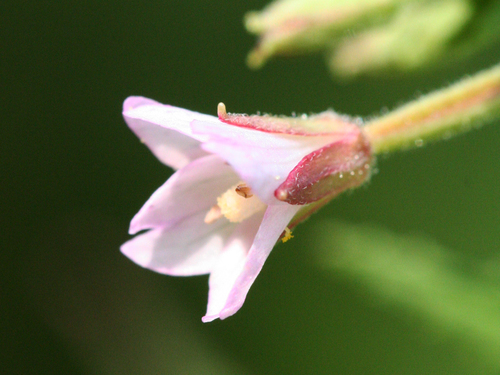
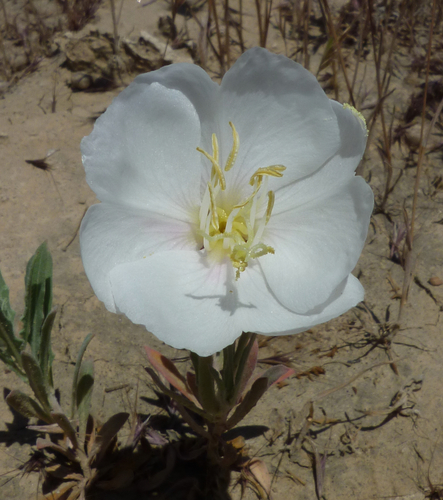
Oenothera avita, commonly called California evening primrose, is a perennial herb. It produces a spreading or upright stem that grows 10 to 80 centimeters (4 to 31 inches) long. Most forms of this species have non-fleshy roots, and produce new rosettes from spreading side roots. However, the subspecies known as Eureka Dunes evening primrose has fleshy roots, and grows new shoots from buried stems. Young Oenothera avita plants develop a basal rosette of leaves, while older plants produce leaves along their stems. These leaves are lance-shaped to nearly oval, and reach up to 6 centimeters in length. Flowers grow from the upper leaf axils; they droop while in bud, and become erect once they bloom. Each flower has four white petals that fade to pink as they age, and the petals may grow longer than 3 centimeters. This species is native to four U.S. states: Arizona, California, Nevada, and Utah, as well as Baja California, Mexico. In Utah, it grows in the southwest portion of the state, and it grows in southern Nevada similarly. In Arizona it is found in the western part of the state, and in California it occurs in Southern California. It only extends across the U.S.-Mexico border into the northern parts of Baja California. It grows in open habitats, most commonly in rocky or sandy soils, and can also grow in disturbed areas. It is associated with creosote bush scrub, pinyon-juniper woodlands, and oak communities.