About Oena capensis (Linnaeus, 1766)
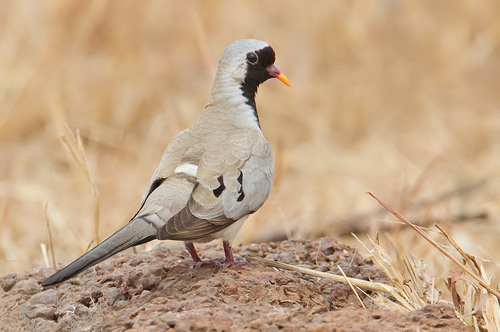
The Namaqua dove (Oena capensis) is a small pigeon that is roughly sparrow-sized. It typically reaches 22 cm in total length, has a wingspan of 28 to 33 cm, and weighs around 40 grams. This species has a very long, tapered black tail, and its overall size and shape are often compared to that of a budgerigar. Most of its plumage is grey, with the exception of a white belly and chestnut primary feathers that are visible when the bird is in flight. Adult males have a yellow and red beak, and a black face, throat, and breast. Adult females do not have the black markings found on males, and have a grey bill with a red base. Juvenile birds have dark blotched patterns on their wings and shoulders, and otherwise look similar to adult females. The song of the Namaqua dove is a quiet, short double hoo, with the longer second note pitched higher; it is described as mournful and is frequently repeated, transcribed as kuh-whooo.
The Namaqua dove is a widespread resident breeding bird found across Sub-Saharan Africa and Madagascar, and its range extends into the Arabian Peninsula to southern Israel and Jordan. It inhabits near-desert areas that contain acacia and bushes. This species is prone to wandering outside of its original range, and has now been recorded in several South Asian countries. A 2016 sighting of the species was recorded on 14 October near shore waters off Paradise Point, Karachi, Pakistan. In India, the species has been observed multiple times near Nalsarovar Bird Sanctuary.