About Oedipoda caerulescens (Linnaeus, 1758)
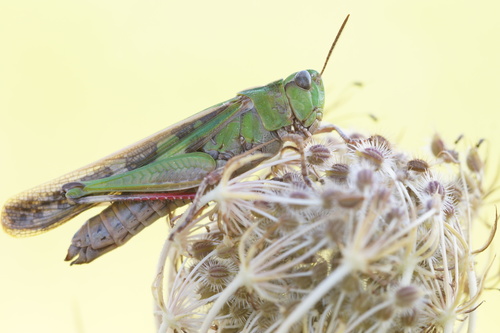
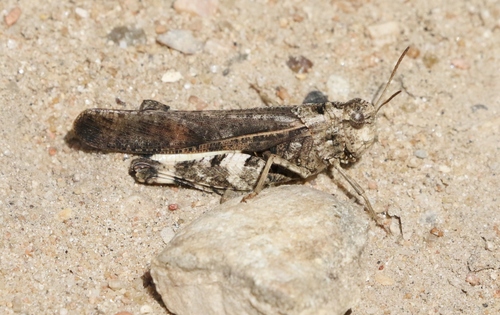
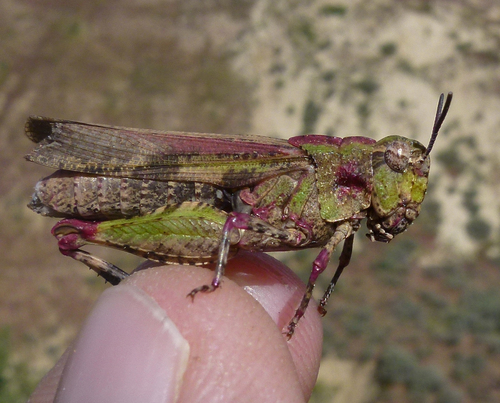
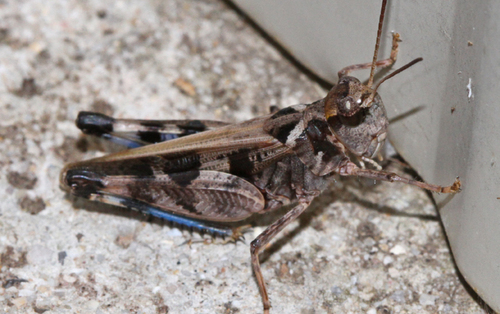
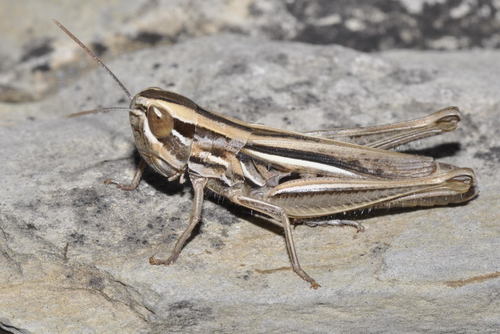
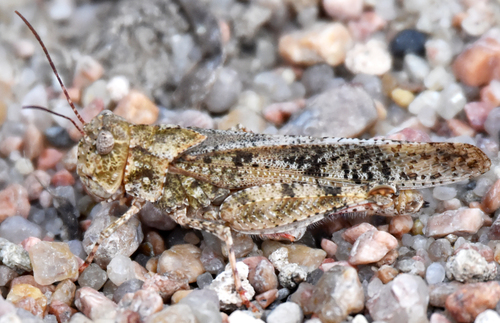
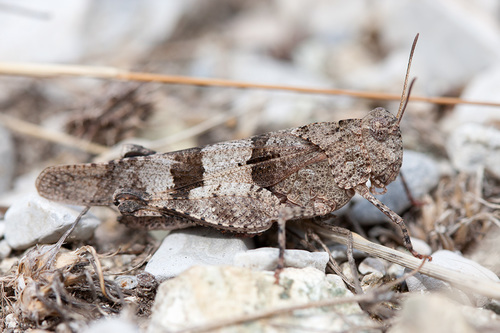
Oedipoda caerulescens (Linnaeus, 1758) is a medium-sized grasshopper. Males measure between 15 and 21 mm in length, while females measure between 22 and 28 mm. Body color varies dramatically based on the substrate the grasshoppers developed on, and can range from reddish brown, gray, or yellowish to entirely dark or bright. Most individuals have two or three pale bands crossing their forewings. The most striking feature, easily visible when the insect flies away, is the bright turquoise color of the hind wings, marked with a black marginal stripe. The upper surface of the posterior femora has a notch. When at rest, this species can be confused with other Oedipoda species like O. germanica. This species is distributed across Europe, North Africa, and Asia, and was recently rediscovered in the Maltese islands. Oedipoda caerulescens inhabits dry areas with low, open vegetation, including dunes, heathlands, sand grasslands, and sunlit limestone rocks. Many of its habitats are located on land that has recently been used for human activity, such as coal spoil heaps, quarries and pits, and railway track ballast. This is an exclusively terrestrial insect, and its cryptic coloration usually matches the substrate it lives on. It presses itself against the ground and stays motionless, only jumping when danger approaches very closely. A notable behavior is the "hook" landing, which evolved to confuse potential attackers. When this grasshopper lands, it swings around to face the direction it came from. The sudden disappearance of the adult's bright blue hind wings makes it hard for predators to quickly adjust their search strategy to relocate the prey. Females lay their eggs in bare, dry soil. This species produces almost no acoustic sounds. Its diet consists mainly of grasses.