About Oedignathus inermis (Stimpson, 1860)
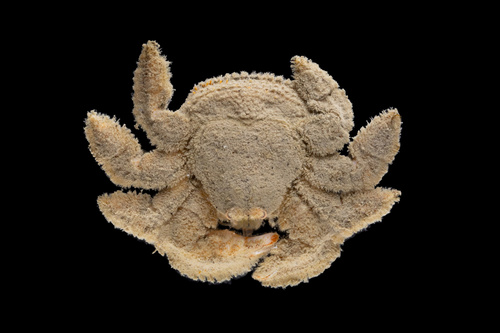
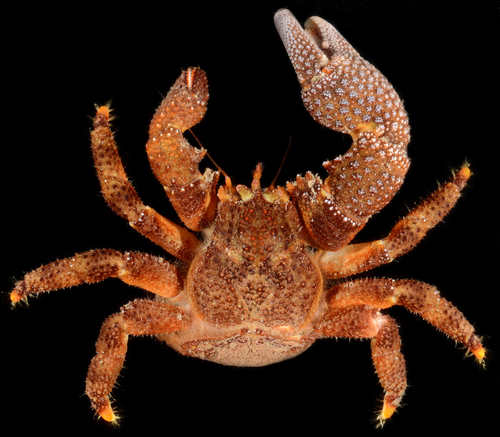
Oedignathus inermis, also called Oedignathus inermis (Stimpson, 1860), can be told apart from other king crabs in the subfamily Hapalogastrinae by specific features. Its chelipeds are only slightly flattened, and both its chelipeds and legs have many tubercles, along with few spines and little setae. In comparison, other genera in this group have flattened chelipeds covered in setae, and legs that bear several large spines. In terms of ecology, O. inermis lives in pairs underneath encrusting purplish coralline algae that grow on rocks around the low tide mark. This species can be found at depths ranging from 0 to 45 metres (0 to 150 ft). When it occurs in the littoral zone, O. inermis is associated with mussel beds, though it spends more of its time in the sublittoral zone. Larvae of O. inermis are released in January and February, which happens at a similar time of year to larval release in other hermit crabs. This timing may line up with seasonal plankton blooms, which provide food for the larvae. O. inermis is eaten by birds such as the American black oystercatcher.