About Oedemera lurida (Marsham, 1802)
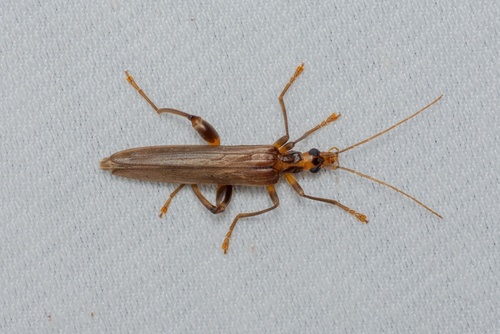
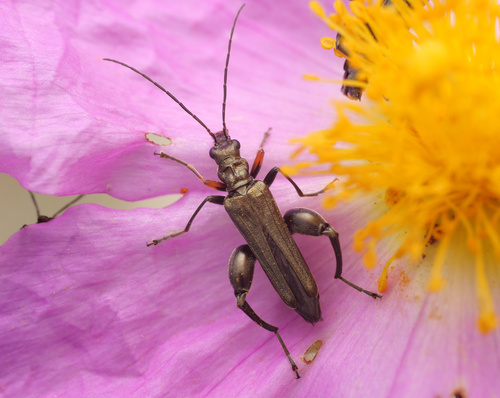
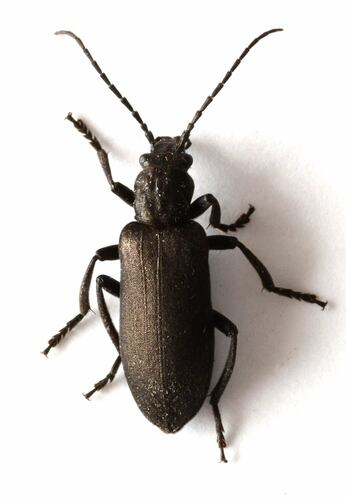
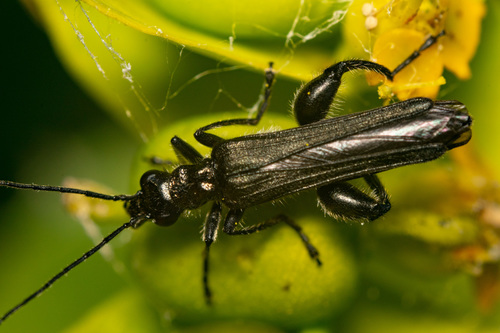
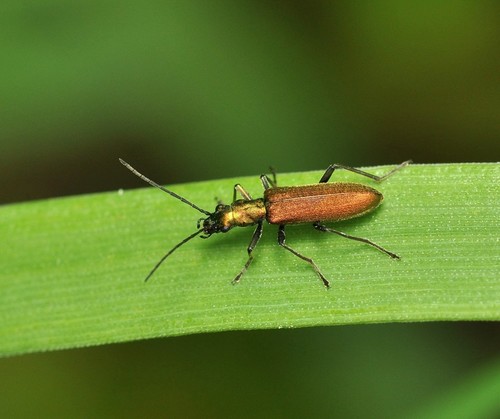
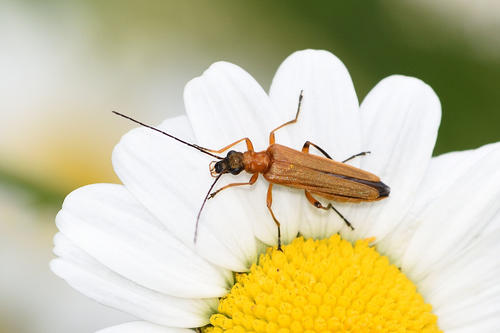
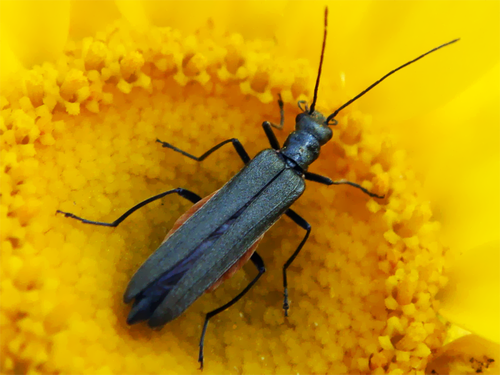
Oedemera lurida reaches a length of approximately 5–7 millimetres (0.20–0.28 in). The body of these beetles can be metallic pale-green, gray-green, or brownish. Unlike most males of other Oedemera species, males of this species do not have thickened hind femora. Their elytra are narrow and covered in dense gray hairs. The antennae are eleven-segmented and covered in fine short hairs. This species is part of a three-species group called the Oedemera-lurida-complex. Members of this complex are very difficult to tell apart, because they can only be separated by subtle physical characteristics. To identify these beetles correctly, they usually need to be dissected and examined under a microscope. On average, Oedemera lurida is smaller than Oedemera virescens, but size is not normally used to distinguish between these two species. The larvae of this species develop in rotten wood or humus. They feed on the stems of herbaceous plants as well as rotten wood. Adult beetles feed on pollen and nectar from many different types of flowers, particularly umbels, Taraxacum flowers, Ranunculus flowers, and hawthorns. Adults can most commonly be found from April to July. This beetle species occurs across most of Europe, North Africa, and the Near East. It inhabits forests, forest edges, clearings, meadows, and fields.