About Ocypode cursor (Linnaeus, 1758)
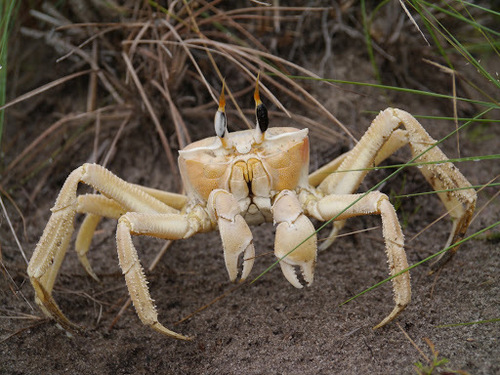
Ocypode cursor (Linnaeus, 1758) can reach a carapace width of 55 millimetres (2.2 inches). It can be distinguished from Ocypode ceratophthalma and other species in the Ocypode genus by a tuft of bristle-like setae extending from the tips of its eyestalks.
This species has a disjunct distribution: it is found in the eastern Mediterranean Sea and tropical parts of the eastern Atlantic Ocean, but not in the western Mediterranean Sea that connects these two regions. Researchers hypothesize that O. cursor entered the Mediterranean Sea during a warm period, then became restricted to the warmer eastern Mediterranean after a subsequent cooler period, which isolated the two populations. This distribution pattern is also seen in the sea snail Charonia variegata and the sea anemone Telmatactis cricoides. The species' range is apparently expanding within the Mediterranean, and it is likely that the two populations will reconnect in the future. In the Atlantic Ocean, O. cursor's range extends as far south as northern Namibia, and does not reach South Africa.
In West Africa and the eastern Mediterranean, Ocypode cursor prefers to inhabit sandy beaches, where it digs burrows near the high-tide mark, and sometimes lives entirely above the intertidal zone. The water content of the sand is the key factor that determines the distribution of these crabs' burrows. It is less tolerant of extreme salinity and temperature than the fiddler crab Uca tangeri, but can still extend some distance into brackish waters. O. cursor is a predator, and frequently feeds on sea turtle eggs. In the Mediterranean Sea, where tidal range is negligible, O. cursor burrows start within 3 metres (10 ft) of the sea, with larger crabs located further from the water's edge.