About Octopus insularis Leite & Haimovici, 2008
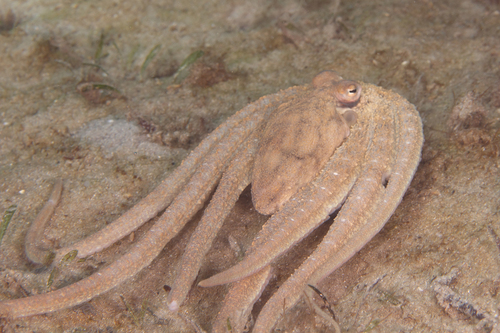
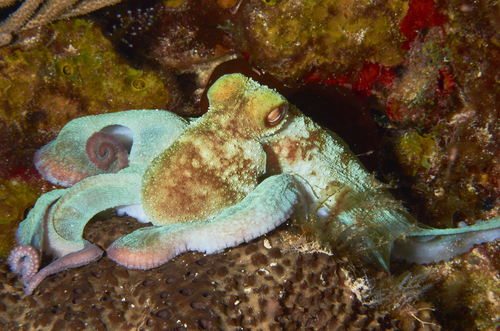
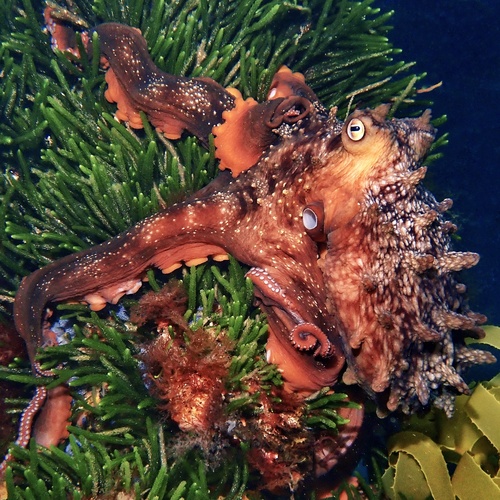
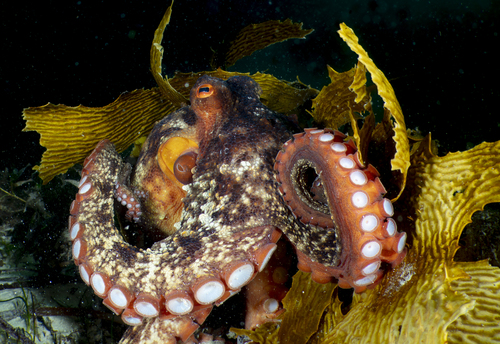
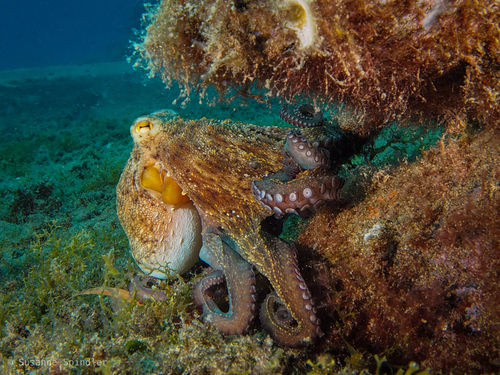
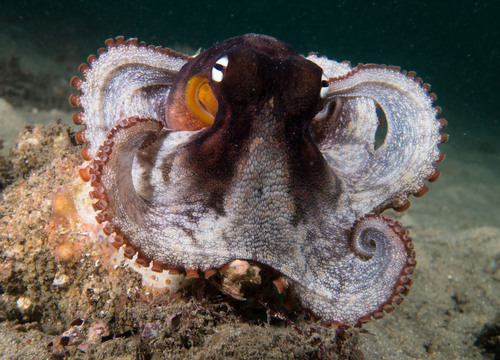
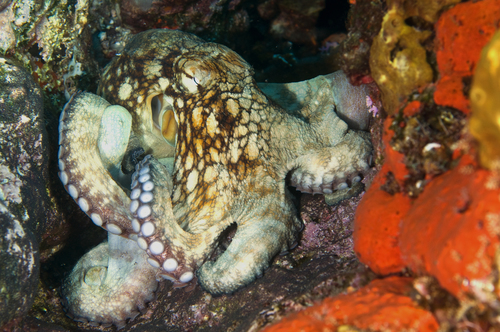
Octopus insularis, first formally described by Leite & Haimovici in 2008, is a medium-sized octopus with a red-brown body color and proportionately compact arms. This species was not recognized as separate from the common octopus Octopus vulgaris until 2008, and multiple physiological differences between the two species have now been recorded. Compared to O. vulgaris, O. insularis has relatively shorter arms, a deeper inter-arm web, fewer suckers on its hectocotylus, a stronger beak, smaller spermatophores, and reaches sexual maturity at a smaller body size. This species is known to occur off the coasts of Brazil and in the Gulf of Mexico, with verified occurrence records as far north as Florida; multiple publications about the species are currently in preparation. Its specific epithet insularis refers to its insular distribution, as it was first found near islands including Fernando de Noronha, Saint Peter, and Saint Paul. O. insularis inhabits shallow waters across a wide range of habitat types: rocky, muddy, or sandy sea bottoms; sandstone, coral, or flat biogenic reefs; algae patches; tide pools; and intertidal rocky beds. Spawning for this species occurs during the winter months, and individuals follow annual growth and maturation cycles. While gonadal development of O. insularis is similar to that of O. vulgaris, the species differs by having relatively smaller gonads, lower fecundity, year-round production and release of spermatophores, and group-synchronous ovulation. These reproductive differences are thought to be linked to O. insularis' shorter lifespan and the lower variation in its local environmental conditions.