About Ochropacha duplaris Linnaeus, 1761
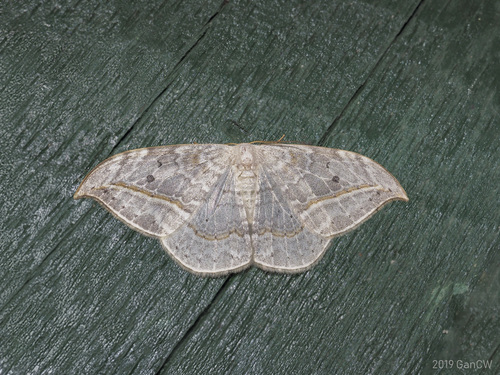
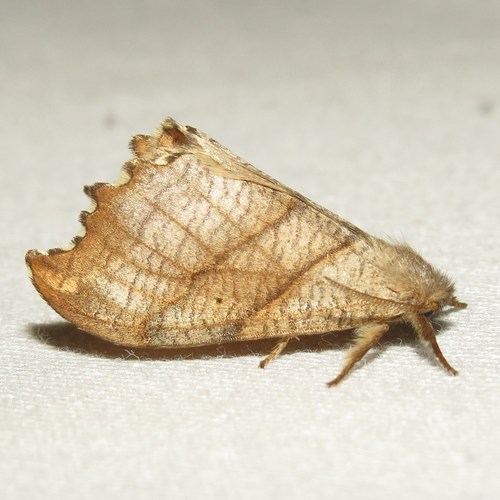
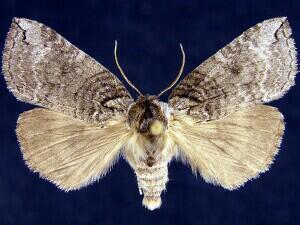
Ochropacha is a monotypic moth genus (meaning it contains only one species) in the family Drepanidae. It was first described by Hans Daniel Johan Wallengren in 1871. Its only species is Ochropacha duplaris, commonly known as the common lutestring, which was first described by Carl Linnaeus in 1761. This species is found in Jilin (China), Russia, Japan, the Korean Peninsula, and across the region ranging from Central Asia to Europe. The wingspan of adult common lutestring moths measures 27 to 32 mm. It resembles Tetheella fluctuosa, but can be distinguished by several traits: its forewings usually have less distinct whitish lines, its central band is typically dark-striated toward the edges, it has two black discal dots placed transversely, it lacks a praesubterminal dash, and it has a dark fuscous oblique apical dash. The larva is pale dull greenish, darker along its dorsal side, with a darker dorsal line, broad dull olive-green subdorsal markings, a yellowish lateral line, black dots, and a reddish head. Adult moths fly from June to August, with the timing varying by location. Larvae of Ochropacha duplaris feed on birch.