About Ochrogaster lunifer Herrich-Schäffer, 1855
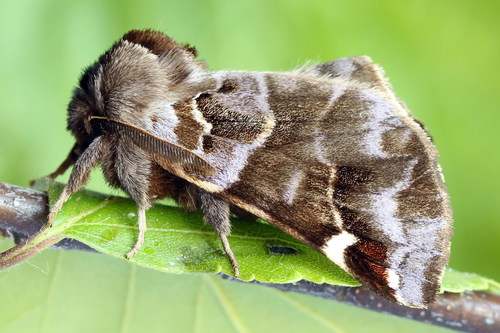
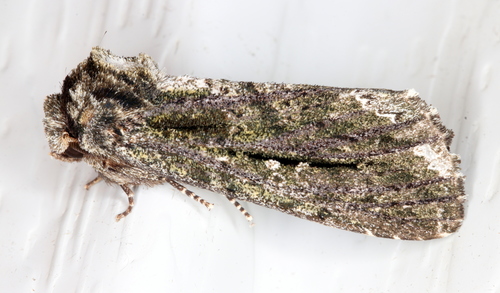
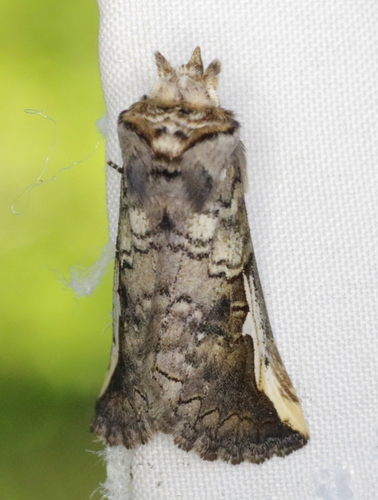
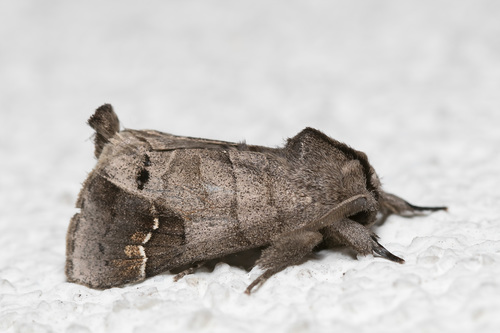
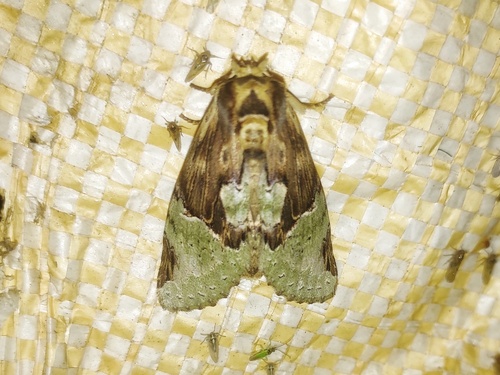
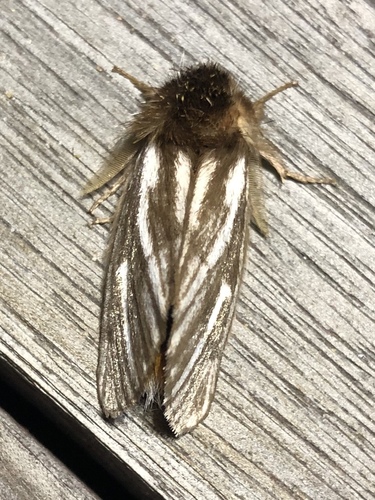
Ochrogaster lunifer, commonly known as the bag-shelter moth or processionary caterpillar, is a member of the moth family Notodontidae. This species was first described by Gottlieb August Wilhelm Herrich-Schäffer in 1855. Both larval and adult forms of this species have irritating hairs that trigger urticaria (skin irritation). Adult moths have a woolly appearance, with a wingspan reaching approximately 5.5 centimeters across. Forewings are dark grey or brown, while hindwings are white that shades to grey near the base. Some individuals have a pale dot in the center of each forewing, and some have white lines across the wings. Their abdomen is banded, ending in a white tuft of hairs. Larvae feed at night, primarily on acacia (wattle) trees and Grevillea striata (beefwood), and shelter together during the day inside communal brown silken bag nests. These nests are made from silk, excrement, shed caterpillar skins, and other debris. They can be located at the end of a branch shoot, high on the host tree trunk, or on the ground at the base of the food plant. When caterpillars completely defoliate their current food tree, they migrate in search of a new tree, leaving a silk trail behind them. When an O. lunifer caterpillar encounters one of these trails, it will follow it, especially if the trail carries an associated pheromone scent. Processions can contain one hundred or more caterpillars moving head-to-tail, staying connected through contact with the tail hairs of the caterpillar ahead. If disturbed, the group curls into a tight defensive bunch. If two caterpillars each find and follow the other's silk trail, they will circle endlessly; if an entire group does this, they can form a circular mass. When mature, caterpillars travel away from their food plant to pupate, again leaving a silk trail as they move. Pupae develop hidden inside silk cocoons under the ground. The variable appearance of adult moths and differing nesting habits suggest that what is currently classified as Ochrogaster lunifer may actually include two or more distinct species across Australia. This moth species is found throughout mainland Australia. All life stages of O. lunifer – egg masses, larvae, and adults – carry urticating (irritating) scales or hairs that are harmful to humans and other animals. Records of adverse health effects on humans and livestock from bag-shelter moth nests and caterpillars date back to the early 1900s, when the species was recorded under the synonym Teara contraria. O. lunifer caterpillars are covered in small harmful hairs called true setae, which cause an irritating dermatitis when they contact human skin. More severe effects including osteomyelitis, ophthalmia, and serious allergic reactions have also been recorded, under the synonym Ochrogaster contraria Walker. In pregnant horses, ingesting O. lunifer caterpillars can cause abortions, a condition known as equine amnionitis and foetal loss (EAFL). True setae dislodge easily from caterpillars when mechanically disturbed, and can then spread into the surrounding environment; dislodged setae may even be carried long distances by wind. The main sources of these urticating setae are communal caterpillar nests, which accumulate setae along with cast skins and frass over months, and dispersing caterpillars that form processions in autumn. Caterpillars also naturally shed some setae during feeding and daily activity. Adult female moths have a large tuft of urticating scales at the tip of their abdomen; contact with these scales causes an itchy rash. When a female lays her egg batch on a host tree, she covers the eggs with scales from her abdominal tuft to protect the eggs from predators.