About Ochotona princeps (Richardson, 1828)
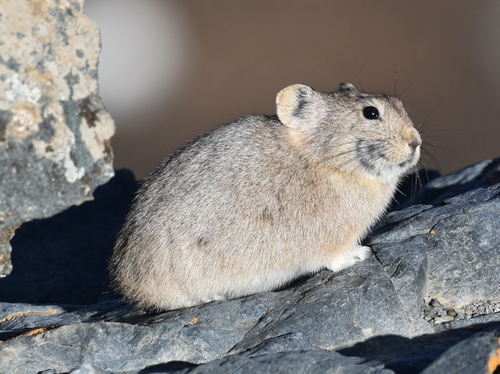
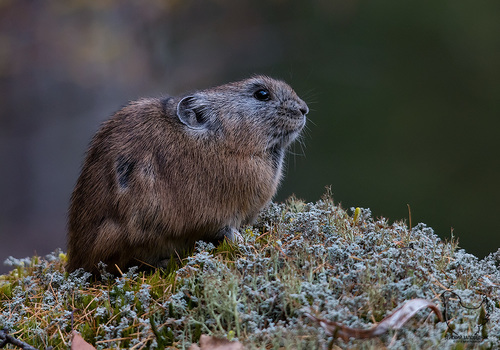
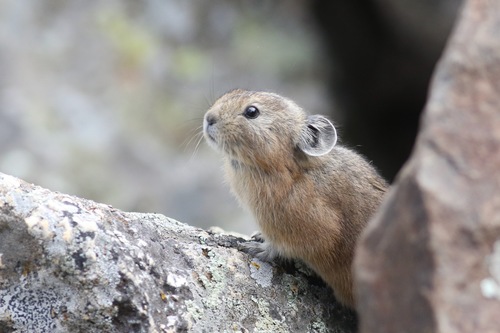
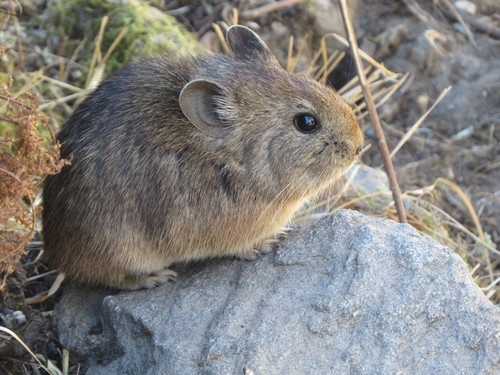
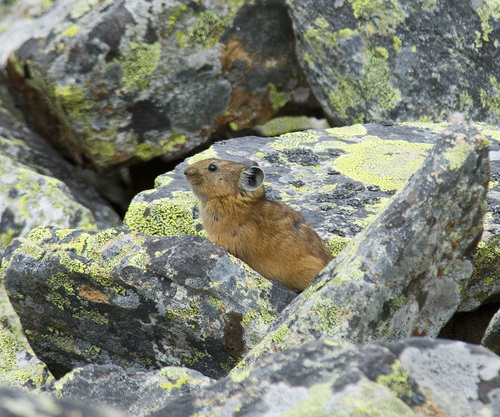
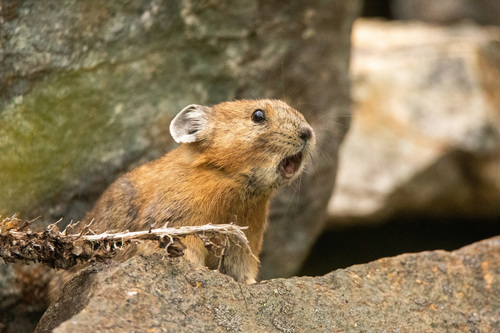
American pikas, historically known as "little chief hares", are small, rounded mammals with compact, oval bodies adapted for life in cold alpine environments. Adults typically measure 16.2 cm (6.4 in) to 21.6 cm (8.5 in) in length, with hind feet ranging from 2.5 cm (0.98 in) to 3.5 cm (1.38 in). They usually weigh between 121 g and 176 g (4.3–6.2 oz), and body size varies across different populations and regions. In many populations that show sexual dimorphism, males tend to be slightly larger than females. The American pika falls at an intermediate size among all pika species. Its key features include nearly round ears, densely furred feet with black toe pads, and a thick undercoat that provides insulation during winter. Dense fur covering its entire body insulates against cold temperatures, making the species well adapted to high-elevation habitats. Its hind legs are only slightly longer than its forelegs, which gives the animal a low stance typical of pikas, and its hind feet are relatively short compared to most other lagomorphs. The soles of the feet are densely furred, except for the black pads at the ends of the toes. The ears are moderately large, rounded, covered in fur on both surfaces, and are typically dark with white margins. Compared to most other lagomorphs, this species has a relatively longer "buried" tail: the tail is so short and densely covered with fur that it appears hidden within the animal's body fur instead of projecting outward. This adaptation is thought to provide extra insulation and protection from cold alpine winds. The skull of the American pika is slightly rounded, with a broad and flat preorbital region that distinguishes it from related species. The cranium is relatively compact, adapted to support a strong bite force useful for cutting alpine vegetation. The zygomatic arches are well developed to anchor large masseter muscles, and the maxillae hold a single large fenestration that aids in chewing coarse plant material. Fur coloration is identical in both sexes, but varies by subspecies and season. Dorsal fur ranges from grayish to cinnamon-brown, and often has tawny or ochraceous tones in summer. In winter, the fur becomes grayer and longer; the dense underfur is slate-gray or lead-colored, and the ventral fur is whitish. Like rabbits, male American pikas are called "bucks" and females are called "does".
American pikas are found across the mountainous regions of western North America, ranging from central British Columbia and Alberta in Canada to the U.S. states of Oregon, Washington, Idaho, Montana, Wyoming, Colorado, Utah, Nevada, California, and New Mexico. Out of approximately 30 existing pika species, only two are native to North America: the American pika and the collared pika (O. collaris). The collared pika occurs further north, and an approximately 800 km (500 mi) gap across British Columbia and Alberta separates its distribution from that of the American pika. American pikas primarily inhabit scree and talus fields, often surrounded by alpine vegetation, and also occupy piles of broken rock. They occasionally use human-created substrates such as mine tailings or scrap lumber piles. Pikas typically build dens and nests below rock surfaces, usually within gaps 20–100 centimetres (8–39 in) in diameter, but they often perch on larger, more prominent rocks. They are commonly found near or above the tree line in cool, moist microhabitats such as high peaks or along watercourses. The species is highly sensitive to heat stress and cannot tolerate high diurnal temperatures. In the northern parts of its range, the species occurs from near sea level up to around 3,000 m (9,800 ft), while in southern regions such as California and New Mexico, it is rarely found below 2,500 m (8,200 ft). While American pikas do not dig extensive burrows, they may widen existing crevices in talus to create shelter.
Adult males and females with adjacent territories form mated pairs. When multiple males are present, females exercise mate choice. The species is a reflex ovulator — ovulation only occurs after copulation — and is also seasonally polyestrous. Females typically produce two litters per year, with each litter averaging three young. Breeding begins roughly one month before snowmelt, and gestation lasts around 30 days. Parturition occurs as early as March at lower elevations, and between April and June at higher elevations. Lactation greatly depletes a female's fat reserves, so even though females experience postpartum estrus, they only raise a second litter if their first litter does not survive. Pikas are born altricial: they are blind, lightly furred, and have fully erupted teeth at birth. Newborns weigh between 10 and 12 g (0.35 and 0.42 oz). Their eyes open at around nine days of age. Mothers spend most of the day foraging and return to the nest roughly every two hours to nurse their young. Juveniles become independent after about four weeks, which coincides with weaning. Young pikas may stay within their natal range or move to adjoining territories, generally avoiding areas occupied by relatives. Dispersal is primarily driven by competition for territories.