About Ochotona dauurica (Pallas, 1776)
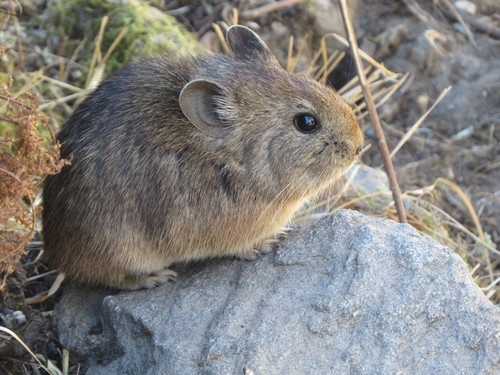
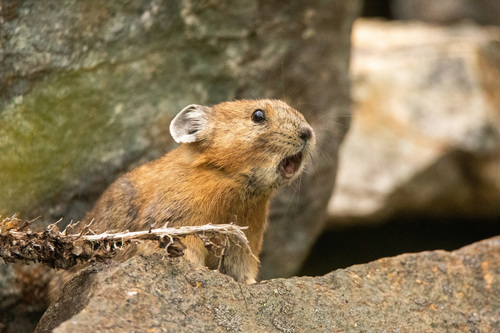
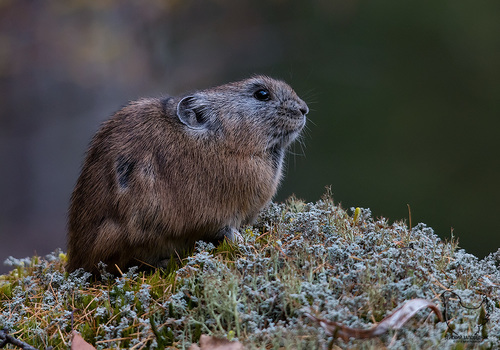
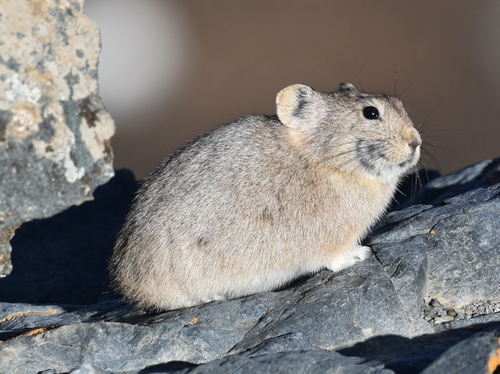
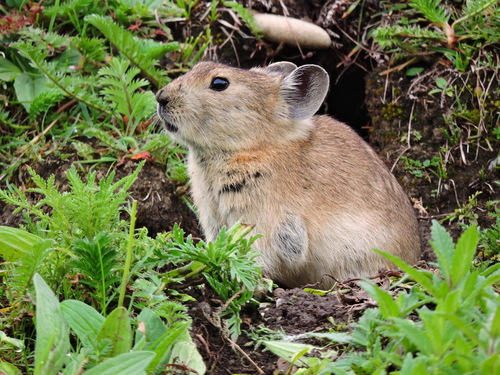
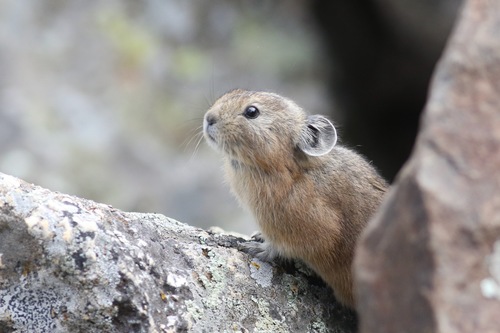
The Daurian pika, with the scientific name Ochotona dauurica (Pallas, 1776), is a small relative of rabbits and hares in the order Lagomorpha. It is well known for its "barking" alarm call, and for its unusual habit of making hay to help survive the winter. Four subspecies are currently recognized: Ochotona dauurica annectens, O. d. bedfordi, O. d. dauurica, and O. d. mursavi. Like other lagomorphs, Daurian pikas are characterized by a secondary set of incisor teeth. They are sexually monomorphic, and have thick reddish coats. Pikas of this species have no external tail, and their ears are large and rounded. The auditory bullae, a feature of the Daurian pika skull, are small compared to the auditory bullae of many other pika species. This small size is thought to be connected to the species' preference for fairly low altitude habitats. Daurian pikas are considered a keystone species within their native range. Daurian pikas are found across Mongolia, southern Russia, Manchuria, and several provinces of China. They inhabit mountainous regions at altitudes from 400 to 4,000 meters above sea level. They occupy desert grasslands, an environment that allows them to burrow during winter, find fresh grass for food, and collect herbaceous vegetation to store for the winter. They sometimes share burrows with Campbell's dwarf hamster, and this behavior only occurs in the steppes and semi-deserts of northern Manchuria. Daurian pikas have been observed sharing burrows with multiple other mammal species. They occasionally "visit" the burrows of Altai marmots and Mongolian pikas. In turn, the burrows of Daurian pikas are visited by ground squirrels, and sometimes by burrowing birds. Due to low competition and low predation rates, winter is the limiting factor for Daurian pika populations.