About Oceanodroma furcata (Gmelin, 1789)
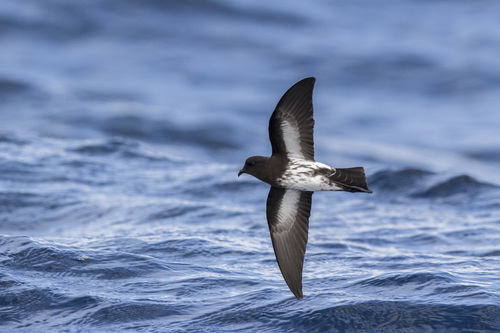
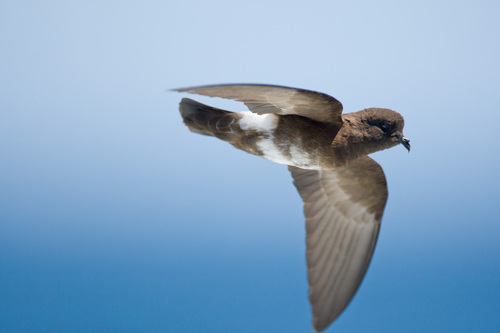
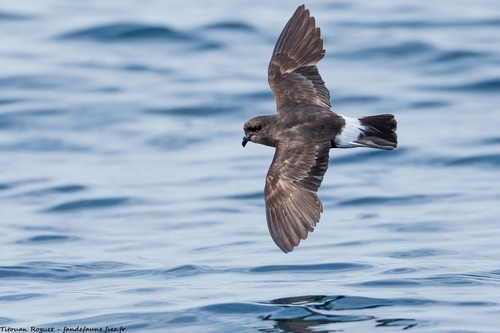
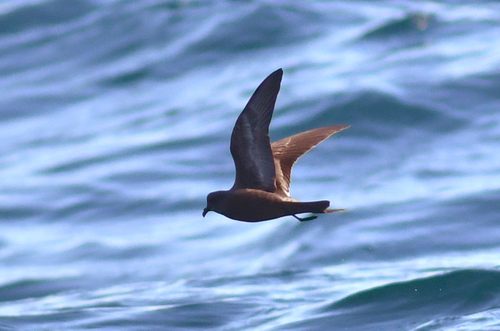
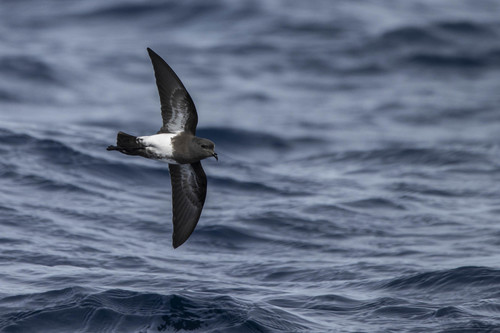
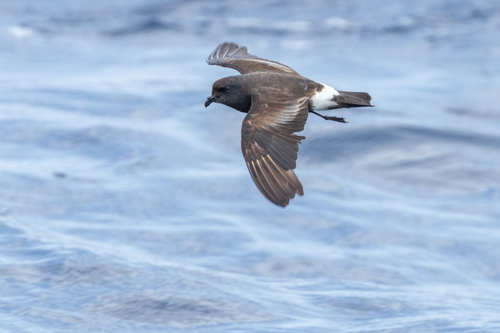
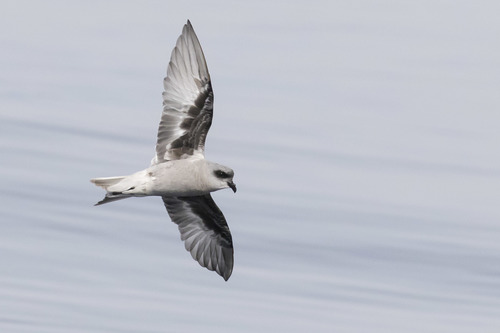
The fork-tailed storm petrel, with the scientific name Oceanodroma furcata (Gmelin, 1789), is a small seabird that measures 20 cm in length and has a 46 cm wingspan. Its foraging behavior is similar to that of other storm petrels: it flies with short, stiff wingbeats just above the water surface. Despite its common name, the species' forked tail is not always visible. The main distinguishing feature of fork-tailed storm petrels is their overall bluish-gray plumage. They usually have a paler underside that contrasts with the darker coloration under their wings. They also have a dark gray forehead, a black ear patch, and a small, black bill. Other storm petrel species, such as the similar-looking ashy storm petrel, are significantly darker. Fork-tailed storm petrels from southern populations are somewhat darker than individuals from northern populations. Males and females are generally very similar in both color and size. Juveniles also resemble adults, except their tail notch is less noticeable. Fork-tailed storm petrels are generally silent, and only call when entering their breeding colony at night. The most common call is a 3- to 5-note, raspy "ana-ana-ana" produced by both sexes. Calling is especially intense during courtship, when calls are paired with elaborate aerial displays. Males typically give a higher-pitched, single-note call, which they use to locate females in noisy colonies and maintain their pair bond. The global range of the fork-tailed storm petrel is estimated to cover 22,400,000 km², with over 6,000,000 individuals worldwide, making it the second-most widespread and abundant storm petrel. During the breeding season, fork-tailed storm petrels form dense colonies on islands across northern California, Oregon, Washington, British Columbia, Alaska, and northeast Asia off the Kamchatka Peninsula. Most of the global population is concentrated in Alaska, particularly in the Bering Sea near the Aleutian Islands. The species' southernmost breeding colony is on Little River Rock in Humboldt County, which hosts a population of 200 individuals. A breeding population of fork-tailed storm petrels on the Flannan Isles (Na h-Eileanan Flannach), around 35 km west of the northern tip of Scotland's Outer Hebrides, was reported in July 1939. The species' nesting habitat varies, ranging from bare rock to forest. They typically build nests under rock crevices or roots, or burrow into soft ground with low-growing vegetation. Because fork-tailed storm petrels frequent the open ocean, little is known about their habits outside of the breeding season. They have been frequently sighted off the Californian coast, making them the most northerly distributed storm petrel during winter. Sparse sightings also confirm they forage as far south as Hawaii. Like other storm petrels, the fork-tailed storm petrel mainly feeds on crustaceans and fish near the ocean surface, including amphipods, myctophids, shallow-water fish such as greenling and sablefish, copepods, decapods, and squid. They are also extremely opportunistic, and have been observed scavenging fatty tissue from dead marine mammals as well as trailing behind fishing boats. Fork-tailed storm petrels have a well-developed olfactory system and rely heavily on scent to find food, so they are often the first birds to arrive at a strong-smelling food source. When at a food source, these birds capture prey by fluttering across the water surface, and may occasionally dive to depths of 0.6 m. Like other Procellariiformes, the fork-tailed storm petrel produces stomach oil from digested food and stores this oil in the proventriculus, a section of the bird's digestive system. This oil allows the birds to go long periods without food, and also lets them transport nutrient-rich food back to their chicks from distant feeding areas.