About Oceanites gracilis (Elliot, 1859)
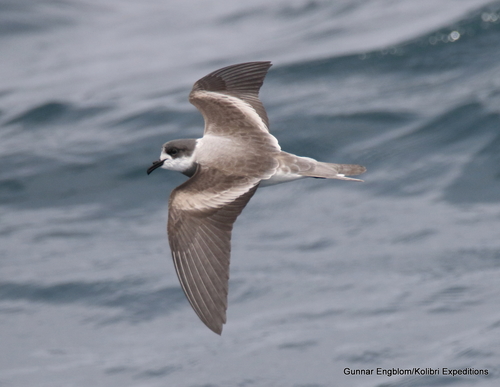
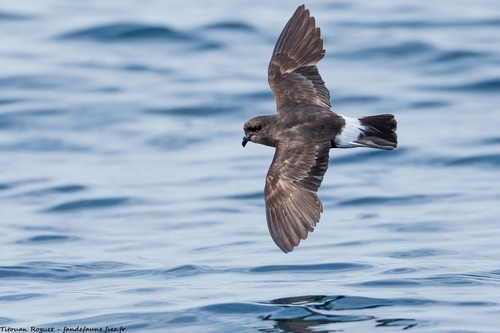
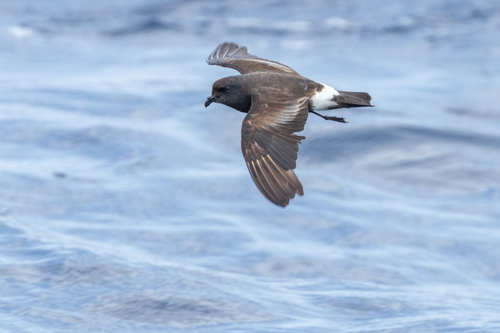
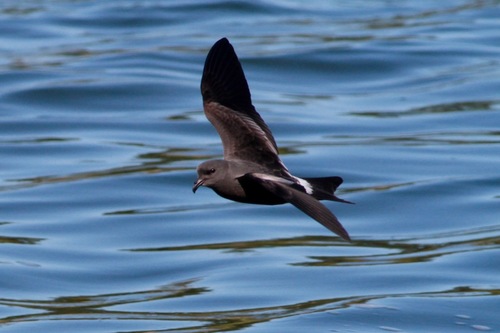
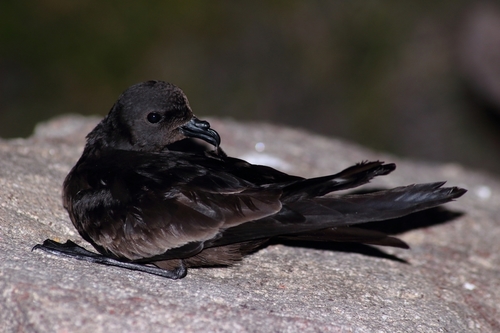
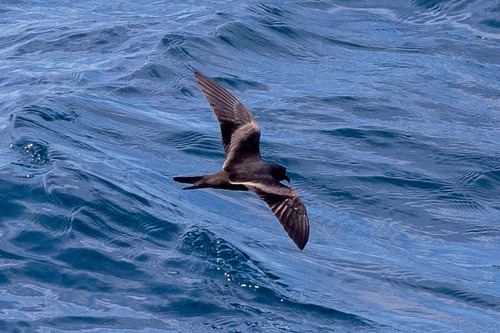
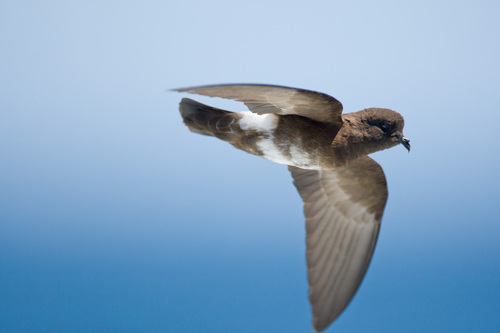
Elliot's storm petrel, scientifically named Oceanites gracilis, is a seabird species that belongs to the storm petrel family Oceanitidae. This species is also commonly called the white-vented storm petrel. It has two recognized subspecies. O. g. gracilis occurs in the Humboldt Current off the coasts of Peru and Chile, while O. g. galapagoensis lives in the waters surrounding the Galápagos Islands. This storm petrel has a sooty-black plumage, with a white rump and a white band that crosses its lower belly and extends up the belly's midline. It has long legs that stick out beyond the body when the bird is in flight. Even though this species is sighted frequently, it remains very poorly understood. Before 2003, only one nest of the species had ever been found, located on Isla Chungungo off the coast of Chile. A 2002 survey found approximately eleven nests in three crevices on this same island. At the time of the survey, Isla Chungungo was also used for nesting by Humboldt penguins (Spheniscus humboldti), and there appeared to be very few suitable nesting sites available for the petrels. Another possible breeding location is inland in the Atacama Desert: a mummified chick confirmed as this species via DNA analysis was found in a crevice there, and signs of past activity have been found in various cavities. However, no live birds have been observed in this area despite searches conducted at different times of year. It is considered likely that breeding colonies of the species exist in Peru, because the birds are quite common in offshore waters there. The population around the Galápagos Islands is thought to be resident and probably breeds, but no nesting site for this subspecies has ever been discovered. The feeding behaviour of the Galápagos subspecies is unusual among storm-petrels: it forages close to shore, while all other storm-petrels are exclusively pelagic.