About Nymphula nitidulata (Hufnagel, 1767)
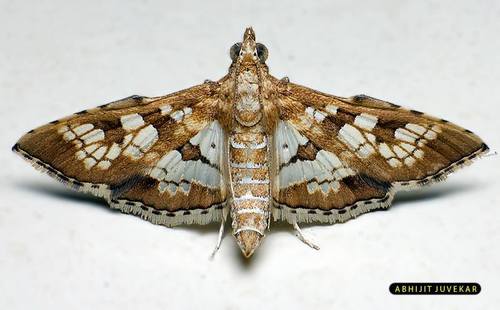
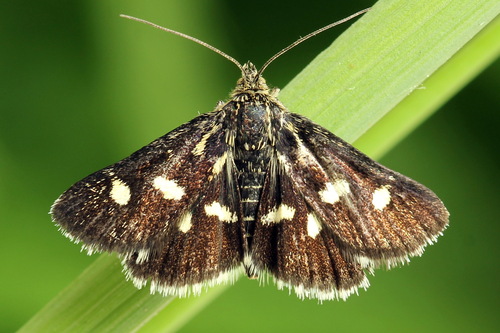
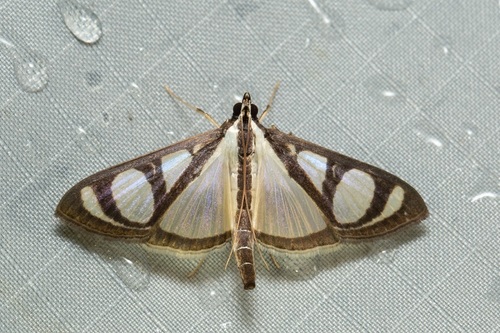
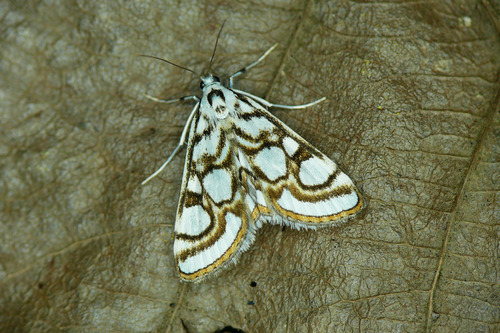
Nymphula nitidulata, commonly called the beautiful china-mark, is a moth species in the family Crambidae. It was first described by Johann Siegfried Hufnagel in 1767. This species is distributed across Europe, Japan (specifically Hokkaido), Turkey, Armenia, Russia (including the Ural region, Siberia, and Amur), and China. The wingspan of adult moths measures 20–25 mm. The forewings are white, with a dark fuscous costal edge and sometimes a dark fuscous subcostal line. They also have a curved dark fuscous subbasal line, lines and transverse discal spots that are strongly outlined in dark fuscous (sometimes partially brownish). The first outlined line is curved, while the second is indented below its middle. This second line connects via a prolongation to the discal spot and the first line, and the two lines are sometimes also connected on the dorsum. There is also a yellow-ochreous terminal streak with dark margins. The hindwings match the forewings in base color, but their lines are narrower, not connected, the subbasal line is absent, and the discal mark is oblique, narrow, and dark fuscous, usually touching the first line. Fully grown larvae are bright yellow or brownish-yellow, with a dark brownish dorsal line and a pale brown head. Larvae of this species feed on plants of the genera Sparganium and Nuphar lutea.