About Nymphoides aquatica (J.F.Gmel.) Kuntze
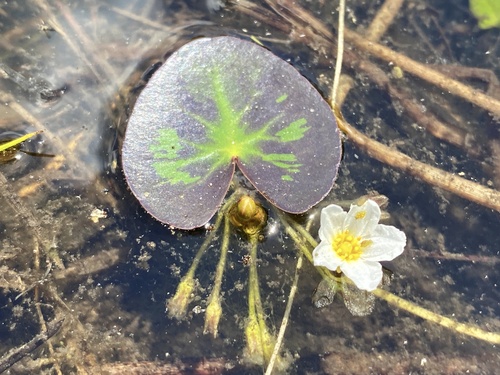
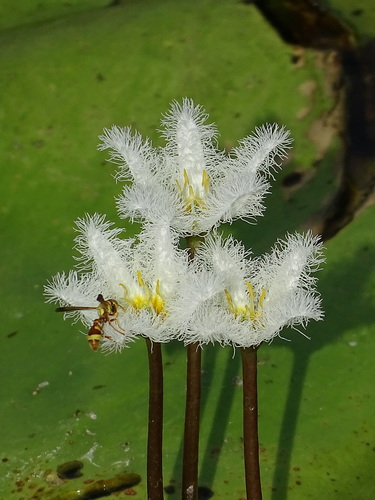
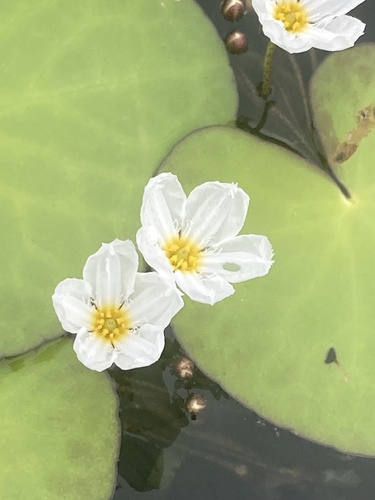
This species, commonly called the Banana Plant, has a cluster of thick, banana-shaped roots that grow close to its leaves near the water surface. Its leaves are rounded with a notch at the base, and resemble small water lily leaves, which can develop fully over one to two weeks. When grown in high light, the upper surface of the leaves is green, while the lower surface is dull purple; when grown in low light, both the upper and lower surfaces are light green to yellow. It produces small white five-petalled flowers that grow out from beneath the leaf. This species is dioecious, meaning male and female flowers grow on separate individual plants. In cultivation, Nymphoides aquatica is unusual because it can be grown either rooted in substrate or as a floating plant. It prefers bright light and tropical temperature ranges. It can be propagated either from naturally produced runners or by dividing its rootstock. Although it is a perennial, cultivated plants are best replaced with new stock every four to five years. When planting, the rootstock should not be fully buried in the substrate. During winter and in more shaded conditions, this species forms submersed leaves rather than floating leaves.