About Nymphalidae
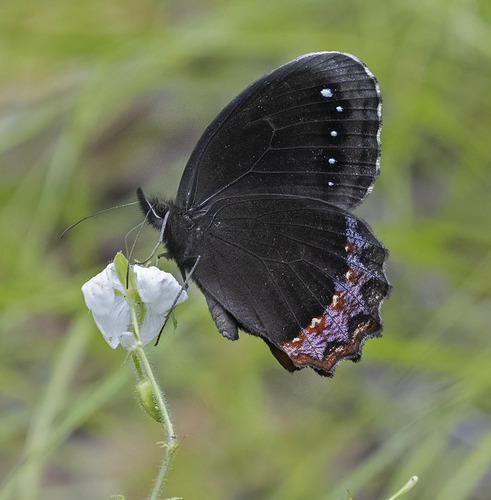
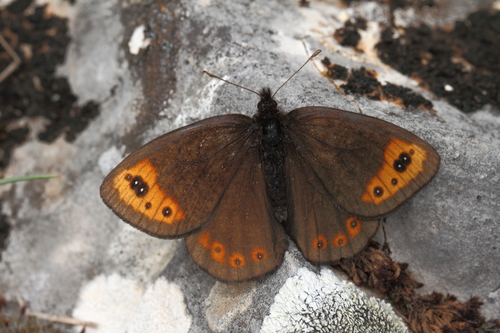
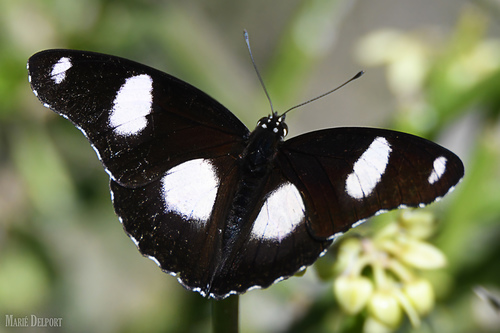
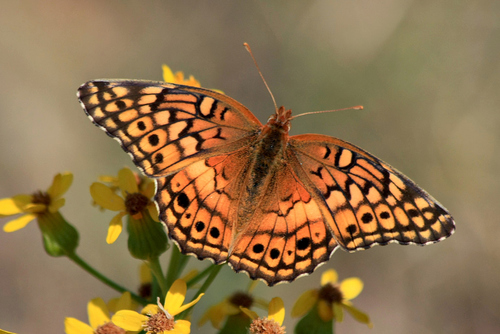
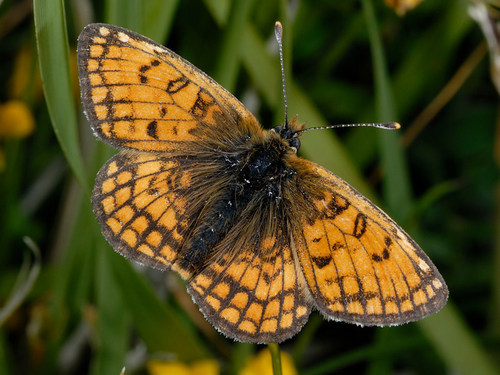
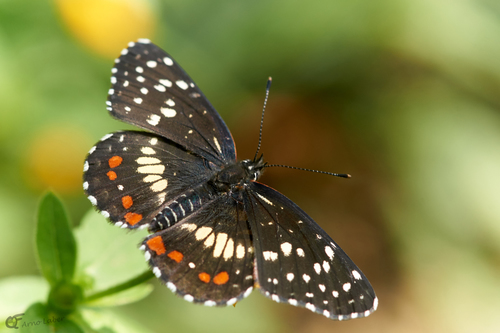
Nymphalidae is a family of butterflies, commonly called four-footed or brush-footed butterflies, because adult individuals have a small or reduced first pair of legs, so they only use four functional legs for standing. The reason why these forelegs have become vestigial is not yet fully clear. The leading current theory suggests the forelegs help amplify the sense of smell: many species have a brush-like set of soft hairs called setae on the forelegs, leading researchers to propose the forelegs improve intraspecies signaling and communication, which benefits species reproduction and overall health. Nymphalidae caterpillars are hairy or spiky and have head projections, while their chrysalids have shiny spots. This family has consistent wing venation traits: the submedial vein (vein 1) on the forewing is unbranched, except it is forked near the base in one subfamily; the medial vein has three branches (veins 2, 3, and 4); veins 5 and 6 arise from the junction points of the discocellulars; the subcostal vein and its extension beyond the cell apex (vein 7) never has more than four branches (veins 8–11); veins 8 and 9 always arise from vein 7, while veins 10 and 11 sometimes arise from vein 7 but more often branch from the subcostal vein before the apex of the cell. Hindwings of Nymphalidae have internal (1a) and precostal veins. The discal cell in both wings can be closed or open, most often closed in the forewing and open in the hindwing. In many forms, the dorsal margin of the hindwing is channelled to hold the abdomen. Nymphalidae antennae always have two grooves on the underside, and their terminal club varies in shape. Across the entire family, the front pair of legs is reduced in size and functionally impotent in males; this is also true for females, with only three exceptions: the genera Libythea, Pseudergolis, and Calinaga. Some subfamilies, such as Danainae and Satyrinae, show particularly extensive foreleg atrophy. In many forms of these subfamilies, the forelegs are held pressed against the underside of the thorax, and are often very hard to spot in males. Several species within the Nymphalidae family have shown noticeable phenological shifts, including earlier spring emergence, in response to rising global temperatures. These shifts show evolutionary plasticity, but they may also cause mismatches with host plant availability and pollination networks, which could potentially impact the long-term survival and ecological roles of these butterflies.