About Nymphaea alba L.
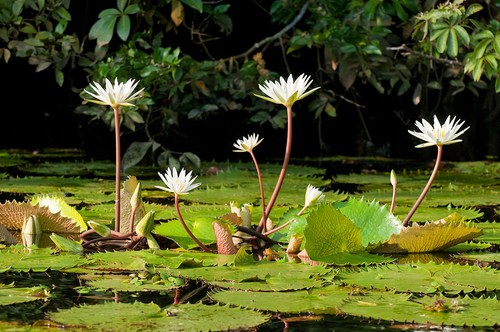
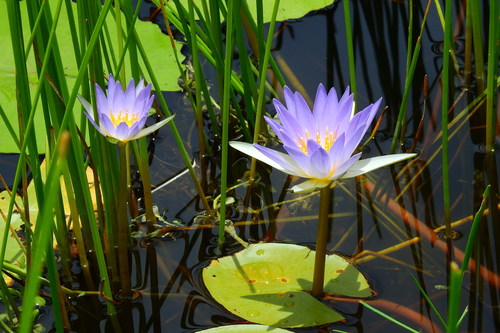
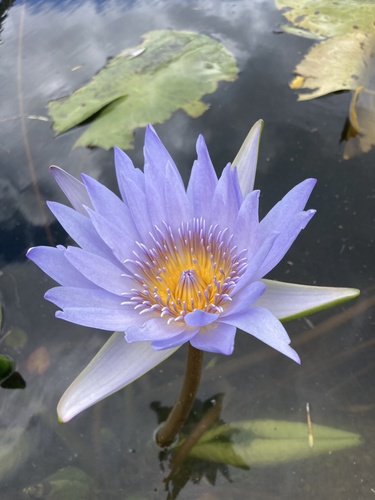
Nymphaea alba L., also called the white water lily, produces white flowers that usually bloom during the daytime throughout most of the summer. Flowers bloom above large, rounded green leaves that can grow up to 30 cm across; both the leaves and flower stalks float on the water surface. When it first opens, the flower is cup-shaped and around 8 cm wide. As it matures, it can reach 20 cm wide and becomes star-shaped. The flower petals are arranged in a single ring pointing upward, surrounding multiple yellow stamens. Mature leaves are up to 30 cm (12 inches) in diameter, and a single plant can spread 150 cm (59 inches) across. Nymphaea alba is native to freshwater habitats across almost all of Europe, parts of North Africa, and the Middle East. In North Africa it occurs in Algeria, Morocco and Tunisia. In temperate Asia it is found in Armenia, Azerbaijan, Siberia, Iran, Iraq, Palestine and Turkey. In tropical Asia, it grows within the Indian territory of Jammu and Kashmir. A full list of European countries where it is native includes Belarus, Estonia, Latvia, Lithuania, Moldova, the Russian Federation, Ukraine, Austria, Belgium, Czech Republic, Germany, Hungary, Netherlands, Poland, Slovakia, Switzerland, Denmark, Finland, Ireland, Norway, Sweden, the United Kingdom, Albania, Bosnia and Herzegovina, Bulgaria, Croatia, Greece, Italy, Montenegro, North Macedonia, Romania, Serbia, Slovenia, France, Portugal and Spain. It has been introduced to the Azores, Bangladesh, Chile, parts of China, Myanmar, and New Zealand. This species grows in still or very slow-moving freshwater, including ponds, ditches, lakes, and canals. This includes artificial water bodies such as lakes and ponds created by gravel extraction, built as fishponds, or for livestock use, and even temporary lakes that fill with sediment and develop fen vegetation. Artificial canals and ditches, which are more commonly occupied by this species than ponds, are created for transport or recreation, and these habitats also support additional wildlife, attracting other insect species, providing shelter for frogs, and offering early nectar for nectar-feeding insects. When cultivated, Nymphaea alba requires plenty of space, as it grows up to 4 inches tall and spreads 3 to 5 feet wide. It grows best in full sun, in loamy soil, and in undisturbed water. For planting, the plant is placed in a basket, covered with pea shingle, and positioned 6 to 10 inches below the water surface. Once the plant is fully established, the base of the plant can sit at twice the original planting depth. It can be fed with proprietary aquatic fertilizer during the growing season. White water lily is valued for both nutrition and uses. Its peduncles and young leaves can be eaten as vegetables, and its rhizomes can be used as food supplements. Local people also use different parts of the plant for a range of purposes: it is used in herbal medicine to treat diarrhea, piles, or cough, and it has value for its fragrance and as an ornamental plant. Because of these uses, wild-harvested Nymphaea alba is collected and sold in markets.