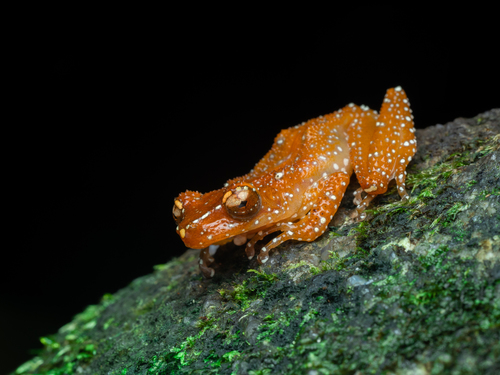
About Nyctixalus pictus (Peters, 1871)
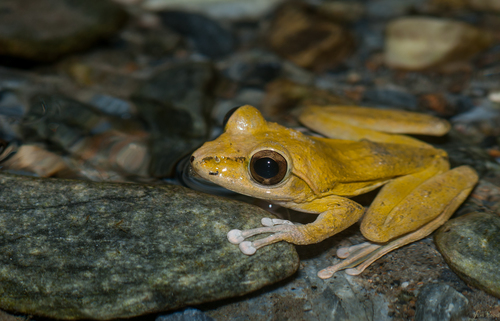
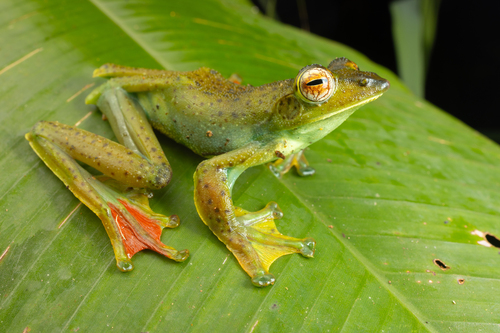
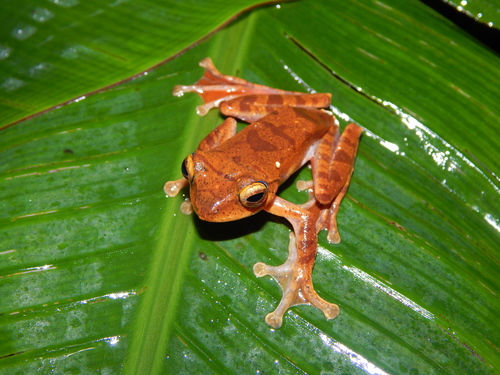
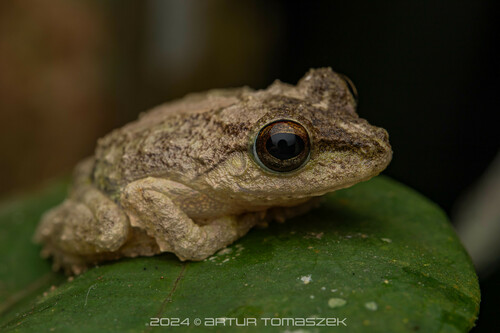
Nyctixalus pictus grows to approximately 35 mm (1.4 in) in snout–vent length, with males being slightly smaller than females. It has a pointed snout, a distinct tympanum, and long limbs. The tips of its fingers and toes are dilated into large discs; the fingers have no webbing, while the toes are only partly webbed. Its body is colored brown or reddish brown, with spots ranging from white to yellow across its surface. This species is distributed across the Malay Peninsula, extending from extreme southern Thailand through Peninsular Malaysia to Singapore, as well as Sumatra (Indonesia), Borneo (Brunei, Malaysia, and Indonesia), and the Philippines. It inhabits the shrub and lower tree layers of primary and secondary forests. It is generally found at elevations below 700 m (2,300 ft), though it can occur up to 1,650 m (5,410 ft) on Borneo. Its tadpoles develop in water-filled cavities in trees, including phytotelms, and in rotting logs. Nyctixalus pictus has a widespread distribution but is an uncommon species. Its populations are threatened by habitat loss caused by forest clearing for agriculture and logging. Its range overlaps with several protected areas. In Singapore, this species is only found within the Bukit Timah and Central Catchment Nature Reserves.