About Nyctiphrynus ocellatus (Tschudi, 1844)
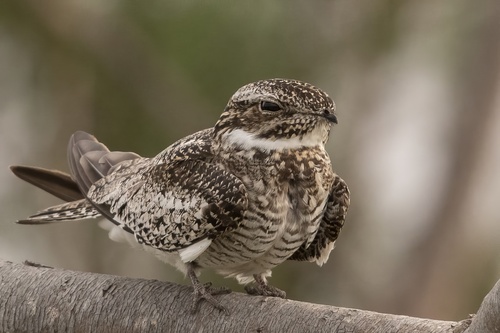
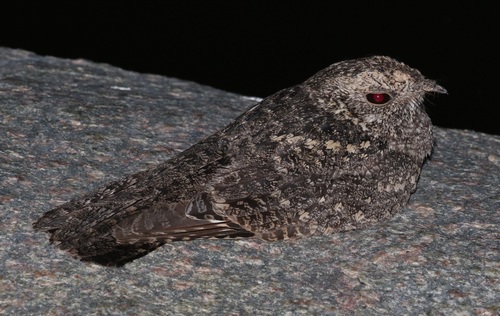
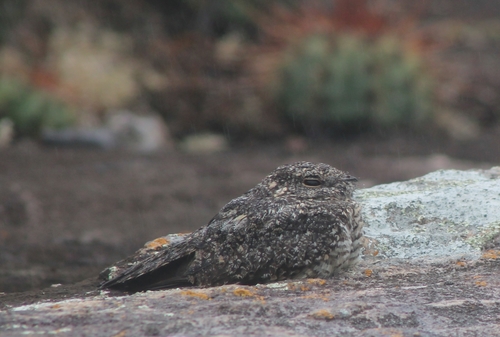
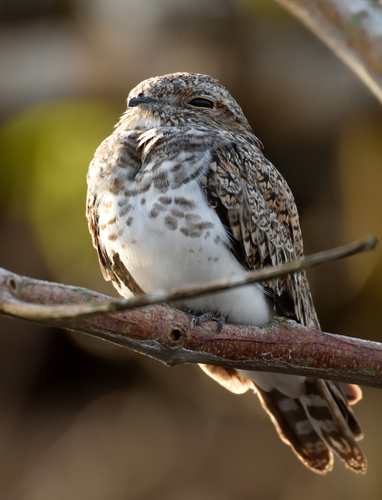
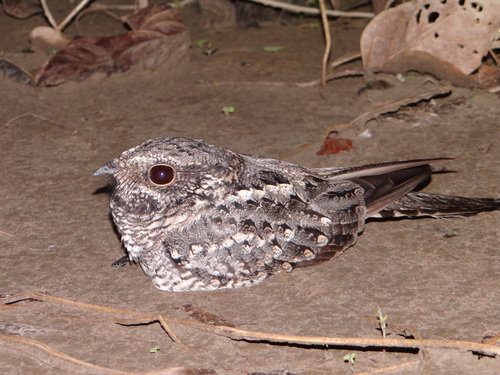
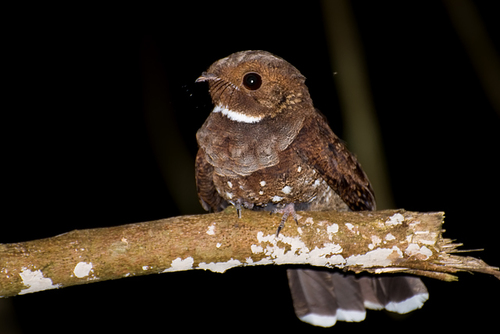
The ocellated poorwill, Nyctiphrynus ocellatus (Tschudi, 1844), is 20 to 21 cm (7.9 to 8.3 in) long. Males weigh 35 to 43 g (1.2 to 1.5 oz), while females weigh 29 to 44 g (1.0 to 1.6 oz). This species has two color morphs: a brown morph and a rufous morph. The nominate subspecies' brown morph is mostly dark grayish brown, with blackish brown spots on the wings and white spots on the belly. These white spots resemble eyes, which gives the species its common name. The ocellated poorwill has a bold white band around the throat, and the outer three or four tail feathers have narrow white tips. The rufous morph is paler than the brown morph, and reddish brown rather than dark brown. The subspecies N. o. lautus is smaller than the nominate, and has narrower white tips on its tail. At least one author argues that the N. o. lautus holotype is immature, and that there are otherwise no color differences between the two subspecies. The ocellated poorwill has a disjunct distribution. The nominate subspecies occurs in two separate areas of South America: one range extends from southern Colombia through eastern Ecuador and Peru into Bolivia, and east into Amazonian Brazil; the other ranges from southeastern Brazil west into eastern Paraguay and extreme northeastern Argentina. N. o. lautus is found in the border region of eastern Honduras and northeastern Nicaragua, and in northwestern Costa Rica. There is one unconfirmed sight record of the species from Panama. The species mostly lives in lowland forest with an open understory and small clearings, and it is also found in dense secondary forest. It has been recorded at elevations ranging from sea level to 1,350 m (4,400 ft).