About Nyctimystes infrafrenatus (Günther, 1867)
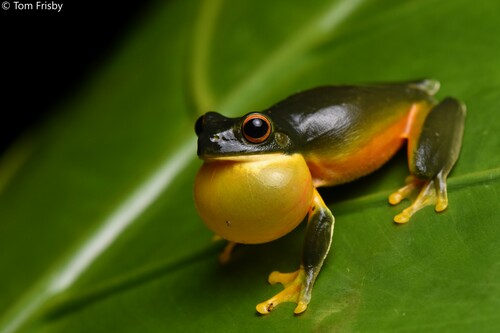
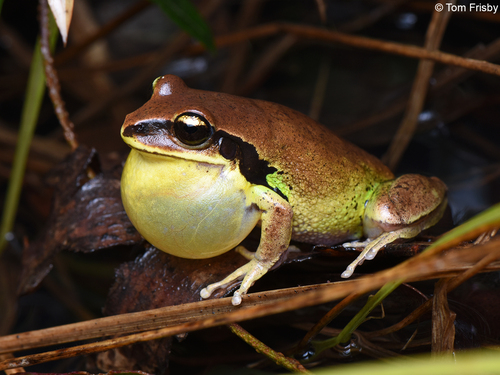
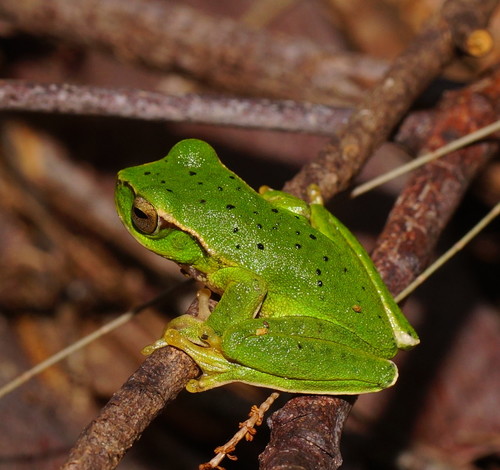
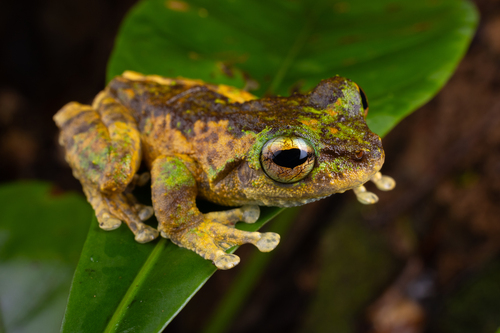
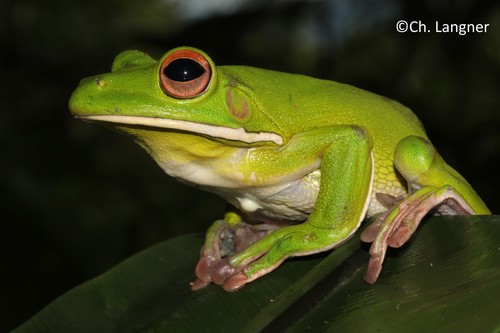
Nyctimystes infrafrenatus, commonly called the white-lipped tree frog, reaches 11–14 cm (4.3–5.5 in) in length, and typically weighs 30–60 g (1.1–2.1 oz). Females are larger than males, and have thicker skin corresponding to this difference in body size. Its dorsal surface is usually bright green, but its colour changes with temperature and background, and can also be brown. Its ventral surface is off-white. A distinctive white stripe runs along the lower lip, which gives the species its common name, and this stripe continues to the shoulder. The white stripes on the trailing edges of the lower leg may turn pink in breeding males. The white-lipped tree frog has large toe pads that help it climb. Its toes are fully webbed, and its hands are partially webbed. This species is found along the coastal areas of Cape York Peninsula and the wet tropics of north-eastern Queensland, Australia. It is the most widely distributed tree frog in the New Guinea region, ranging from eastern Indonesia, across the New Guinea mainland, to the Bismarck and Admiralty Islands in the north. It lives in rainforests, cultivated areas, and around coastal houses, and is restricted to altitudes below 1,200 m (3,900 ft). It has a loud, barking call; when distressed, it makes a cat-like mew sound or may discharge urine. Males call during spring and summer after rain, from vegetation around their breeding site, which is normally a still body of water. Its diet consists mainly of insects and other arthropods. It can live for over 10 years in the wild. This species is known to be transported accidentally in fruit produce from northern Australia, resulting in individual frogs turning up as strays in southern areas.