About Nycticeius humeralis (Rafinesque, 1818)
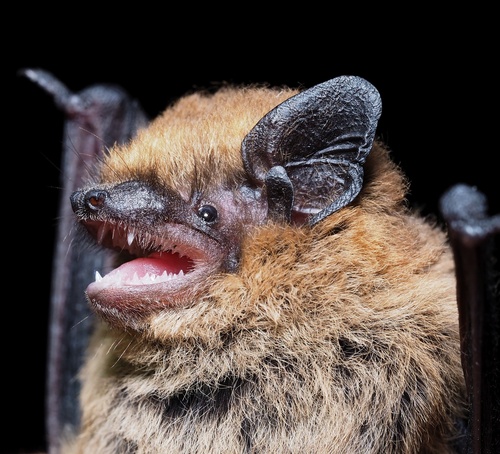
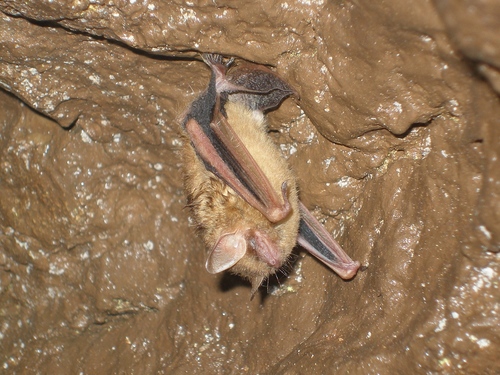
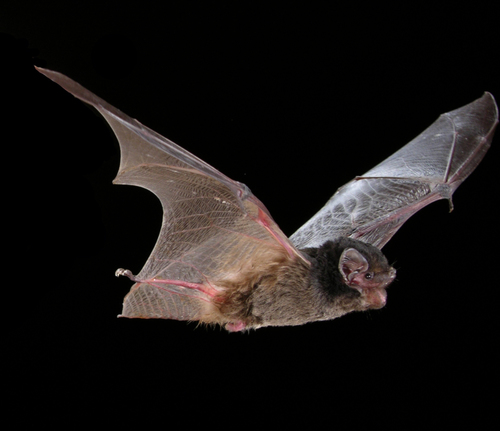
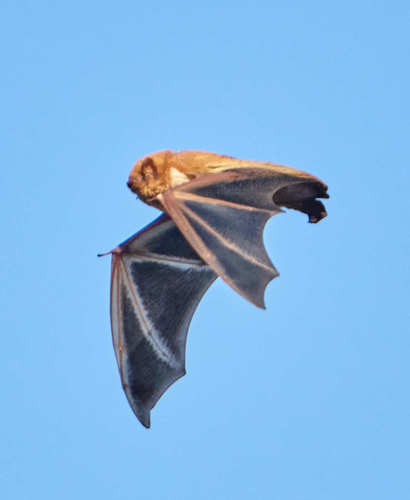
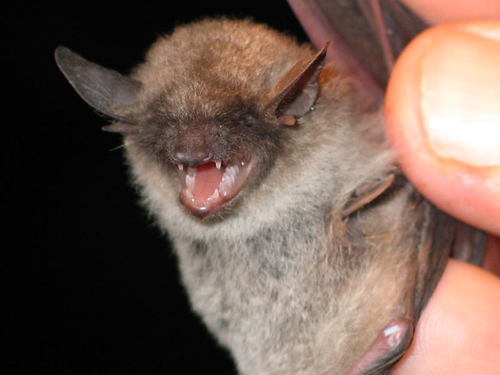
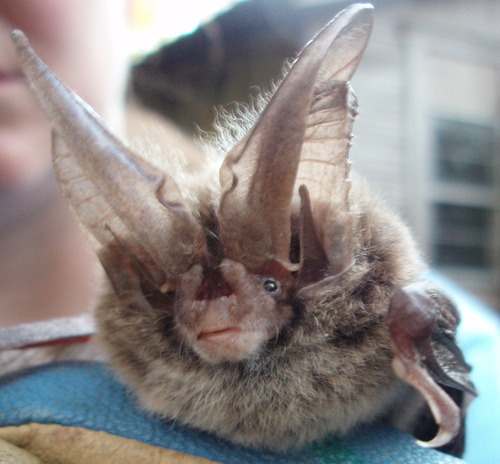
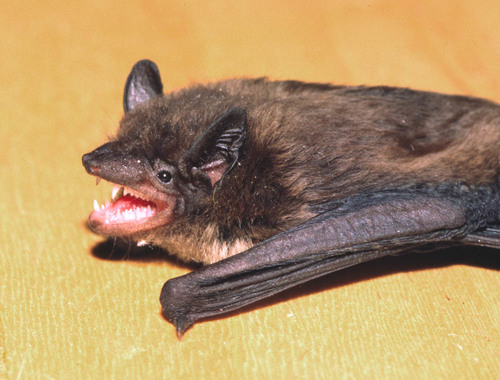
The evening bat, with the scientific name Nycticeius humeralis (Rafinesque, 1818), is a small bat that weighs 7–15 g (0.25–0.53 oz). It is found across most of the midwestern and eastern United States. Its forearms measure 34–38 mm (1.3–1.5 in) in length. Each hair on its dorsal side has a light gray tip, while the basal one to two-thirds of the hair is dark brown. While a small number of individuals have white fur, the majority of the species is mostly brown in color. Evening bats have wide, dog-like muzzles, pronounced facial glands, and disproportionately large bacula. They are often mistaken for juvenile big brown bats, because they resemble that species but are smaller in size. Compared to other insectivorous bats, evening bats have relatively robust jaws. They have an unkeeled calcar and a short, round tragus; the curvature of the tragus distinguishes the species from otherwise similar bats in the genus Myotis. Each side of its upper jaw has one incisor, and the species has 4 molariform teeth in total. Initially, scientists thought the evening bat was only a southeastern bat species. However, breeding evening bats have now been recorded as far north as Michigan and as far west as the 100th meridian. Evening bats roost in a range of different structures, including Spanish moss, under bark, in tree cavities, and inside buildings. For foraging, evening bats in Georgia prefer pine forests, riparian zones, and open fields. Their home ranges cover approximately 300 hectares (1.15 mi²). The species is not present in the northernmost part of its range during winter, so it is likely that at least some evening bats are migratory. Evening bats mate during fall and winter; female bats store the sperm until spring, when fertilization takes place. In May, females form maternity colonies that range from 15 to 300 individuals in size. Among females that give birth, 90% have twins, though single pups and triplets also occur. While it is most common for evening bats to nurse their own offspring, a small share of pups are nursed by unrelated females. Pups gain the ability to fly within one month of birth, and are weaned within 42 days of birth. Female evening bats display natal philopatry: as adults, they return to the roost where they were born to give birth.