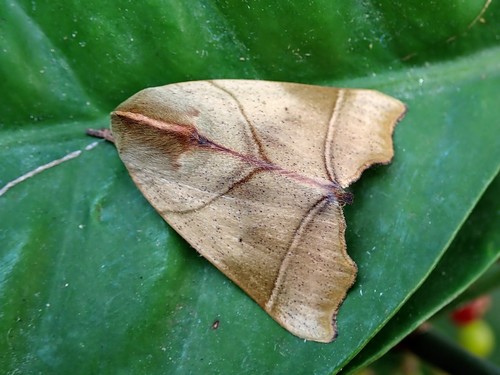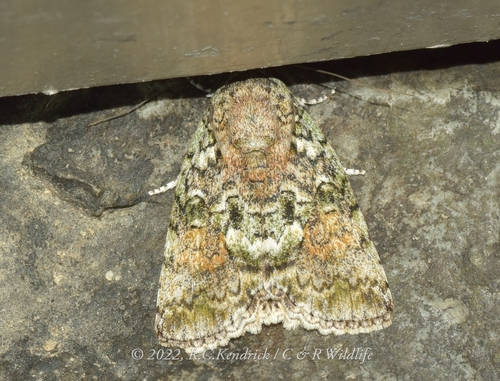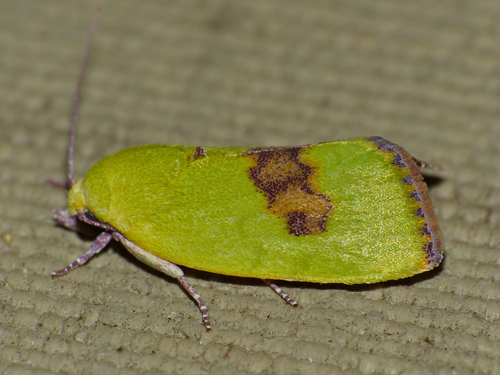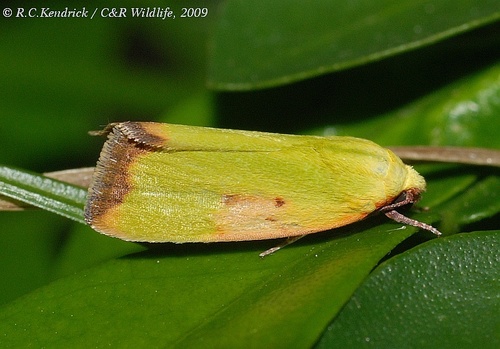
About Nycteola degenerana (Hübner, 1799)
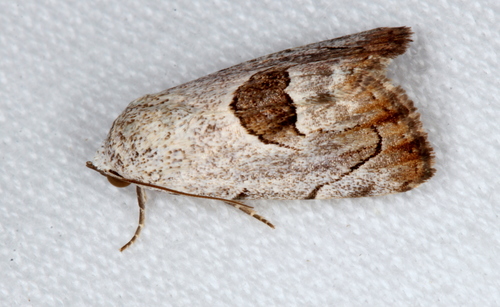
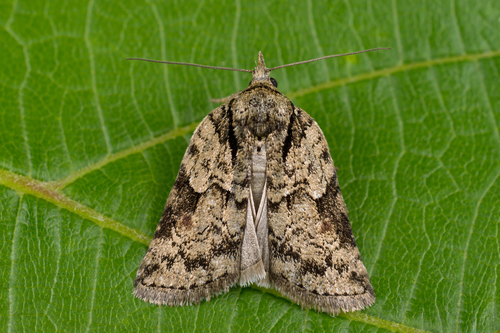
Nycteola degenerana, commonly known as the sallow nycteoline, is a moth species belonging to the family Nolidae. Jacob Hübner first formally described this species in 1799. Its range extends across Europe, covering areas from southern Fennoscandia down to Spain, Italy, and the Balkans. Outside of Europe, the species is located in China, Japan, the Korean Peninsula, the Russian Far East (including Primorye, southern Khabarovsk, and the southern Amur region), southern Siberia (including Transbaikalia, the Baikal area, Altai, and western Siberia), Turkey, and the Ural. This moth has a wingspan of 23 to 28 millimeters, and it is the largest species within its genus Nycteola. Adult moths are active in two distinct periods per year: from mid-June to early July, and from the end of July after overwintering through to May. There are two generations of this species each year. The larvae of Nycteola degenerana feed on willows of the genus Salix, specifically including Salix caprea, Salix aurita, Salix cinerea, Salix myrsinifolia, and Salix phylicifolia, as well as Quercus robur, the common oak.