About Nyctalus azoreum (Thomas, 1901)
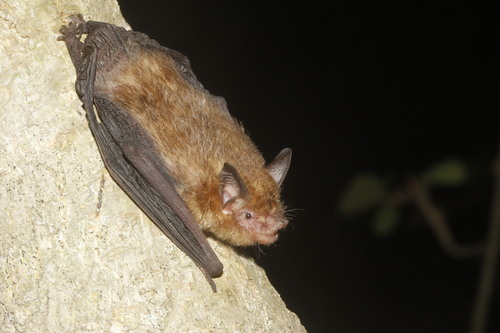
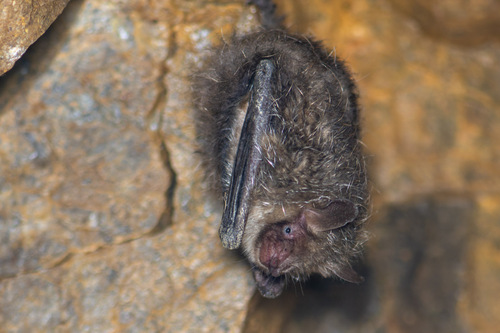
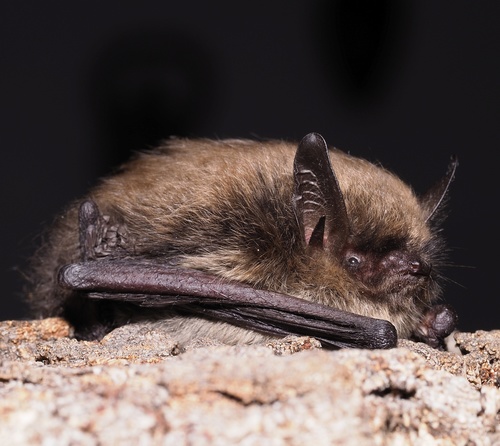
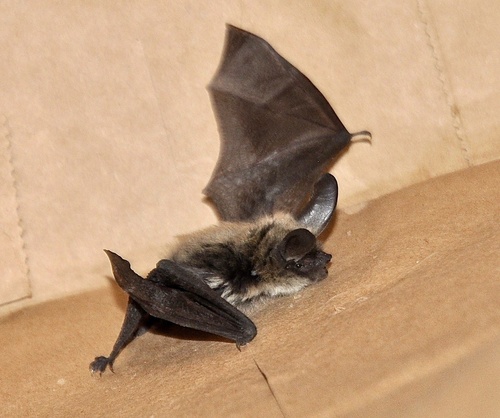
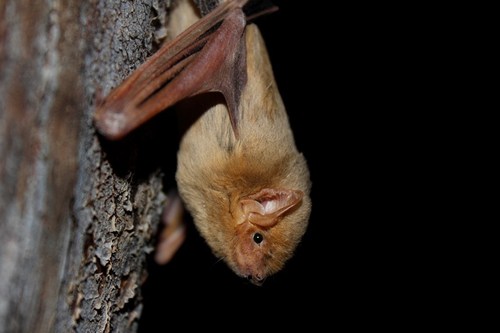
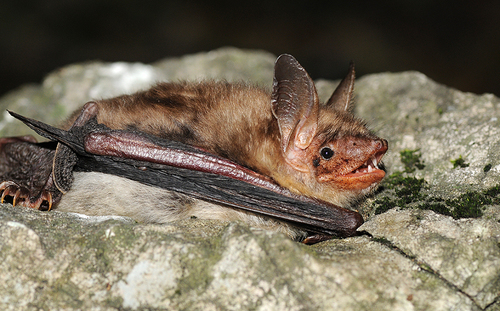
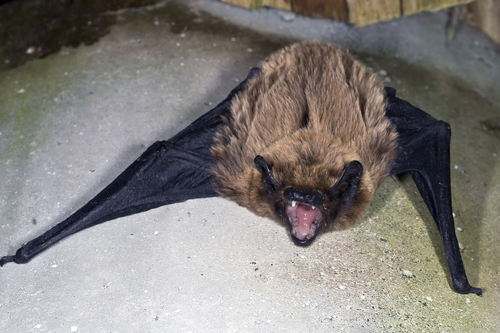
The Azores noctule (Nyctalus azoreum) is a bat species that lives in the dry forests of the Azores. It is the only mammal species that is endemic to the Azores. This species has been recorded on most of the islands that make up the Azores; it remains common on some of these islands, but rare on others. Its population is threatened by human-caused habitat loss, and the remaining existing populations are heavily fragmented. Azores noctules are known to roost in hollow trees, buildings, and caves. This species is related to the broadly distributed lesser noctule, and it was previously classified as a subspecies of the lesser noctule. Genetic studies have shown that the Azores noctule originated relatively recently from lesser noctules that colonized the Azores, and it has low genetic divergence from its parent species. Despite this relationship, the Azores noctule is much smaller and lighter than the lesser noctule, has darker fur, and produces echolocation calls at a different frequency (around 4–5 Hz higher than the lesser noctule). For these reasons, it is usually recognized as a separate species. Unlike most other bat species, the Azores noctule has an unusually high rate of daytime flight, and frequently hunts insects during the day, even though it is still most active at night. Researchers have hypothesized that this diurnal foraging behavior may have developed because there are no avian predators living in the Azores. Azores noctules do still appear to show some anti-predator behaviors, such as leaving roosting sites in groups, but this behavior may instead be linked to foraging or defense against non-avian predators like rats.