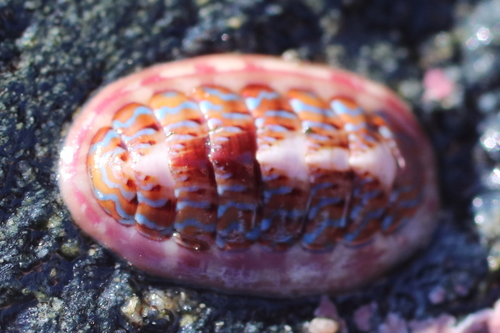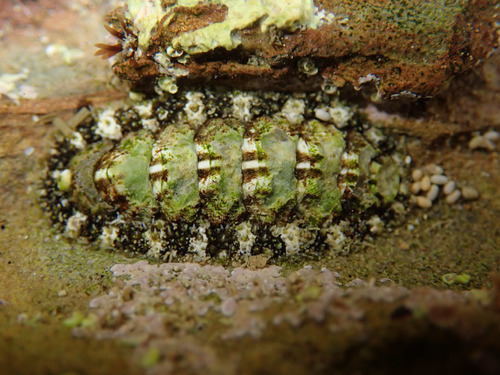
About Nuttallina californica (Reeve, 1847)
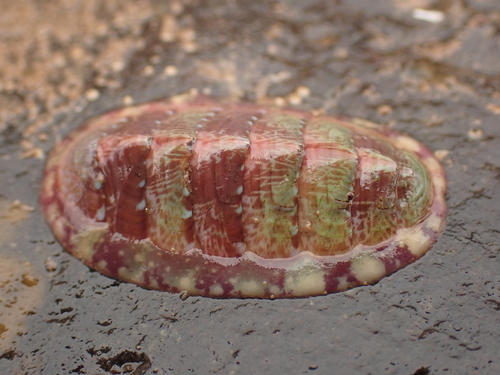
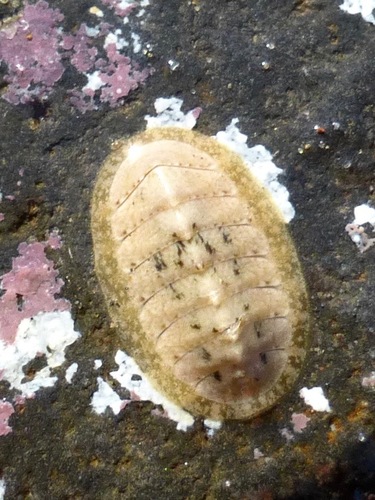
Description: Male Nuttallina californica can reach a maximum length of 5.1 centimetres (2.0 inches). The species' valves are black, with an intermittent white stripe running along the dorsal side. Its girdle is granular, and made up of reddish-brown bristles. This species is morphologically similar to two other Nuttallina species found in California: N. fluxa (Carpenter, 1864) and a studied but undescribed third species (Piper, 1984). Individuals cannot be easily distinguished from these relatives without genetic analysis, and some authors question whether these three are actually separate species.
Distribution and habitat: Nuttallina californica is endemic to the western coast of North America, specifically occurring in California and Baja California — this range is the origin of its specific epithet and common name. In general, N. californica dominates intertidal sites north of Point Conception, while the morphologically similar N. fluxa is more common south of Point Conception, though both species have been recorded across the full state of California. When N. californica is found south of Point Conception, it typically occurs in areas with higher wave exposure or cooler water temperatures. N. californica usually lives in areas with abundant microalgae, which is an important food source for the species. Researchers have hypothesized that these chitons leave behind slime trails that promote vegetation growth. This is an intertidal species that can be found in rock crevices, near barnacles and mussels.
Reproduction: The breeding season of N. californica runs from March to July. During the reproductive cycle, female chitons develop oocytes in their gonads through three distinct stages. Oocytes grow and mature between September and February. From March through July, oocytes reach the third stage of development, and are then ready to be released into the water. Males release their sperm into the water at the same time to fertilize the released eggs. This external reproductive process is called broadcast spawning. The reproductive cycle pauses in August, when gonads become temporarily inactive, before the cycle repeats the following month.