About Notropis bifrenatus (Cope, 1867)
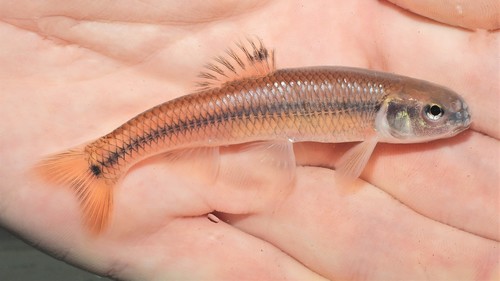
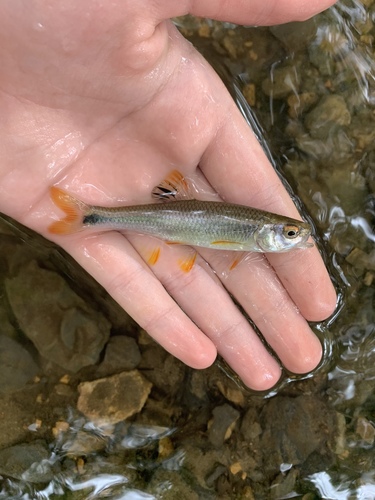
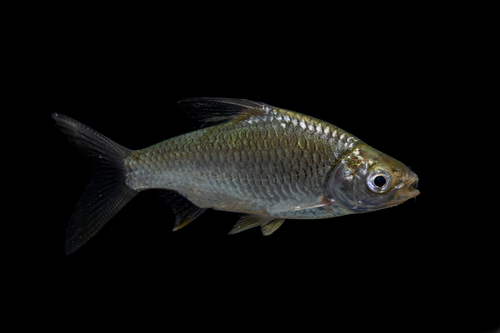
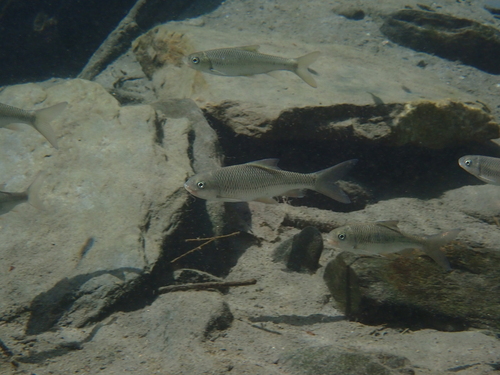
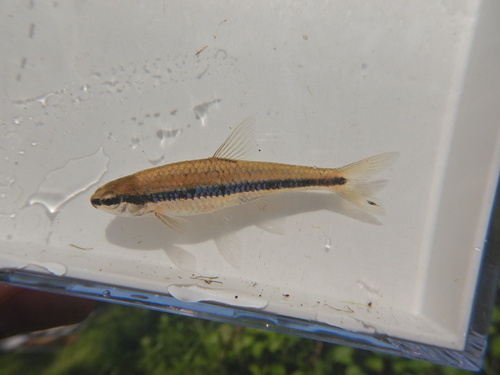
This species has the scientific name Notropis bifrenatus (Cope, 1867), and is commonly called the bridle shiner. Individuals have small, slender bodies that are somewhat laterally compressed. The average adult length is 50 mm (2.0 in). The snout is usually shorter than the eye diameter. It has a small, angular, terminal mouth and large scales, with an incomplete lateral line. Its dorsal side is straw-coloured and silvery, with green-blue iridescence, while its ventral side is silvery-white. A prominent black lateral band runs from the tail to the snout. Breeding males develop minute nuptial tubercles on the head, nape, and pectoral fin. The bridle shiner is distributed across eastern North America, ranging from eastern Lake Ontario east to Maine, and south to South Carolina. In Ontario, it occurs in lowland areas of the eastern Lake Ontario drainage and the Saint Lawrence River, with the most stable population located around the Thousand Islands. It inhabits quiet sections of streams, and is occasionally found in lakes. It is typically associated with abundant submersed aquatic vegetation, and a river bottom made up of silt, sometimes mixed with sand. The species uses vegetation for protection, feeding, and spawning. It can live in moderately turbid water, but prefers clear water.