About Notorynchus cepedianus (Péron, 1807)
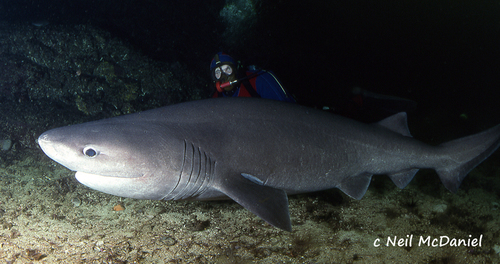
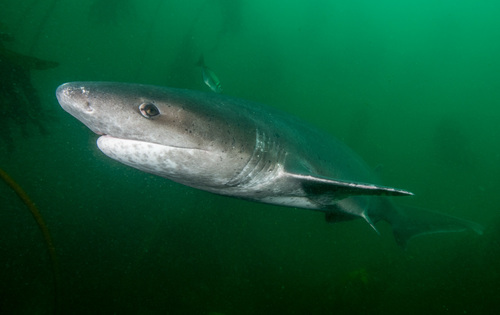
At birth, Notorynchus cepedianus, commonly called the broadnose sevengill shark, measures 40–45 cm (15.5–17.5 in) long. Mature males reach around 1.5 m (4.9 ft) in length, while mature females grow to approximately 2.2 m (7.2 ft). The maximum recorded length for this species is 3.3 metres (11 ft). The heaviest recorded individual weighed 182 kg (401 lb) and measured 2.91 metres (9.5 ft) long. This is a large, active shark species with a large head, small eyes, and a small snout. It has a broad, highly noticeable mouth. It has a single dorsal fin positioned toward the rear of its body, extending from the base of the pelvic fins to their upper edges. Its body has a mottled grey and white base color, covered in a variable number of small black spots. This shark is found in three main ocean regions: the western Pacific Ocean off the coasts of China, Japan, Australia, and New Zealand; the eastern Pacific Ocean off the coasts of Canada, the United States, and Chile; and the southern Atlantic Ocean off the coasts of Argentina and South Africa. It is especially common in San Francisco Bay, particularly near the Golden Gate Bridge and Alcatraz Island. Large, older individuals typically occupy deep offshore environments at depths down to 446 feet (136 m). Most individuals live in either deep bay channels, or the shallower waters of continental shelves and estuaries. These sharks are primarily benthic, meaning they cruise along the sea floor and only occasionally travel up to the surface. In coastal areas of South Africa, individuals tend to favor open habitats with a sandy sea floor and sparse clumps of kelp.