About Notophthalmus perstriatus (Bishop, 1941)
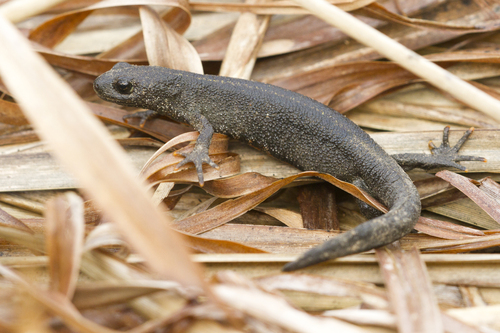
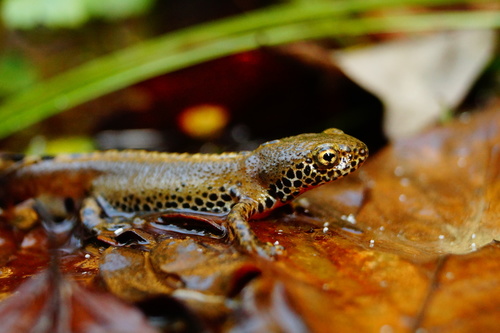
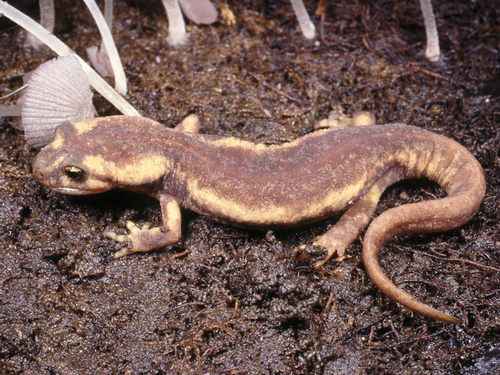
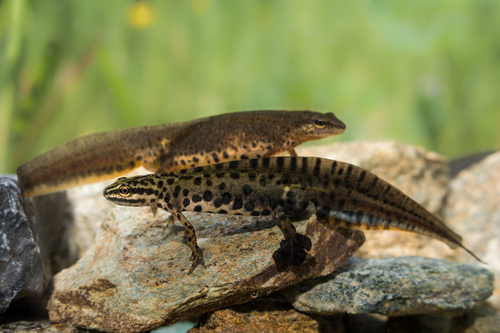
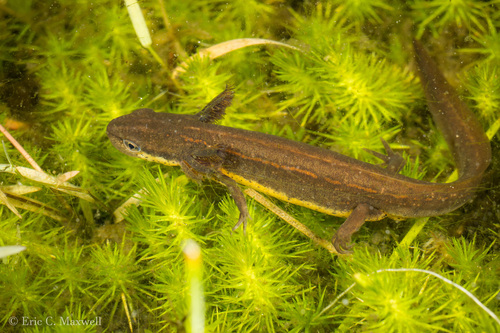
Fully mature striped newts (Notophthalmus perstriatus) reach a total length of 2.12–4.12 inches (5.4–10.5 cm). Their base color ranges from yellow-green to olive green to black-brown, marked with bright red or orange parallel stripes along the back. The underside of the species is yellow with black spots.
Aquatic larvae of the striped newt are tan, greenish, or brown, with bushy external gills, a distinct light-colored lateral line, and dark mottling on their large tail fin. The species has a terrestrial juvenile life stage called an eft, which spends multiple years entirely on land. Efts are light brown or orange and retain the species' characteristic red striping.
Neoteny, also called paedomorphosis, is common in populations that live in permanent or semi-permanent fishless ponds. Neotenic adult striped newts are yellow-green to brown, and often do not have the red stripes seen in terrestrial adult forms.
Striped newts are distributed from southern Georgia southward into central Florida. They typically occupy fire-maintained habitats with sandy soils, including longleaf pine sandhills, scrub, and scrubby flatwoods. They may also occur in hammock ponds occasionally, where they breed from late winter through spring.