About Notolabrus inscriptus (Richardson, 1848)
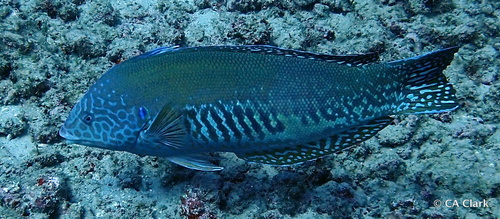
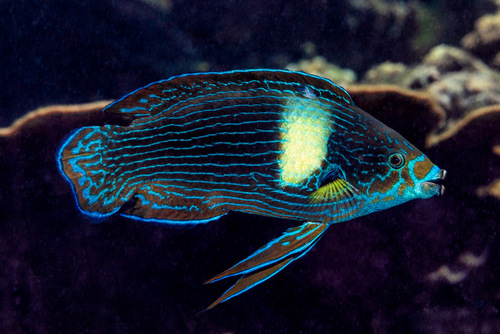
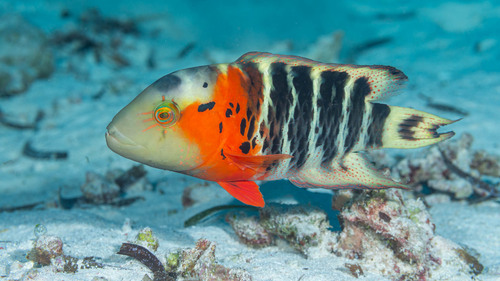
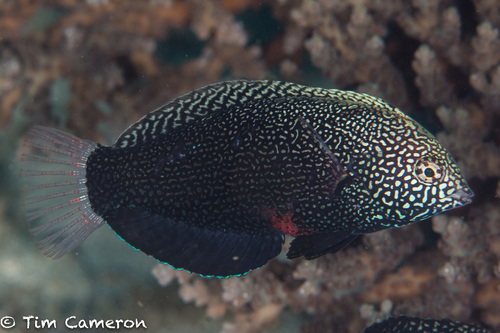
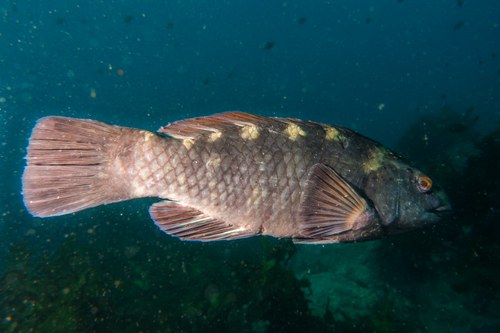
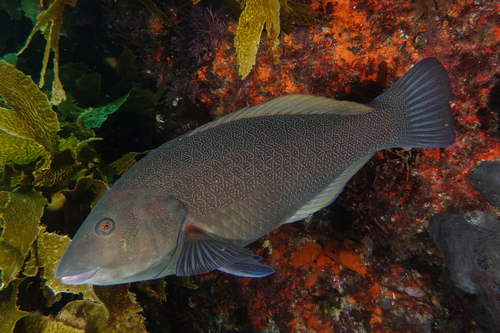
Notolabrus inscriptus, commonly known as the inscribed wrasse, is a large species in its genus Notolabrus. The largest recorded males measured 325 mm in standard length, and the species is reported to reach a maximum standard length of 50 cm (20 in). Small juveniles are greenish with white markings, and have an eyespot on the soft portion of the dorsal fin, plus a second eyespot on the anal fin. Females are brown, with white markings on their scales that form thin longitudinal stripes. Males are bluish-grey, with an irregular, scribble-like pattern on their bodies – this pattern gives the species both its common name and its specific scientific name. Male inscribed wrasses also have white dorsal and anal fins. This species is native to eastern Australia (including Lord Howe Island and Norfolk Island), the Kermadec Islands, and the northeast coast of New Zealand’s North Island, where its range runs from Cape Reinga to East Cape. It is an uncommon species along the mainland Australian coast, but is abundant at Lord Howe Island, Norfolk Island, and the Kermadec Islands. Inscribed wrasses inhabit kelp beds on rocky reefs, found at depths around 17 m (56 ft). They are carnivorous, feeding on benthic invertebrates, with a diet dominated by molluscs and crustaceans. Like other species in the genus Notolabrus, male inscribed wrasses form harems within territories they defend. In this species, harems average six individuals, made up of females or juveniles.