About Notolabrus gymnogenis (Günther, 1862)
Scientific name: Notolabrus gymnogenis (Günther, 1862)
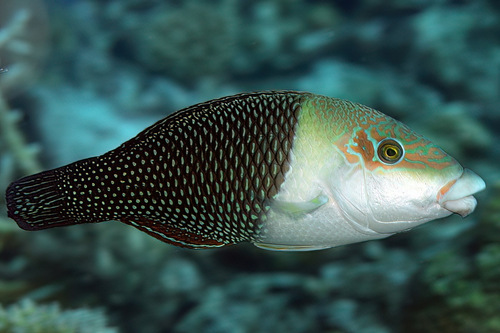
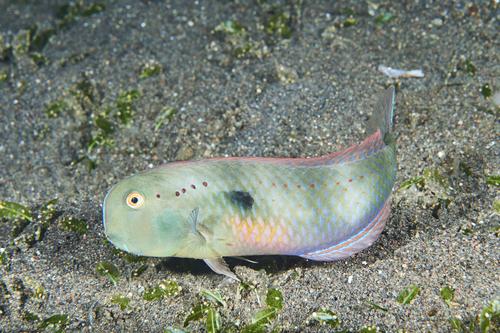
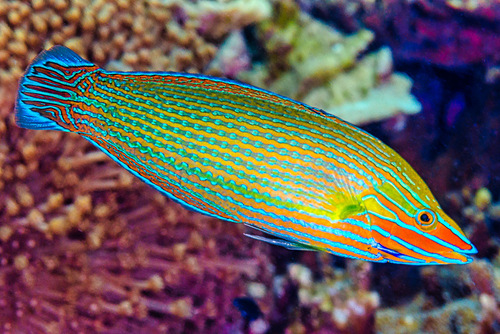
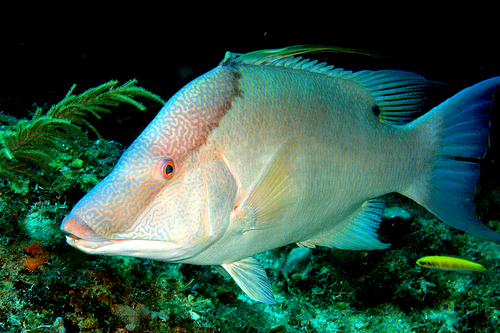
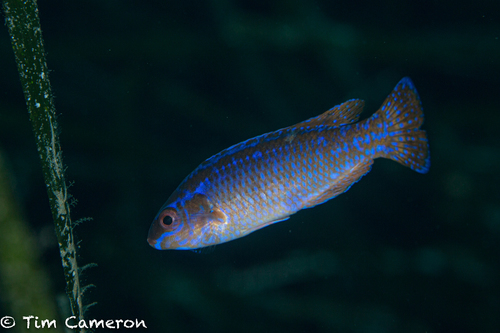
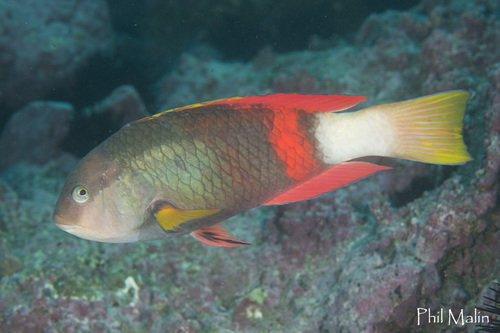
Description This species reaches approximately 40 cm in total length. Like many wrasses, its appearance changes across different life stages. Juveniles are greenish brown, with rows of white spots running along their sides. Females range in color from reddish to brownish-orange, and also have rows of white spots along the sides. Males are brightly colored: they have red dorsal and anal fins, a red band around the rear of their body, a white caudal peduncle, and a yellow caudal fin. The largest recorded male had a standard length of 23 centimetres (9.1 in).
Distribution This fish is found in coastal waters of eastern Australia, ranging from Hervey Bay, Queensland to Lakes Entrance, Victoria, and also occurs in Tasmania and Lord Howe Island. It is most commonly found in cooler waters of south-eastern Australia, where it lives as a benthic inhabitant of coastal reefs, and is very common on reefs in New South Wales. It occurs at depths between 4 and 53 metres (13–174 ft).
While this species can be found on both deep and shallow reefs, it typically prefers deeper waters. When water temperatures rise in its habitat, the fish moves to cooler areas within its existing range. As a result of increasing global ocean temperatures linked to climate change, populations of this species have declined in shallow reefs and increased in deep inshore reefs.