About Nothofagus moorei (F.Muell.) Krasser
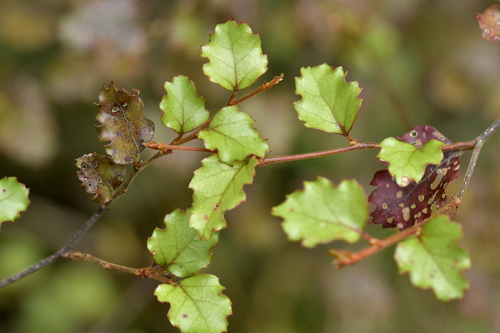
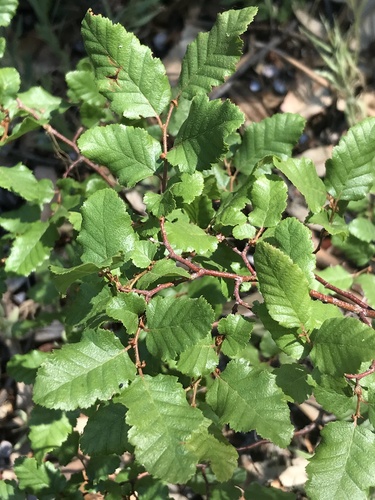
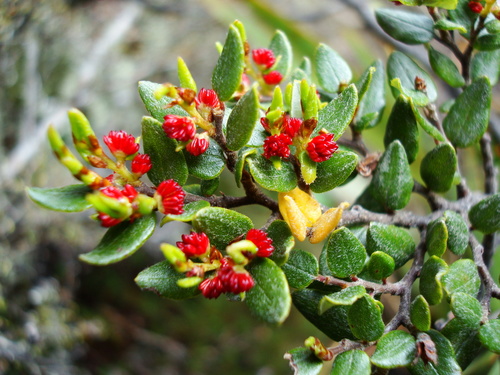
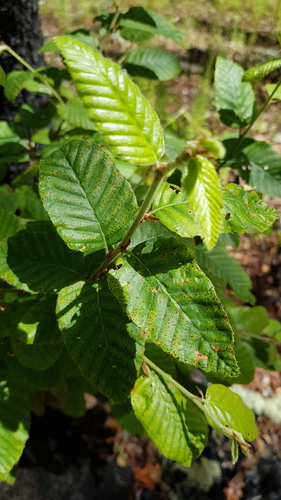
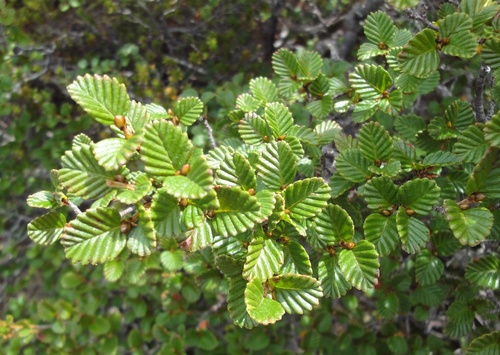
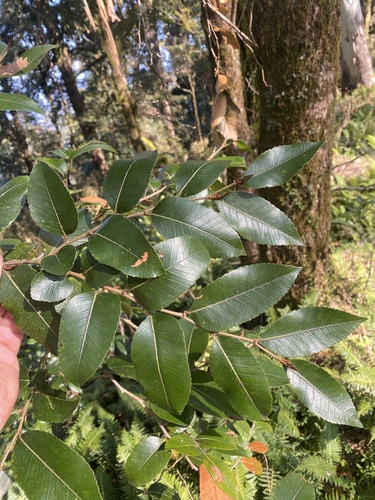
Nothofagus moorei, commonly known as Antarctic beech, is a tree that typically grows up to 50 metres (160 feet) tall. It often has a massive trunk reaching up to 1.5 metres (4 feet 11 inches) in diameter, with suckers growing at its base. Its leaves are simple, and range from roughly egg-shaped to elliptic or lance-shaped. Most leaves are 30–100 mm (1.2–3.9 in) long, glossy, leathery, and roughly glabrous, borne on a petiole 3–5 mm (0.12–0.20 in) long. New spring leaves are reddish-brown to red. Male flowers grow in rounded or flattened clusters about 10 mm (0.39 in) in diameter; each cluster holds up to three flowers with a total of 15 to 40 stamens, surrounded by 8 to 12 bracts that form a cup-shaped structure. Female flowers grow in more or less sessile, oval clusters of three that are about 5 mm (0.20 in) long, surrounded by an involucre of bracts. Flowering takes place in spring, but does not occur every year. The fruit is a prickly cupule 8–10 mm (0.31–0.39 in) long that contains one or two nuts. Antarctic beech grows in cool temperate rainforests, ranging from the Barrington Tops plateau in New South Wales north to the Lamington Plateau and Springbrook Plateau in southern Queensland, between altitudes of 480 m and 1550 m. It grows in areas with temperate to cool temperatures and occasional snowfalls. It reaches its best development at Werrikimbe National Park and Mount Banda Banda.