About Nothofagus gunnii (Hook.f.) Oerst.
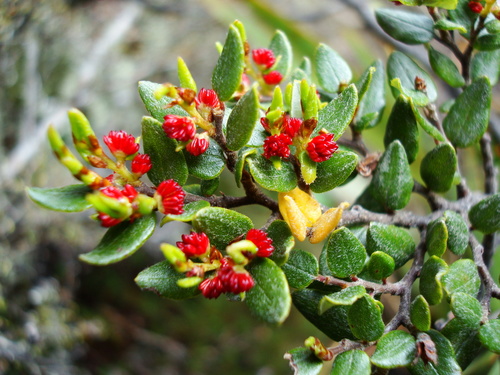
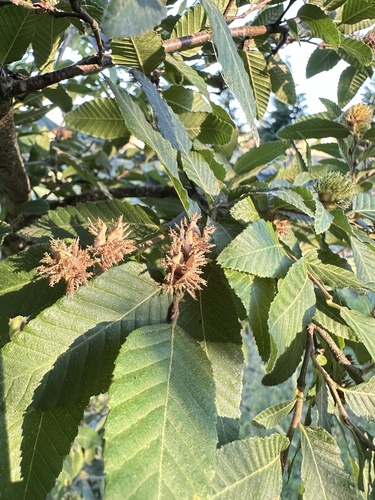
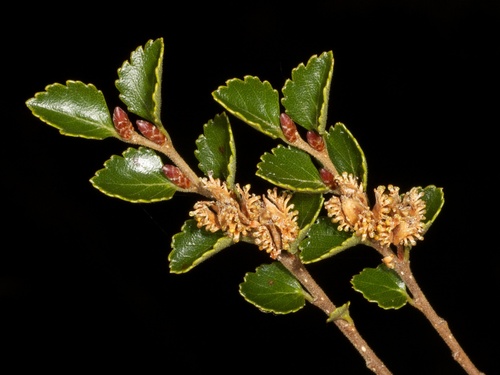
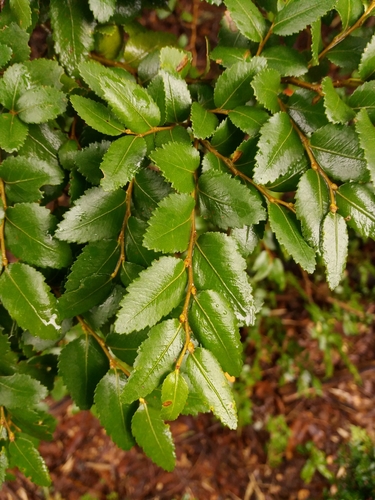
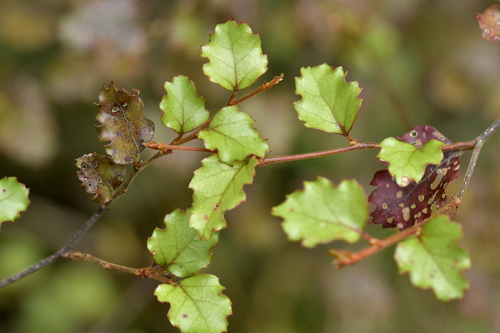
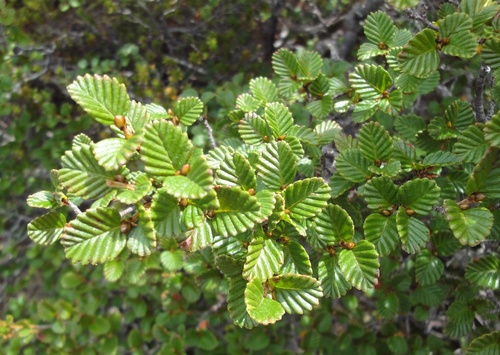
Nothofagus gunnii (Hook.f.) Oerst. is a tangled shrub or small tree that can reach up to 8 metres tall, with growth habit heavily dependent on site exposure, giving it a thick shrubby overall appearance. Its leaves are alternate, simple, ovate, with rounded teeth along the margins, and attached by short petioles. The leaf lamina is generally less than 20 mm long, and has a distinct 'concertina' shape from the way developing leaves fold inside the bud. Leaves are almost circular, with deep veins that end in the gaps between the leaf's rounded teeth. This species is deciduous, with individual leaves having an average lifespan of 7 to 8 months. Foliage is bright green, turning yellow and sometimes brilliant red during autumn. Nothofagus gunnii has separate male and female flowers that may occur on the same individual tree; both types of flowers are small and inconspicuous. The fruit is small, around 6 mm wide, woody, and contains three small nuts: two have three small wings, and one has two wings. Most years produce very little seed, but occasional 'mast' years produce heavy seed crops with high germination rates. The seeds have very short viability. Nothofagus gunnii can be easily visually distinguished from the other Tasmanian species in the same genus, Nothofagus cunninghamii, by the crinkled texture of its leaf lamina. Nothofagus gunnii dominated forests (called tanglefoot forests) cannot survive fire, and must re-establish from unburned neighbouring areas. The species is very sensitive to changed environmental conditions because of its slow growth, and less than 100 km² (39 sq mi) of this forest remains today. This species is the only native deciduous tree in Tasmania, and the only cold-climate winter-deciduous tree species native to Australia. Nothofagus gunnii is endemic to the island of Tasmania, restricted to high altitude, relatively high rainfall areas that have not experienced recent fire. It was first discovered at the summit of Mount Olympus in central Tasmania, and is also found at several locations within Mount Field National Park and on Cradle Mountain. It is considered a paleoendemic species to Tasmania, and macrofossils of this species have been found in Oligocene sediments in the state. Nothofagus gunnii only grows in alpine and sub-alpine mountain environments in Tasmania. It is generally limited to elevations above 800 metres (2,600 ft), due to temperature conditions and the relatively short duration of snow cover in Tasmania's oceanic climate. It can grow as a dominant low shrubby tree on open, typically sloping, rocky ground. The species' range is severely limited by fire regimes, as it is fire-sensitive and can only survive very low-intensity fires. Local extinctions of the species in the Denison Range have been attributed to fire. Despite its limited range, Nothofagus gunnii is not listed as endangered. Very few recorded data exist about this species' reproduction, but by analogy to similar species like Nothofagus cunninghamii, it is assumed that seeds are wind-dispersed and the species is a mast seeder. The species is wind-pollinated. For cultivation, Nothofagus gunnii requires around 1,800 mm of rainfall spread evenly throughout the year, cool temperatures that do not drop below -10 °C, and full sun. It grows best in deep peaty soils. It is most successfully grown from fresh seed collected during a mast year, which germinates in a few weeks. It is believed that a beneficial mycorrhyzal fungus is required for the plant's long-term successful cultivation. Cuttings can be rooted when taken in late winter before bud break. Nothofagus gunnii is rarely found in cultivation, due to its poor performance and slow growth, and is considered a good candidate species for bonsai.