About Nothofagus fusca (Hook.f.) Oerst.
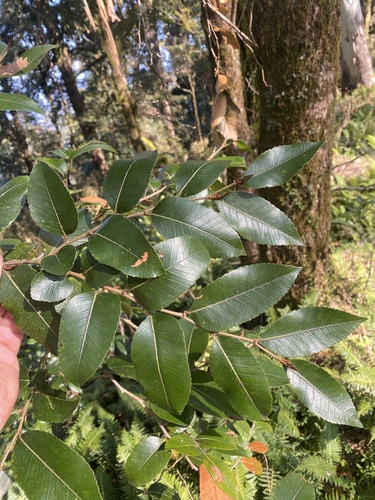
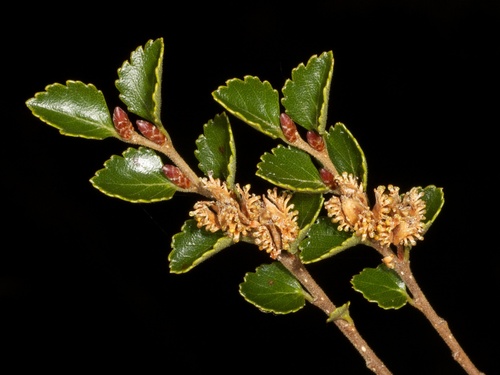
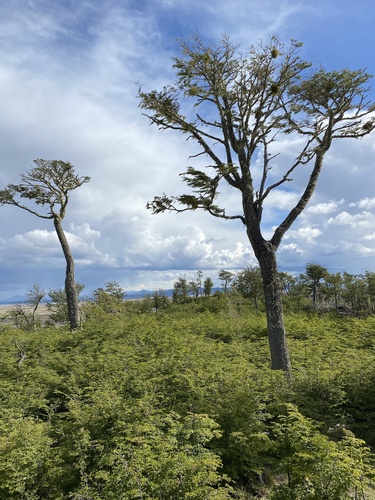
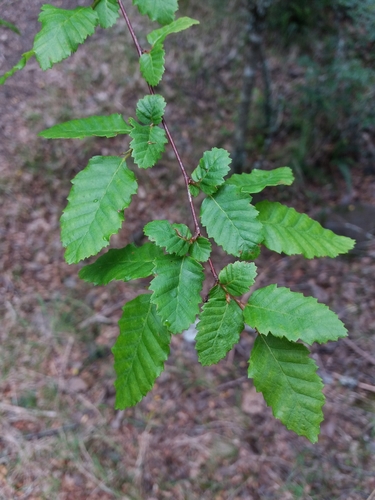
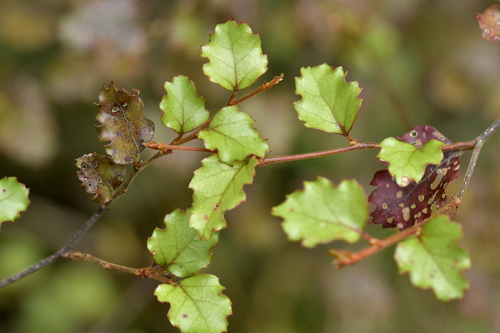
Nothofagus fusca (Hook.f.) Oerst., commonly called red beech (tawhai raunui in Māori), is a southern beech species endemic to New Zealand, where it is also classified under the name Fuscospora fusca. It grows on both the North and South Islands of New Zealand, typically found on lower hills and inland valley floors with fertile, well-drained soil. It is a medium-sized evergreen tree that reaches up to 35 metres in height. Its leaves are alternately arranged, broadly ovoid, between 2 and 4 centimetres long and 1.5 to 3 centimetres broad, with a distinctively double-toothed margin where each lobe holds two teeth. Its fruit is a small cupule that contains three seeds. Pollen from this tree has been found near the Antarctic Peninsula, indicating that Nothofagus fusca formerly grew in Antarctica starting from the Eocene period. The species is not currently considered threatened. Red beech is the only known plant source of the C-linked dihydrochalcone glycoside nothofagin, apart from rooibos (Aspalathus linearis). It is cultivated as an ornamental tree in regions with mild oceanic climates, and has been planted in Scotland and the Pacific North Coast of the United States. The wood of red beech is the most durable out of all New Zealand beeches. It was historically commonly used for flooring across many parts of New Zealand, and the timber is exceptionally stable when dried to the correct moisture content. At a 12 percent moisture content, the average density of red beech is 630 kilograms per cubic metre.