About Nothofagus dombeyi (Mirb.) Oerst.
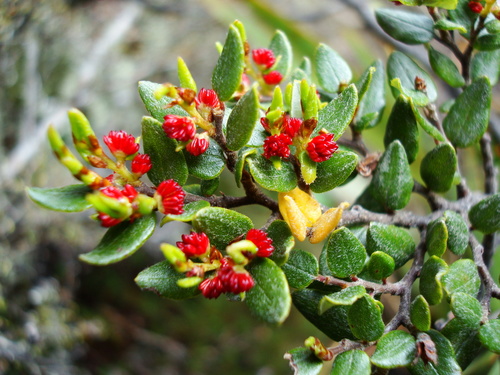
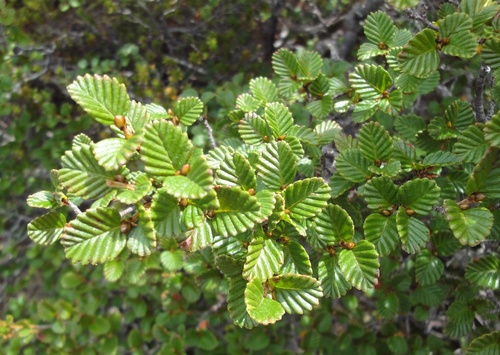
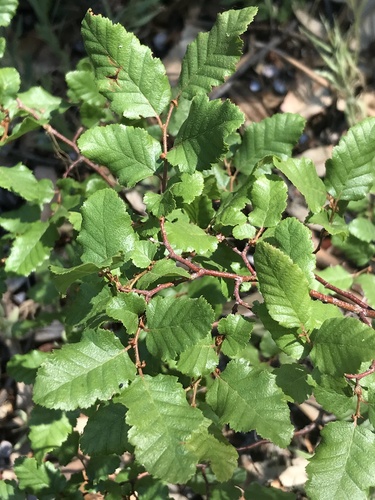
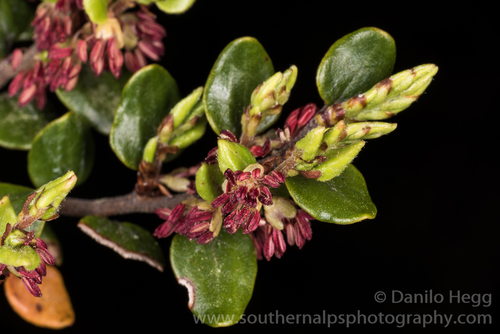
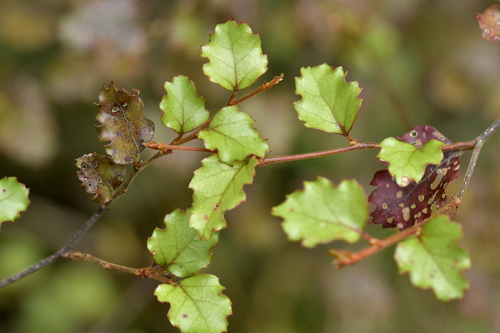
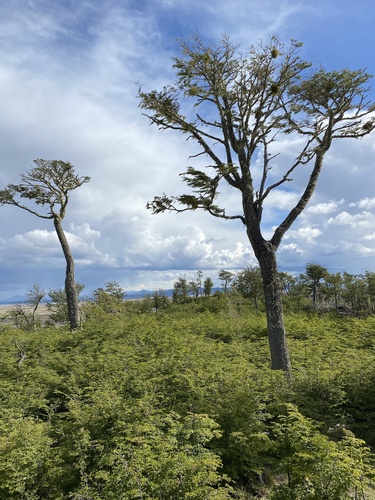
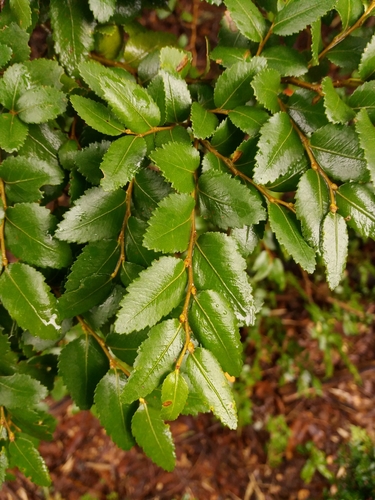
Nothofagus dombeyi (Mirb.) Oerst., commonly called coihue, is a large evergreen tree that can reach up to 45 m (148 ft) in height and 1.9 m (6.2 ft) in trunk diameter. One tree felled by a storm in 1954 reportedly measured 2.55 m (8.4 ft) in diameter at breast height, with a total volume including branches of 87 m³. This species typically has elegant, horizontally flattened branches. Its leaves are evergreen, small, ranging 25–40 mm long and 10–16 mm wide, thick, leathery, lustrous, and dark green, with toothed margins and an acute tip. Each leaf attaches to the branch via a very small, rounded, rhomb-shaped petiole. Nothofagus dombeyi is hermaphroditic, with both male and female flowers growing on the same individual. Wind acts as the pollen vector for this species. The flowers are less than 5 mm across and not showy. Its fruit is a triangular nut that measures approximately 4–7 mm. This species occurs between 35° and 45° South latitude, at elevations ranging from 700 to 1,200 m (2,300 to 3,900 ft) above mean sea level. It forms dense forests, including those found in Los Alerces and Nahuel Huapi national parks. It grows best on low hills with gentle slopes, and has high requirements for water and soil quality. The largest stands of this tree grow on south-facing slopes, and the healthiest individual trees are typically found growing along the banks of rivers and lakes. It sometimes forms mixed forests alongside Araucaria araucana (monkey-puzzle trees), an example of this can be found in Chile’s Villarrica National Park. Coihue timber is widely regarded as excellent. In Argentina, harvesting of coihue is limited because the highest quality stands are located within protected national parks. The sapwood of coihue wood is bright grayish white, while the heartwood is pale pink-white, and it darkens after cutting. The wood has a very fine texture and is easy to work with. It takes engraving beautifully, is semi-heavy, hard, durable, and resistant to decay. It is used for making furniture, barrels, flooring, and general construction. Nothofagus dombeyi has been introduced as an ornamental tree for parks and large gardens in the British Isles, where it has received the Royal Horticultural Society's Award of Garden Merit. It has also been introduced to the North Pacific Coast of the United States. Cultivated Nothofagus dombeyi requires fertile, reliably moist, acid pH soil. Young plants need shelter from cold winds, while mature specimens are hardy down to −15 °C (5 °F).