About Nothofagus cunninghamii (Hook.) Oerst.
Nothofagus cunninghamii (Hook.) Oerst., also commonly called myrtle beech, varies widely in growth habit depending on its growing conditions. In protected rainforest valleys, it grows as a tree reaching up to 50 meters tall, while in exposed alpine conditions it forms a low-growing shrub shorter than 1 meter, with an absolute maximum height of around 55 meters.
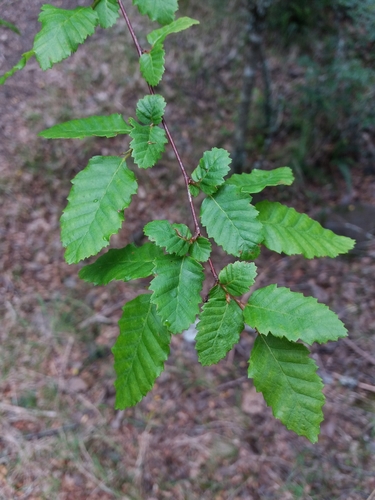
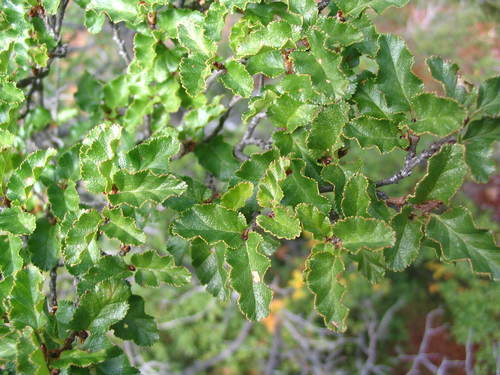
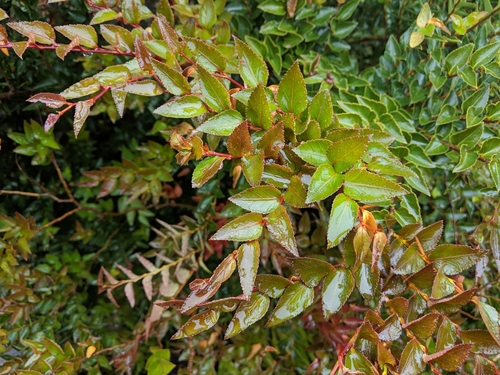
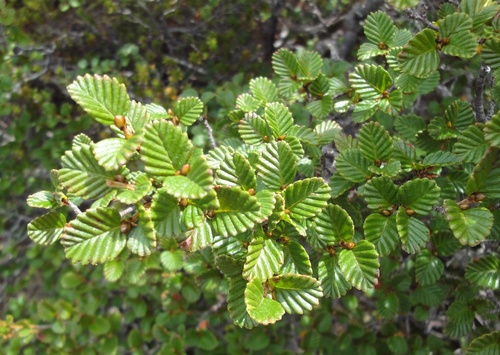
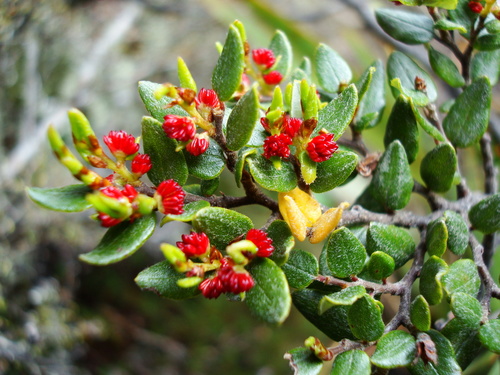
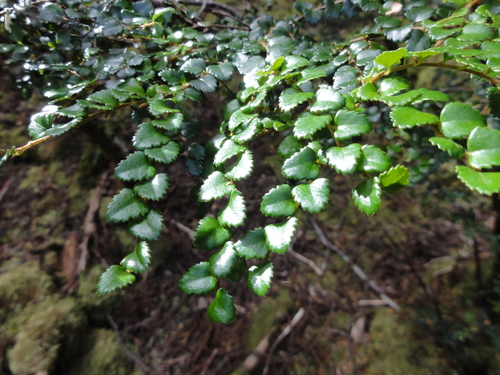
The leaves are simple, alternate, and grow 0.5–1.5 cm long, reaching up to 2 cm long on specimens in Victoria. They are dark green, with bright red, pink, or orange new growth in spring. Leaves are triangular with irregular minute teeth, and have craspedodromous venation: all secondary veins spread from a central primary midrib and terminate at the leaf margins. Tertiary veins are poorly defined.
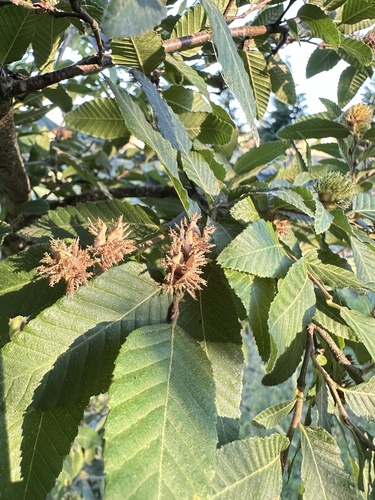
Individual trees carry separate unisexual male and female flowers. Male flowers grow solitarily and have hanging stamens, while female flowers lack stamens and grow in clusters near branch tips, close to leaves. Flowering occurs in November and December. The fruit is small, woody, and about 6 mm across, holding three small-winged nuts containing fertile seeds from December to February. Seeds germinate within 6 to 8 weeks.
Nothofagus cunninghamii is a fairly robust species, requiring around 900 mm of rainfall spread evenly throughout the year. It tolerates frost down to –7 °C. It can grow in full shade (though it grows slowly in these conditions) through to full sun when water is sufficient, but grows best under partial sun. It prefers moist, well-draining soil.
This species is the dominant tree of cool temperate rainforest across Tasmania and southern Victoria. It is most common in Tasmania, where it occurs in most regions except the drier Midlands and east coast. The largest remaining area of Nothofagus cunninghamii-dominated rainforest is takayna/Tarkine in northwestern Tasmania, which is also the largest remaining cool temperate rainforest tract in Australia. In Victoria, it grows best in deep red mountain soils or highly organic soils across the Central Highlands, Strzelecki Ranges, Otway Ranges, and Wilsons Promontory.
Occasionally, round, orange-like fruiting bodies of the fungus Cyttaria gunnii can be seen protruding from Nothofagus cunninghamii trunks. Cyttaria are obligate biotrophic associates of myrtle beech, and have co-evolved with Nothofagus. This tree grows in temperate rainforest alongside other native rainforest species including southern sassafras (Atherosperma moschatum), leatherwood (Eucryphia lucida), horizontal (Anodopetalum biglandulosum), and celery-top pine (Phyllocladus aspleniifolius). It forms important nesting and shelter habitat for birds.
Nothofagus cunninghamii grows across a range of ecosystems, but establishes most successfully in partial sun within the understory of wet sclerophyll forest. In mixed forests, the main lower tree layer is made up of Nothofagus cunninghamii and sassafras, with a tall eucalyptus overstory. When the existing eucalypts eventually die, myrtle beech becomes the dominant species, forming a pure rainforest. This process takes several hundred years. The ecosystem is maintained by rare fires in wet conditions, which prevent eucalypt seeds from germinating. After a major fire, pure rainforest is replaced by eucalypts, and the process of rainforest reestablishment begins again. Myrtle beech rarely survives intense fire, and must re-colonize burned areas from neighboring populations. It can survive light fires, however, by regenerating from seed or vegetatively from basal epicormic shoots. Both Nothofagus cunninghamii and its close relative N. moorei are excellent hosts for epiphytes.
The wood of Nothofagus cunninghamii is well-suited for cabinetry: it is hard, with strong, tough, close grain, and ranges in color from soft pink to reddish brown, often with figured grain. It can be polished to a fine sheen. It is used for flooring, joinery, wheel cogs, and furniture, and works well for steam bending, turnery, and carving. It is harvested from old-growth forest, but the vast majority of Nothofagus cunninghamii timber is left on the ground, as the species grows alongside the heavily harvested mountain ash. Its dry density is 700 kg/m³.
In cultivation, Nothofagus cunninghamii is easily grown from fresh seed, which germinates in just a few weeks. Cuttings can be rooted, but generally perform worse than plants grown from seed. Cultivated specimens tolerate temperatures from 45 °C (113 °F) down to −7 °C (19 °F); mountain populations of the species can withstand temperatures as low as −15 °C (5 °F), but no cultivation material has been selected from these cold-hardy provenances. Cultivated trees in western Scotland grow stout and hardy, and examples of the species can be seen at The Tasmanian Arboretum.